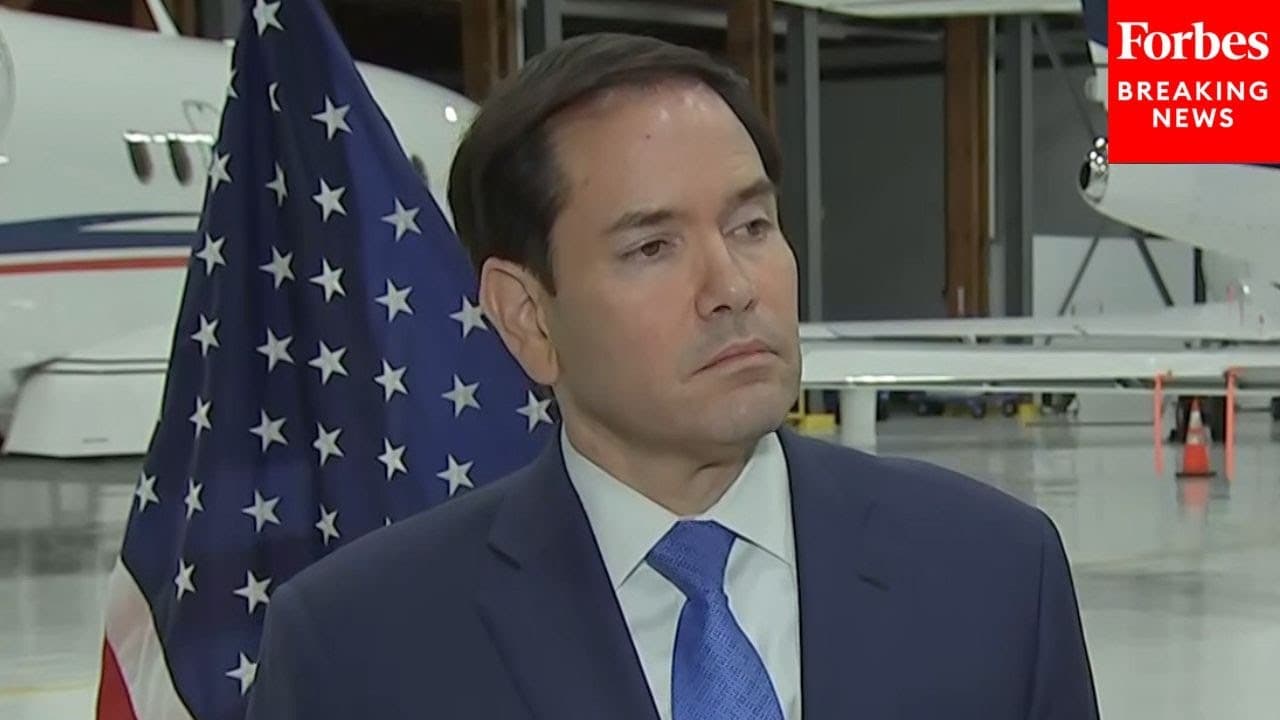
What Did Marco Rubio Say After the G7 Meeting?
TL;DR
Russia’s demand for the rest of Donetsk is unacceptable to Ukraine, while continued strikes and battlefield losses suggest no immediate path to peace. Marco Rubio also defended United States counterdrug operations, described Sudan’s humanitarian crisis as horrifying, urged an end to outside support for the RSF, and anticipated agreements during the Saudi crown prince’s White House visit.
Transcript
Where do I stand here? Yeah. All right, let's go. Um, Mr. Secret, what the hell is that? A court reporter. See a court reporter. What's wrong with All right. What's up, Mr. Secretary? Is it your assessment that Russia does not really want peace? Well, we can only go by what we see. I mean, I think they've stated clearly what they want is they want ... Read More
Key Insights
- Russia’s territorial demand is an obstacle to peace because Rubio said Moscow wants the rest of Donetsk and Ukraine will not accept that condition. He assessed the situation based on Russia’s stated position, continued long-range attacks, and ongoing battlefield activity.
- Russia is losing 7,000 soldiers per week, according to Rubio’s stated assessment. He also said Russian forces had made gains in Donetsk while continuing long-range strikes intended to degrade Ukraine’s electrical grid and demoralize the Ukrainian population.
- United States sanctions are part of the administration’s response to the Ukraine conflict. Rubio said the president recently imposed sanctions that partners had requested, while the government continued its previous activities without presenting another specific new deliverable at the meeting.
- United States Caribbean operations are described by Rubio as counterdrug measures taken in national self-defense. He argued that organized criminal narcoterrorists threaten the country and said the operation could stop if drug boats stopped transporting narcotics toward the United States.
- United States intelligence assets in the region collect information that supports ongoing counterdrug actions. Rubio declined to discuss operational intelligence details and rejected a report concerning intelligence-sharing or targeting information as false, inaccurate, or misleading.
- Saudi Arabia and the United States are preparing agreements for the Saudi crown prince’s White House visit. Rubio said substantial progress had followed the president’s earlier visit, although several details still needed to be tightened and finalized before any announcements.
- Sudan’s humanitarian emergency includes unprecedented malnutrition and suffering, according to reports Rubio said the United States received from humanitarian groups. He said fewer refugees arrived than expected, raising fears that many people were dead, immobilized by illness, or too malnourished to flee.
- The RSF’s atrocities are systematic rather than isolated misconduct, according to Rubio. He accused the force of sexual violence, murder, and other attacks against civilians, while calling for outside weapons and logistical support to be cut off immediately.
Install to Summarize YouTube Videos and Get Transcripts
Explore YouTube Video Summarizer or Get YouTube Transcript Extractor
Questions & Answers
Q: Does Russia want peace with Ukraine, according to Marco Rubio?
Rubio said the assessment must be based on Russia’s conduct and stated demands. He noted that Russia wants the rest of Donetsk, a condition Ukraine will not accept, while Russian forces continue long-range strikes against Ukraine and make some battlefield gains. Based on those facts, he described the parties as remaining stuck without an apparent path to an agreement.
Q: What did Rubio say Russia is doing in Ukraine?
Rubio said Russia continues launching long-range strikes into Ukraine, apparently seeking to degrade the country’s electrical grid and demoralize its population. He also said Russian forces had made gains in Donetsk but were losing 7,000 soldiers per week. Russia’s demand for the rest of Donetsk remained unacceptable to Ukraine, preventing progress toward peace.
Q: What new support did the United States provide on Ukraine?
Rubio identified recently imposed sanctions as the new action taken by the president, saying those sanctions were what partners had requested. Beyond that measure, he said the United States continued doing what it had already been doing. He did not identify another specific deliverable from Washington concerning Ukraine during his response to reporters.
Q: Why did Rubio defend United States operations near Venezuela?
Rubio characterized the activity as a counterdrug operation conducted to defend United States national security from organized criminal narcoterrorists in the hemisphere. He said the Maduro regime allows drug-trafficking groups to operate from its territory and facilitates shipments toward the United States and Europe. He maintained that the operation could end if the drug boats stopped.
Q: What did Rubio say about allied intelligence support for Caribbean operations?
Rubio said the United States has regional assets that collect intelligence and that officials act on the resulting information. He declined to provide deeper operational details. He also rejected a media report about intelligence or targeting support as false, inaccurate, or misleading, arguing that purported government sources may lack direct knowledge or have personal agendas.
Q: What agreements were discussed for the Saudi crown prince’s visit?
Rubio said officials were still working through the agreements expected around the Saudi crown prince’s White House visit. He anticipated that good agreements would be signed and said substantial progress had been made since the president’s earlier visit. However, he did not disclose their terms because several matters still required tightening and final approval.
Q: What did Rubio say must happen to stop Sudan’s crisis?
Rubio said weapons and external support reaching the RSF must be cut off as the force continues its advances. He explained that assistance also depends on countries allowing their territory to be used for shipping and transportation. The United States was applying pressure to relevant parties and seeking actionable results through talks involving Egypt, Saudi Arabia, and the United Arab Emirates.
Q: Would Rubio support designating the RSF as a terrorist organization?
Rubio said he would support such a designation if it helped bring the conflict to an end, although he had not reviewed the specific bipartisan Senate proposal mentioned by a reporter. His primary concern was stopping systematic atrocities, including sexual violence and attacks against women, children, and other civilians, rather than endorsing a particular label without assessing its practical effect.
Summary & Key Takeaways
-
Rubio assessed that Russia continues long-range strikes intended to damage Ukraine’s electrical grid and demoralize the country while demanding territory Ukraine cannot accept. He said the United States had recently imposed sanctions requested by partners and otherwise continued its established support, leaving the conflict without an immediate diplomatic breakthrough.
-
Rubio defended United States operations in the Caribbean as a counterdrug response to organized criminal and narcoterrorist threats. He said the United States uses its own regional intelligence assets, rejected reporting about intelligence-sharing disputes as inaccurate or misleading, and accused the Maduro regime of facilitating drug shipments toward the United States and Europe.
-
Rubio described Sudan as a calamity marked by malnutrition, displacement, sexual violence, murder, and systematic atrocities against civilians. He called for cutting off weapons and external assistance to the RSF, demanded actionable results from the Quad process, and said a terrorist designation could be supported if it helped end the conflict.
Read in Other Languages (beta)
Share This Summary 📚
Summarize YouTube Videos and Get Video Transcripts with 1-Click
Try YouTube Summary with ChatGPT & Claude or YouTube Transcript Generator
Explore More Summaries from Forbes Breaking News 📚
Summarize YouTube Videos and Get Video Transcripts with 1-Click
Try YouTube Summary with ChatGPT & Claude or YouTube Transcript Generator