How Does MindAffect’s Brain-Computer Interface Work? | Startup Battlefield Competition: Session 3
TL;DR
MindAffect’s brain-computer interface lets users select commands by looking at rapidly blinking patterns on an iPad while an EEG headset measures the visual cortex’s response. The system can calibrate within a minute, enabled one locked-in user to communicate with his wife for more than two hours a day, and was tested with ten patients in a hospital and 30 at home. Read on to understand the technology, testing, applications, and remaining challenges.
Transcript
well thank you for warding us to wildcards it's a really nice to take it over in unity well maybe you have seen Elon Musk this summer on stage explaining what he wanted to do with his company neuro-link and now he wants to help paraplegic people communicate again maybe you have heard renowned scientists from big universities when they presented the... Read More
Key Insights
- 🧠 The current focus of brain-computer interfaces is primarily on academic research and neural prosthetics.
- 🖱️ Mind Effect aims to expand the use of brain-computer interfaces for communication purposes and make it a dominant paradigm for simple tasks.
- 😃 The competition for Mind Effect comes from existing technologies like buttons, touchscreens, voice commands, and eye tracking.
- 💦 Mind Effect's solution is a result of extensive academic work and collaboration with renowned technicians and professors in the field.
- ❓ Their device does not require extensive training and can be calibrated within minutes.
- 😷 Mind Effect's development kit provides endless possibilities for creating complex interfaces and does not rely on medical applications alone.
- 📔 Insurance companies are supportive of assistive technologies like Mind Effect's solution and are likely to cover its cost.
- 🧠 Latency and engineering challenges are still being addressed to ensure seamless performance of the brain-computer interface solution.
Install to Summarize YouTube Videos and Get Transcripts
Explore YouTube Video Summarizer or Get YouTube Transcript Extractor
Questions & Answers
Q: How does MindAffect’s brain-computer interface work?
An iPad displays selectable blocks, each with a distinct rapid blinking pattern similar to Morse code. When the user looks at a block, an EEG headset measures the corresponding visual-cortex response, and MindAffect’s algorithms determine which command the user selected.
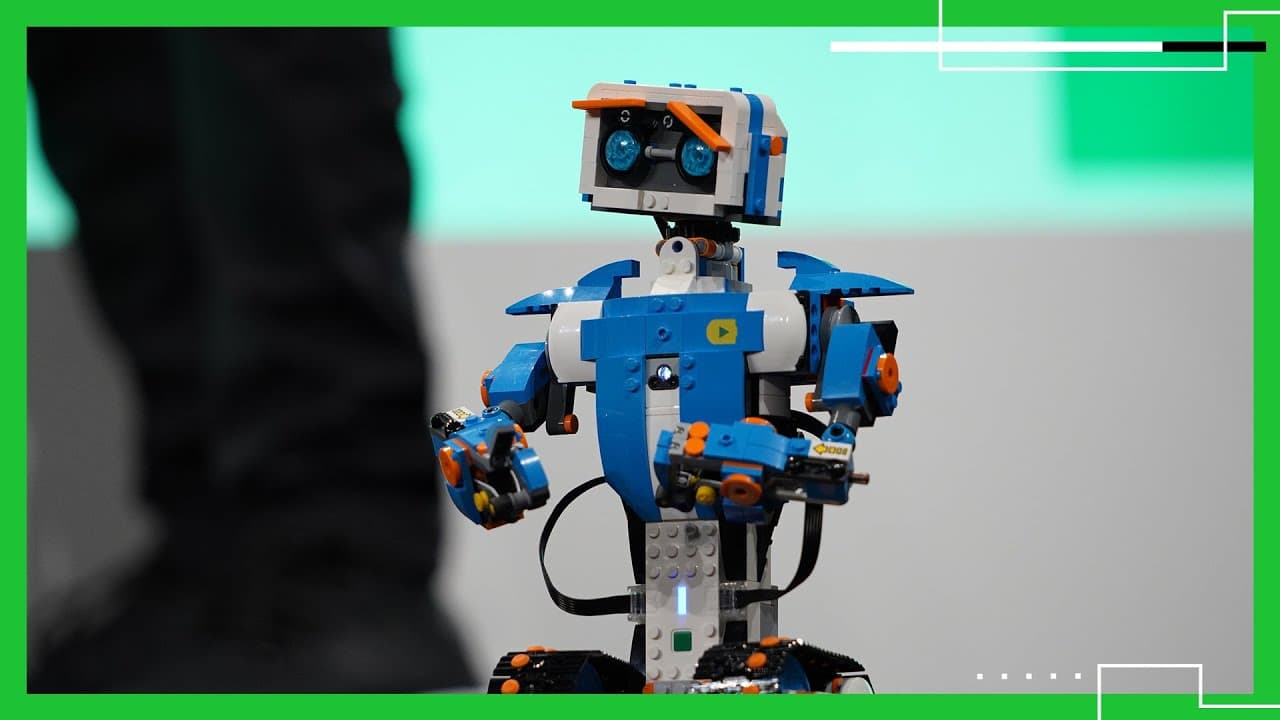
Q: How does MindAffect use blinking patterns to control a LEGO robot?
The user looks at the iPad block associated with moving straight, turning right, or turning left. After the EEG and algorithms identify that block, the iPad sends the selected command to the LEGO robot.
Q: Does the MindAffect system require extensive training?
No extensive training is required. The presenter says the system can train within a minute after the user looks at the first few blinking patterns, although the locked-in user performs a calibration at the start of each day.
Q: How has MindAffect tested its brain-computer interface?
MindAffect tested the system with ten patients in a hospital and 30 patients at home. The company also had one user operating it daily.
Q: How has MindAffect helped a locked-in patient communicate?
The system enabled one locked-in patient to communicate with his wife for more than two hours a day. The patient could hear, smell, and see but could no longer command his muscles.
Q: What can users control with MindAffect’s technology?
The demonstration shows a user controlling a LEGO robot through commands selected on an iPad. The same signaling approach can also control a television, which mattered to the locked-in user who wanted to change channels when his wife was absent.
Q: What makes MindAffect’s interface suitable for complex applications?
The interface can contain an extensive number of selectable blocks, each assigned its own blinking pattern. According to the presenter, this allows complex interfaces to be created with the same underlying solution.
Q: What are MindAffect’s commercialization plans?
MindAffect planned to launch its development kit at CES in Las Vegas the month after the presentation. The presenter said customers could buy the kit the following January for use at home or within a company.
Summary & Key Takeaways
-
Mind Effect has developed a solution that helps locked-in patients communicate with others.
-
They have created an EEG headset and an iPad application with blinking patterns that can be translated into commands.
-
Mind Effect aims to make their solution available to a wider audience by offering a development kit.
Read in Other Languages (beta)
Share This Summary 📚
Summarize YouTube Videos and Get Video Transcripts with 1-Click
Try YouTube Summary with ChatGPT & Claude or YouTube Transcript Generator
Explore More Summaries from TechCrunch 📚






Summarize YouTube Videos and Get Video Transcripts with 1-Click
Try YouTube Summary with ChatGPT & Claude or YouTube Transcript Generator