Why Are Mice Used to Grow Human Stem Cells?
TL;DR
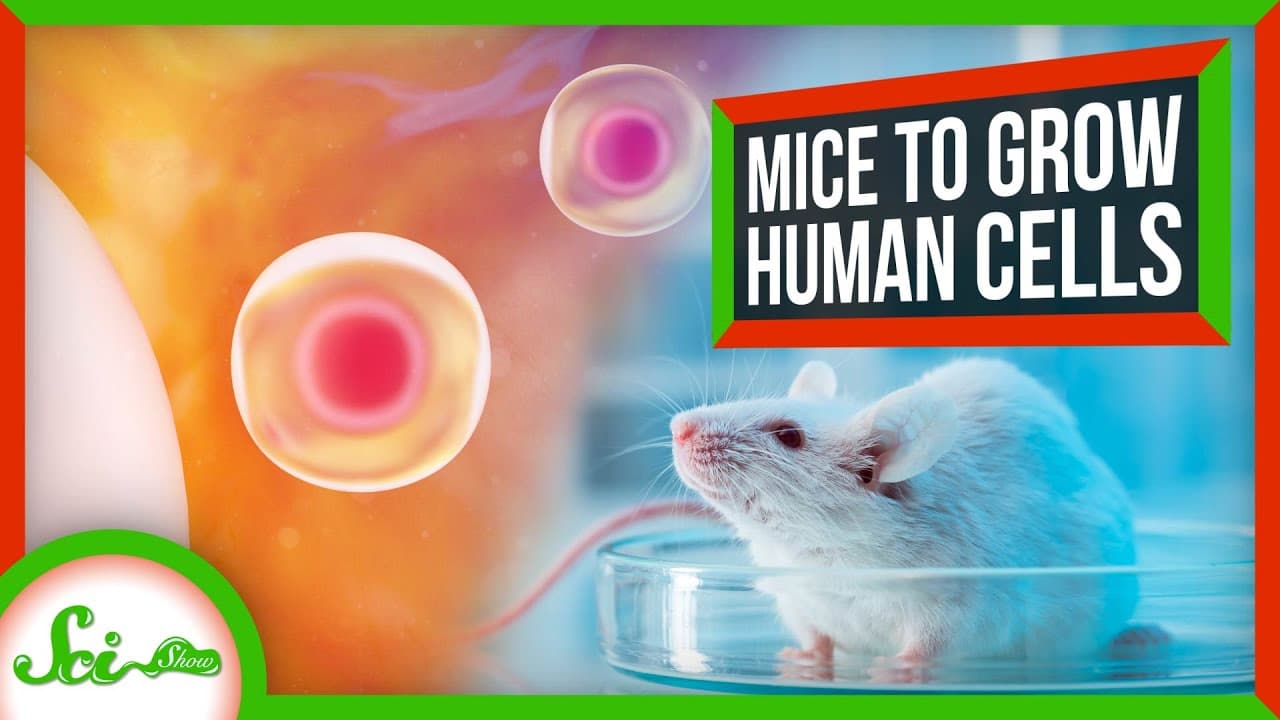
Scientists are using mice to grow human stem cells because it allows for a more accurate replication of the human cellular environment compared to traditional in vitro methods. This approach could lead to advancements in medical research and treatment for diseases like Alzheimer's and Parkinson's by enabling better understanding and development of human cells.
Transcript
stem cells are widely believed to hold great promise in medical research because of their ability to transform into all sorts of other cell types like blood skin nerve and muscle cells scientists believe that understanding how stem cells work and figuring out how to hack their developmental process could lead to major advancements in all sorts of a... Read More
Key Insights
- 😷 Stem cells hold promise in medical research due to their ability to transform into different cell types.
- 🫒 In vitro cell culture has limitations in accurately representing cell behavior in living organisms.
- 💗 Growing human stem cells in mice may improve disease research models and facilitate organ generation.
- 🈸 Pluripotent stem cells are crucial for understanding cell development and potential therapeutic applications.
- 😒 Ethical considerations surround the use of animals with human cells and DNA in research.
- 💗 The ability to grow stem cells in mice does not replace traditional cell culture methods but offers additional research opportunities.
- 😷 Medical advancements through stem cell research could lead to treatments for Alzheimer's, Parkinson's, and other complex conditions.
Install to Summarize YouTube Videos and Get Transcripts
Explore YouTube Video Summarizer or Get YouTube Transcript Extractor
Questions & Answers
Q: Why is in vitro cell culture not always ideal for studying cell behavior?
In vitro cell culture can fail to accurately mimic the complex environment that cells experience inside an organism, leading to inaccurate research results.
Q: How could growing human stem cells in mice benefit medical research?
Growing stem cells in mice would provide a more accurate model for studying human diseases and potentially enable the generation of functional human organs.
Q: What is the significance of pluripotent stem cells in research?
Pluripotent stem cells have the ability to differentiate into various cell types, offering great potential for treating conditions and understanding cell development.
Q: Are there any ethical concerns associated with growing human stem cells in mice?
Ethical questions arise when animals have human cells and DNA, and the scientific community will need to address these concerns.
Summary & Key Takeaways
-
Stem cells have the potential to transform into various cell types, making them valuable in medical research.
-
Growing cells in vitro (outside a living body) can be challenging and may not accurately represent how cells behave in an organism.
-
Cultivating human stem cells in mice could improve research accuracy and potentially lead to advancements in treating conditions like Alzheimer's and Parkinson's disease.
Read in Other Languages (beta)
Share This Summary 📚
Summarize YouTube Videos and Get Video Transcripts with 1-Click
Try YouTube Summary with ChatGPT & Claude or YouTube Transcript Generator
Explore More Summaries from SciShow 📚


Summarize YouTube Videos and Get Video Transcripts with 1-Click
Try YouTube Summary with ChatGPT & Claude or YouTube Transcript Generator