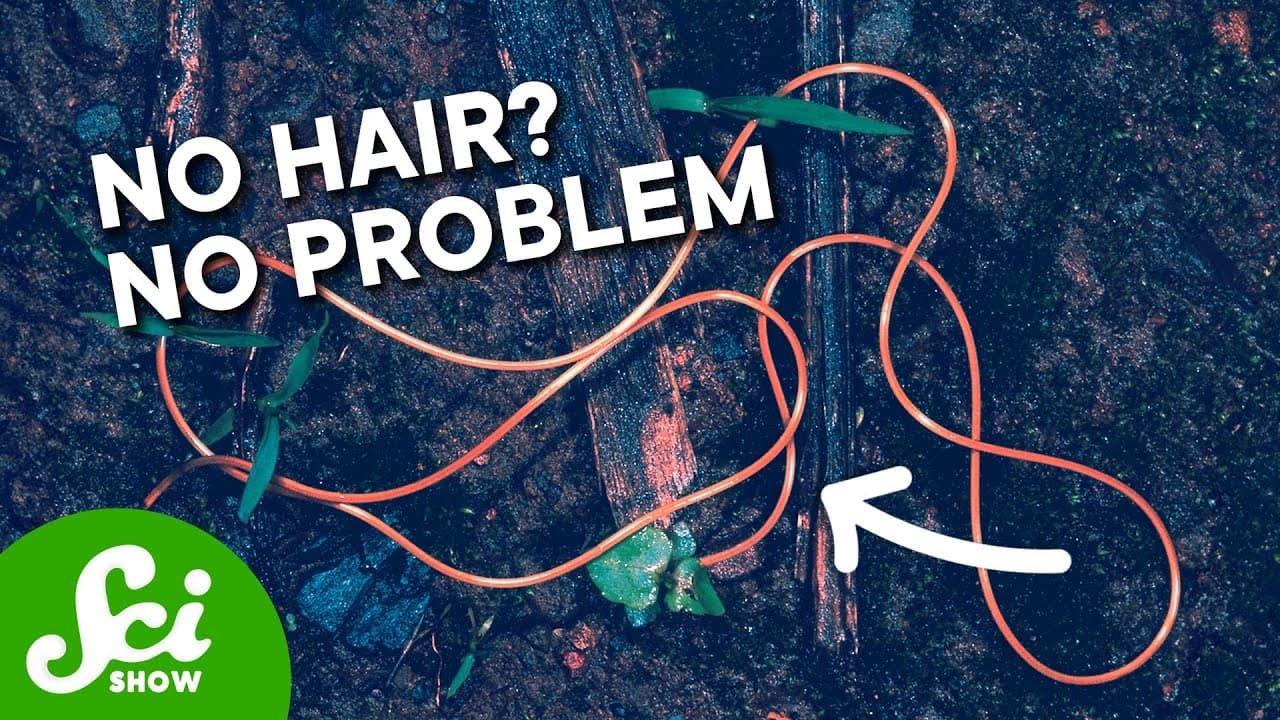
Why Do Hairworms Lack Hair and Cilia?
TL;DR
Hairworms lack 30% of common animal genes, including the vital instructions for producing cilia, which are crucial for locomotion and sensory functions in other animals. Despite this genetic deficiency, hairworms have adapted to survive and reproduce effectively, raising questions about their unique mechanisms for navigation and finding mates without these key structures.
Transcript
So you know the mind-controlling fungus that makes its victims climb trees and all that? Plenty of other parasites alter their host’s behavior as part of their M.O. to complete their life cycle. But the parasites known as hairworms are doing it with a genetic shortcoming we’ve never seen before. Hairworms are missing a huge portion of genes that ar... Read More
Key Insights
- 🎟️ Hairworms, a type of parasite, are missing 30% of commonly found animal genes, including the ability to produce cilia.
- 👱 The absence of cilia is unusual even for parasites, as these hair-like structures are critical for cellular functions in most other animals.
- ⌛ Hairworms have adapted to survive without cilia for an extended period of time, suggesting remarkable genetic and evolutionary adaptations.
- 🖤 The study discovered unique genes in hairworms whose functions are still unknown, suggesting possible compensatory mechanisms for the lack of cilia.
- ❓ Hairworms challenge the conventional understanding of the minimum genetic equipment required for survival and reproduction.
- 🤨 Their ability to navigate, find mates, and reproduce without cilia raises intriguing questions about alternative sensory mechanisms or adaptations used by these parasites.
- 👨🔬 Further research is needed to understand how hairworms have evolved and thrived despite their genetic deficiencies.
Install to Summarize YouTube Videos and Get Transcripts
Explore YouTube Video Summarizer or Get YouTube Transcript Extractor
Questions & Answers
Q: How do hairworms alter the behavior of their hosts?
Hairworms force their insect hosts to engage in behaviors that facilitate the worms' reproduction, such as swimming to release the adult worm to find a mate.
Q: What did the researchers find when they sequenced the genomes of hairworms?
The analysis revealed that hairworms are missing 30% of the basic set of genes found in animals, including the genes responsible for producing cilia.
Q: Why is the absence of cilia in hairworm cells significant?
Cilia play a crucial role in locomotion, sensory perception, and many other functions in animals. The fact that hairworms lack cilia suggests they have adapted to survive without this important cellular feature.
Q: How do hairworms navigate and find mates without cilia?
The exact mechanism is still unknown, but hairworms, even during their free-living phase, are somehow able to reproduce and find mates without the sensory mechanism provided by cilia.
Summary & Key Takeaways
-
Hairworms are parasites that live inside the bodies of other organisms, such as insects, forcing their hosts to engage in behaviors that help the worms reproduce.
-
Researchers sequenced the genomes of two hairworm species and discovered that these parasites are missing 30% of the genes commonly found in animals.
-
One of the key missing genes is responsible for producing cilia, hair-like structures essential for locomotion, feeding, sensory perception, and other vital functions in animals.
Read in Other Languages (beta)
Share This Summary 📚
Summarize YouTube Videos and Get Video Transcripts with 1-Click
Try YouTube Summary with ChatGPT & Claude or YouTube Transcript Generator
Explore More Summaries from SciShow 📚

Summarize YouTube Videos and Get Video Transcripts with 1-Click
Try YouTube Summary with ChatGPT & Claude or YouTube Transcript Generator