How Does Eckhart Tolle Explain the Power of Pure Awareness?

TL;DR
Pure awareness is experienced by remaining alert and present when thought pauses, without trying to suppress the mind. Eckhart Tolle suggests resting for 10 seconds in conscious presence, where sense perceptions continue but concepts such as your name temporarily disappear. Awakening then develops through repeated shifts from mental absorption back to awareness; read on to understand the practice, common obstacles, and signs of progress.
Transcript
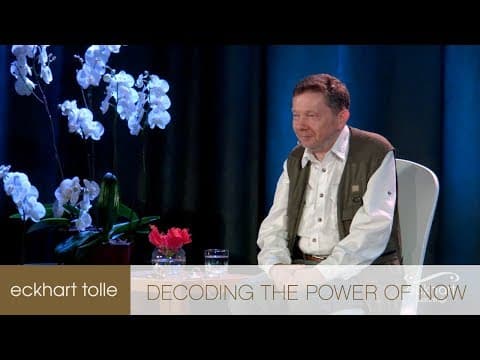
pure awareness in your pure awareness conceptually of course you don't know anything when when your mind stops for example now if I I stop speaking now and use and you can you're still here too we can do it together I stop speaking for a few seconds and as I stop speaking do you you need to fill that space between me stopping to speak and starting ... Read More
Key Insights
- Pure awareness is conscious presence without movement in the mind. During a pause in thought, sense perceptions continue against a background of awareness, while conceptual knowledge such as your name is temporarily unavailable because that knowledge appears as thought.
- Thought suppression is ineffective because holding thought down creates strain and allows thinking to return more strongly. The practical alternative is a shift into alert consciousness, where attention becomes fully present without fighting, controlling, or forcibly stopping the mind.
- Awareness is inseparable from the present moment because awareness can occur only now. When consciousness becomes absorbed by thinking, present-moment awareness disappears, and the internal voice can seem like the person’s identity rather than an activity occurring within consciousness.
- Rising above thought is different from falling below thought. Sleepiness, drinking, and smoking can reduce mental torment by weakening thought, but alert presence moves beyond thinking while preserving consciousness, clarity, sense perception, and an innocent experience of aliveness.
- The moments after waking can reveal awareness before habitual thinking resumes. For several seconds, perception may feel bright, alive, innocent, and free of problems, until thoughts about time, appointments, difficult situations, and other people begin occupying consciousness again.
- Identification with thought creates an unconscious state in which the internal mental voice consumes attention and appears to be the self. That voice can talk continuously and conduct internal discussions, leaving little awareness available for direct experience of the present moment.
- Individual consciousness is the starting point for changing the world. Every circumstance can become part of this shift, because awakening takes place repeatedly in ordinary moments rather than through a single permanent escape from thought or life’s challenges.
- Spiritual awakening is usually an alternating process of presence and absence. People periodically wake up, become absorbed by the mind again, and return to awareness. Gradually, present periods lengthen and external challenges lose some of their power to trigger unconsciousness.
Install to Summarize YouTube Videos and Get Transcripts
Explore YouTube Video Summarizer or Get YouTube Transcript Extractor
Questions & Answers
Q: How can you experience pure awareness without thought?
Allow thought to pause while remaining alert and receptive instead of trying to force the mind into silence. Tolle demonstrates this with a 10-second pause in which you simply receive sense perceptions against a background of awareness.
Q: Why does suppressing thought fail to create pure awareness?
Suppressing thought creates mental strain rather than a shift in consciousness. Tolle compares it to holding your breath: thinking may stop briefly, but it returns even more strongly when the effort ends.
Q: What is pure awareness according to Eckhart Tolle?
Pure awareness is conscious presence without movement in the mind. Sense perceptions remain, but conceptual knowledge is inactive; Tolle says that in this space you may not even know your name because your name is a thought.
Q: Why are awareness and presence considered the same?
Tolle says awareness can exist only in the present moment, so present-moment awareness is implied whenever he uses the word awareness. When thinking absorbs consciousness, the present moment and awareness are lost together.
Q: What can happen during the first moments after waking?
For perhaps 10 or 20 seconds after waking, you may perceive the world with bright, innocent awareness before habitual thought returns. Questions about the time, appointments, and difficult people then restart the machinery of the mind and draw consciousness away from presence.
Q: What is the difference between rising above thought and falling below it?
Rising above thought preserves alert consciousness, clear perception, and a sense that everything is alive. Falling below thought can also reduce mental torment through tiredness, sleep, drinking, or smoking, but it lowers consciousness rather than deepening awareness.
Q: How does identification with the mind reduce awareness?
The internal voice can consume consciousness through constant commentary and imagined discussions. When you identify with that voice as yourself, you become absent from direct experience of the present moment.
Q: How does the awakening process develop over time?
Awakening commonly alternates between presence and renewed absorption in the mind. Forgetting and waking up again are part of the process; gradually, periods of presence become longer, and challenges or unconscious behavior become less able to pull you back into complete identification.
Summary & Key Takeaways
-
Pure awareness appears when thinking pauses but consciousness remains alert. A person can receive sense perceptions without translating them into concepts, names, or personal stories. This presence cannot be produced by forcefully suppressing thought. It emerges through a shift from mental activity into a clearer and more attentive state of consciousness.
-
Tolle distinguishes rising above thought from falling below it. Tiredness, sleep, drinking, or smoking may provide temporary relief from mental activity, but they reduce consciousness rather than deepen it. Alert presence retains bright perception and awareness, allowing the world to appear alive without the usual burden of remembered problems or anticipated difficulties.
-
Awakening usually alternates between presence and renewed identification with the mind. Forgetting, becoming absorbed in thought, and waking up again are normal parts of the process. With practice, periods of awareness become longer, while challenges and unconscious behavior from other people become progressively less capable of pulling an individual back into unconsciousness.
Read in Other Languages (beta)
Share This Summary 📚
Summarize YouTube Videos and Get Video Transcripts with 1-Click
Try YouTube Summary with ChatGPT & Claude or YouTube Transcript Generator
Explore More Summaries from Eckhart Tolle 📚




Summarize YouTube Videos and Get Video Transcripts with 1-Click
Try YouTube Summary with ChatGPT & Claude or YouTube Transcript Generator