Could Ancient Giants Have Built Megalithic Sites?
TL;DR
Ancient Mediterranean traditions connect giants with massive stone structures, but the program presents these links as controversial interpretations rather than established proof. It highlights Greek accounts of the Cyclops, Malta’s Gigantia and Mnajdra temples, enormous stones, and astronomical alignments to argue that unusually large extraterrestrial beings may have influenced ancient builders and possibly humanity itself.
Transcript
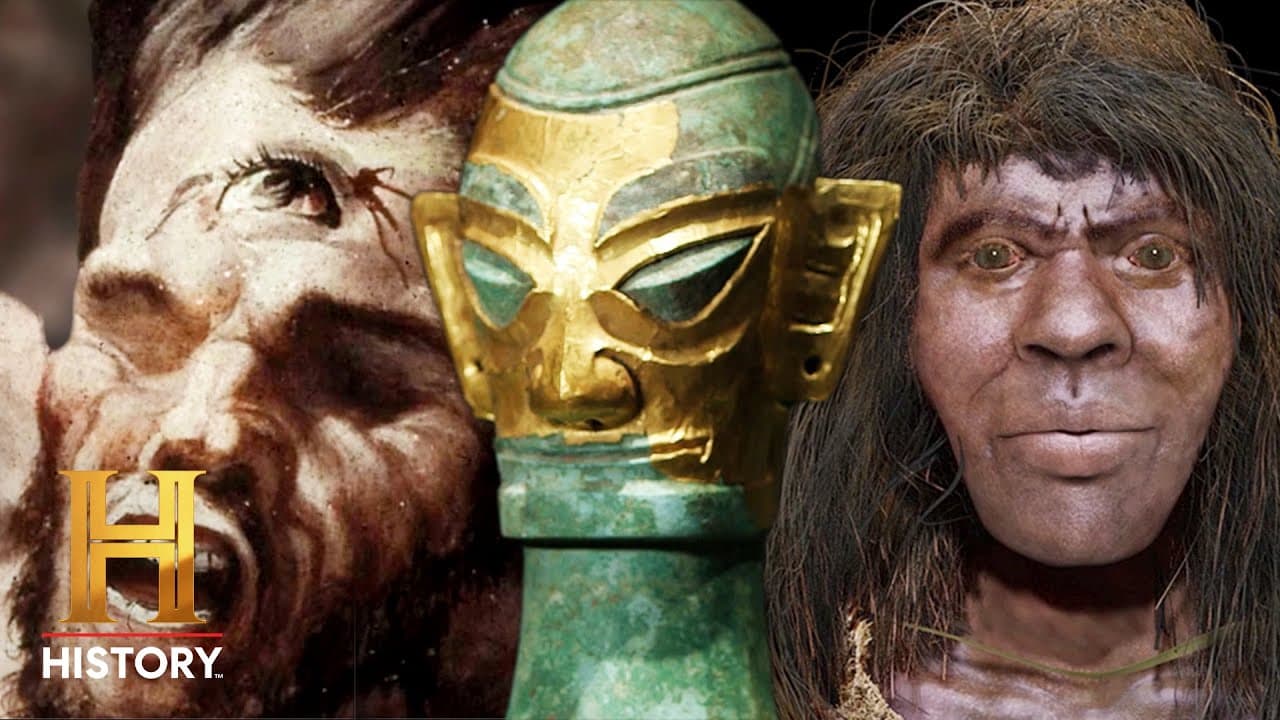
enormous humanoid figures descending from the stars. We have in our ancient Midashic teachings that when the Adamic race descended to Earth, they were beings approximately 100 ft tall. Massive structures built with stones weighing thousands of pounds. Cyclopian architecture is associated with the Cyclops, the oneeyed giants. It really indicates som... Read More
Key Insights
- Giant traditions are presented across Mediterranean cultures as accounts once treated as truth, not merely entertainment. The program cites Greek battles between gods and giants, Roman writings about giants near Mount Vesuvius, and Maltese folklore connecting colossal builders with monumental stone temples.
- The Greek Gigantomachy is described as a struggle between the Olympian gods and giants for control of the heavens. The giants were said to descend from Gaia and Uranus, while Hercules played a pivotal role in defeating them, according to the traditions discussed.
- Cyclopean masonry is construction formed from exceptionally large stones placed upon one another. Its name reflects Greek stories that the one-eyed Cyclops were giant builders and craftsmen capable of making armor, weapons, walls, and gates, including structures associated with Mycenae.
- Malta contains seven enormous megalithic structures despite covering roughly 120 square miles across three inhabited islands. The program says its temples predate the Egyptian pyramids by more than a thousand years and represent some of the earliest monumental architecture discussed in the episode.
- Gigantia was built around 3500 BC according to the mainstream dating presented. Some surviving walls exceed 20 feet, some stones weigh more than 20 tons, and the Maltese name is translated as either a place of giants or a place made by giants.
- Sansuna is the giant goddess credited in Maltese folklore with building Gigantia while nursing an infant. Ancient astronaut theorists reinterpret such a figure as an extraterrestrial rather than a god, but the episode does not provide direct physical proof supporting that identification.
- Mnajdra’s southern temple functions as a solar calendar according to the program. Sunrise travels through its central corridor during the equinoxes, illuminating the temple toward the rear, while other stones correspond to daybreak during the solstices.
- Paul Micallef’s proposed date of 10,200 BC for Mnajdra relies on a claimed summer-solstice light alignment and Earth’s nearly 26,000-year wobble. If correct, the program says this date would precede the earliest known civilizations by approximately 6,000 years.
Install to Summarize YouTube Videos and Get Transcripts
Explore YouTube Video Summarizer or Get YouTube Transcript Extractor
Questions & Answers
Q: Why are ancient Mediterranean structures linked to giants?
Ancient Mediterranean structures are linked to giants because local traditions associate their enormous stones and monumental scale with beings larger than ordinary humans. Greek stories credit the Cyclops with constructing walls and gates, while Maltese folklore attributes Gigantia to the giant goddess Sansuna. The program treats these stories, architectural challenges, and repeated regional traditions as suggestive connections, not as direct archaeological proof.
Q: What is cyclopean masonry in ancient Greek tradition?
Cyclopean masonry is a style of construction characterized by exceptionally large stones placed upon one another. Its name comes from the Cyclops, the one-eyed giants described in Greek tradition as skilled builders and craftsmen. They were credited with making armor, weapons, walls, and gates. The Lion Gate at Mycenae is presented as a structure said to have been built by the Cyclops.
Q: Who were the giants in the Greek Gigantomachy?
The giants in the Gigantomachy were enormous figures who were neither ordinary gods nor humans and who fought the Olympians for control of the heavens. The program says they were descendants of the Titans but also notes that they were born from Gaia and Uranus. Hercules played a pivotal role in the Olympians’ victory, which the episode connects with traditions surrounding Pompeii’s name.
Q: What evidence does Gigantia provide for giant builders?
Gigantia provides an indirect case based on scale, local tradition, and its unusual construction. The temple was built around 3500 BC according to the dating presented, contains stones weighing more than 20 tons, and has walls over 20 feet high that remain standing. Its name refers to giants, and folklore says the giant goddess Sansuna constructed it while nursing an infant.
Q: How old are the megalithic temples of Malta?
The program says mainstream archaeologists date Gigantia to about 3500 BC and the oldest temple at Mnajdra to around 3600 BC. It also states that Malta’s temples are more than a thousand years older than the Egyptian pyramids. A disputed analysis by Paul Micallef proposes that Mnajdra dates to 10,200 BC, based on a reconstructed summer-solstice light alignment.
Q: How does Mnajdra function as a solar calendar?
Mnajdra’s southern temple is aligned with seasonal sunrise positions. During the equinoxes, when daylight and darkness are equal, sunrise enters the central corridor and illuminates the temple toward the back. At other points in the year, different stones correspond with solstice daybreak. The program presents this design as evidence that the builders possessed sophisticated astronomical knowledge and planned the structure carefully.
Q: Why did Paul Micallef date Mnajdra to 10,200 BC?
Paul Micallef reportedly dated Mnajdra to 10,200 BC by accounting for changes in Earth’s orientation over time. He argued that on the summer solstice at that date, sunlight entering the main doorway would have struck the center of an altar stone. The analysis invokes Earth’s nearly 26,000-year wobble, which changes the apparent position of seasonal sunrise over long periods.
Q: Does the program prove that extraterrestrial giants built Malta’s temples?
The program does not present direct proof that extraterrestrial giants built Malta’s temples. It combines legends of giant builders, stones weighing more than 20 tons, ancient astronomical alignments, and disputed dating claims to support a speculative interpretation. Ancient astronaut theorists identify the legendary builders as extraterrestrials, while the transcript also reports mainstream archaeological dates and describes the giant connection as folklore.
Summary & Key Takeaways
-
Legends from Greece, Italy, ancient Sumer, Malta, and other regions describe giants interacting or fighting with humans. Greek tradition distinguishes the giants from the Titans and portrays the Cyclops as enormous craftsmen who produced weapons, armor, walls, and gates, inspiring the term cyclopean masonry for construction using exceptionally large stones.
-
Malta contains seven enormous megalithic structures, including Gigantia on Gozo, whose standing walls exceed 20 feet in places. Archaeologists date Gigantia to about 3500 BC, while local tradition attributes its construction to the giant goddess Sansuna. The program interprets the temple’s scale and folklore as possible evidence of giant builders.
-
Mnajdra consists of three temples with interconnected circular chambers, including a southern temple aligned with equinox and solstice sunrises. Professor Paul Micallef reportedly proposed a construction date of 10,200 BC based on Earth’s changing axial orientation, although mainstream archaeologists place its oldest temple around 3600 BC. Ancient astronaut theorists attribute its knowledge to extraterrestrial giants.
Read in Other Languages (beta)
Share This Summary 📚
Summarize YouTube Videos and Get Video Transcripts with 1-Click
Try YouTube Summary with ChatGPT & Claude or YouTube Transcript Generator
Explore More Summaries from HISTORY 📚




Summarize YouTube Videos and Get Video Transcripts with 1-Click
Try YouTube Summary with ChatGPT & Claude or YouTube Transcript Generator