Don’t Use This Facebook Ads Set Up!
TL;DR
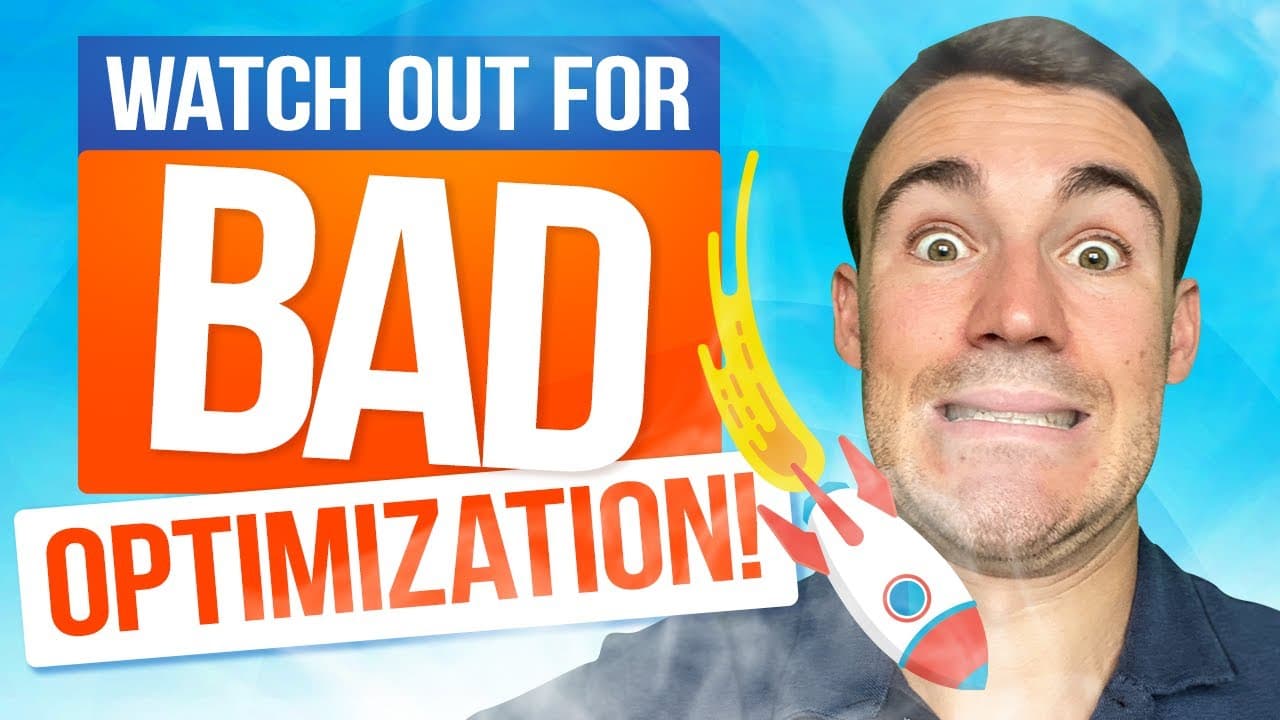
Optimize Facebook ads correctly to improve campaign results.
Transcript
hi guys it's ben heath from lead guru in this video i'm going to talk about how bad optimization is ruining your facebook ad campaigns and what you should do about it instead now before i get into it just want to very quickly ask you to smash that like button and of course subscribe to my youtube channel if you are new and haven't done so already s... Read More
Key Insights
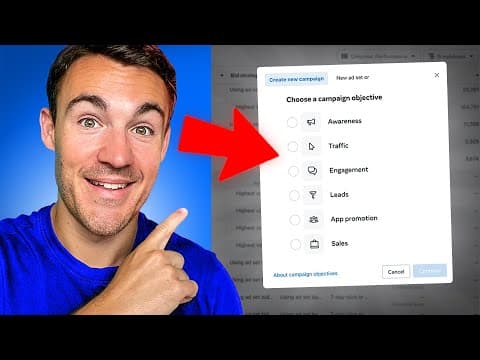
- Choosing the wrong campaign objective, like traffic instead of conversions, can lead to poor ad performance by attracting unqualified clicks.
- Video views optimization often results in views from distracted users, not potential customers, impacting the effectiveness of video ads.
- Engagement objectives may attract negative comments, harming brand reputation rather than driving meaningful interactions.
- Selecting the right conversion event, such as purchase instead of add-to-cart, is crucial for aligning ad performance with business goals.
- Avoid changing default optimization settings like ‘conversions’ to prevent campaigns from functioning like less effective objectives.
- New ad accounts should focus on conversions from the start, rather than using other objectives to 'train' the pixel.
- Understanding that Facebook ad accounts improve with more conversions over time is key; there are no shortcuts to achieving this.
- Proper optimization requires sticking to the desired outcome, even if it means less optimization initially, to achieve better long-term results.
Install to Summarize YouTube Videos and Get Transcripts
Explore YouTube Video Summarizer or Get YouTube Transcript Extractor
Questions & Answers
Q: Why is selecting the right campaign objective important?
Selecting the right campaign objective is crucial because it determines how Facebook optimizes your ads. For instance, choosing 'traffic' as an objective will lead Facebook to prioritize clicks over meaningful actions like conversions. This can result in your ads being shown to less qualified users, such as those prone to accidental clicks, thus wasting ad spend and not achieving business goals.
Q: What are the risks of using video views as an optimization objective?
Using video views as an optimization objective can attract users who are not genuinely interested in your product or service. Facebook may show your ads to distracted users who watch videos passively, such as those scrolling through their feed while watching TV. This does not lead to meaningful engagement or conversions, thereby reducing the effectiveness of your ad campaign.
Q: How can engagement objectives negatively impact your ad campaign?
Engagement objectives can lead to your ads being shown to users who are more likely to interact negatively. This is because Facebook's algorithm prioritizes interactions, which can include negative comments or reactions. In certain industries, this can harm your brand's reputation as users may leave unfavorable comments that deter potential customers.
Q: Why should you select the desired conversion event in Facebook ads?
Selecting the desired conversion event, such as 'purchase,' ensures that Facebook optimizes your ads to achieve that specific outcome. Choosing intermediate events like 'add-to-cart' might lead Facebook to target users who frequently add items to their cart but rarely complete purchases, thus not aligning with your ultimate business objectives and reducing campaign effectiveness.
Q: What is the importance of default optimization settings in Facebook ads?
Default optimization settings, like 'conversions,' are designed to align with common business goals. Changing these settings can lead to your campaign operating like a less effective objective, such as 'traffic,' which focuses on clicks rather than meaningful actions. Keeping the default settings helps ensure your ads are optimized for the desired outcomes.
Q: How should new ad accounts approach optimization?
New ad accounts should focus on conversions from the start, rather than using other objectives to 'train' the pixel. This approach ensures that the ad account learns to optimize for the desired outcome, even if initial results are not ideal. Over time, as more conversions are generated, the account's performance will improve, leading to better results.
Q: What is the analogy used to explain optimization strategy?
The analogy compares running a marathon to achieving a high-performing Facebook ad campaign. Training in unrelated areas, like swimming to improve running, is similar to using objectives like engagement to train for conversions. Just as swimming does not directly improve running skills, using unrelated objectives does not effectively train an ad account for conversions.
Q: Why is it important to focus on the end goal in Facebook ad optimization?
Focusing on the end goal, such as conversions, is important because it ensures that Facebook's algorithms are working towards the desired outcome. Even if the ad account is not fully optimized initially, targeting the end goal helps improve performance over time. This approach avoids wasting resources on objectives that do not align with business goals, leading to more effective campaigns.
Summary & Key Takeaways
-
Ben Heath discusses how poor optimization choices can ruin Facebook ad campaigns and emphasizes the importance of selecting the correct objectives. He argues that advertisers often select objectives like traffic or video views that do not align with their ultimate goals, resulting in wasted ad spend and ineffective campaigns.
-
Heath highlights the importance of choosing the right conversion events and warns against switching default optimization settings. He explains that advertisers should focus on the end goal, such as purchases, rather than intermediate steps like add-to-cart, to ensure Facebook's algorithms work effectively towards desired outcomes.
-
The video also addresses common misconceptions about training new ad accounts, advocating for starting with conversions instead of other objectives. Heath uses an analogy to illustrate that training in unrelated areas does not improve performance in the desired objective, urging advertisers to focus on conversions from the beginning.
Read in Other Languages (beta)
Share This Summary 📚
Summarize YouTube Videos and Get Video Transcripts with 1-Click
Try YouTube Summary with ChatGPT & Claude or YouTube Transcript Generator
Explore More Summaries from Ben Heath 📚
Summarize YouTube Videos and Get Video Transcripts with 1-Click
Try YouTube Summary with ChatGPT & Claude or YouTube Transcript Generator