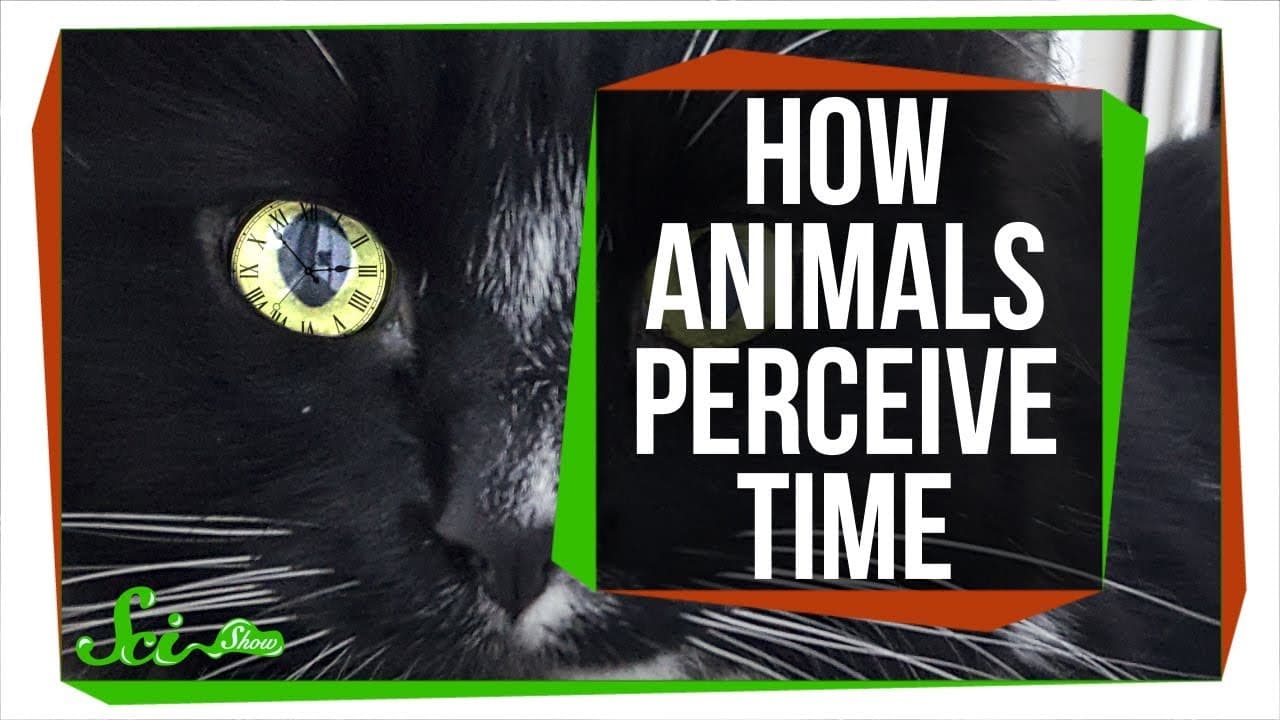
How Do Animals Perceive Time Differently Than Humans?
TL;DR
Animals perceive time differently based on their sensory processing speed, which is influenced by their size and metabolism. Bigger animals often perceive time as moving faster due to slower processing speeds, while smaller animals experience time as slower because of their faster sensory processing. For instance, dogs perceive time about 30% slower than humans, while cats perceive it similarly to us.
Transcript
Every now and then, you may have wondered how your pets or other Animals experience time. Like does every day for Fido feel like two? And what about Mosquitoes or house flies that only live for a week or a month? We'll never be able to get inside another animal's head and feel what it's like for them to experience a day. But whether that day is a b... Read More
Key Insights
- 🐎 Animals' perception of time is influenced by their sensory processing speed, which is determined by size and metabolism.
- 💨 Bigger animals with slower metabolisms have lower sensory processing speed, making time seem faster for them.
- 🚄 Smaller animals with higher metabolisms have higher sensory processing speed, making time seem slower for them.
- 🐎 The critical flicker fusion frequency provides an estimate of an animal's visual processing speed, with different animals having different fusion frequencies.
- 🐎 Exceptions to the relationship between size, metabolism, and sensory processing speed exist, such as creatures with slow visual processing systems despite their small size.
- 🌥️ Specialized adaptations can enhance animals' visual systems, even in larger animals.
- ⌛ Time perception may vary within a single species, indicating that time is not perceived uniformly across the animal kingdom.
Install to Summarize YouTube Videos and Get Transcripts
Explore YouTube Video Summarizer or Get YouTube Transcript Extractor
Questions & Answers
Q: How does sensory processing speed affect animals' perception of time?
Animals with slower sensory processing perceive time to be faster, while animals with faster sensory processing perceive time to be slower.
Q: How do size and metabolism influence animals' sensory processing speed?
Bigger animals with slower metabolisms have slower sensory processing speed, while smaller animals with higher metabolisms have faster sensory processing speed.
Q: How does the critical flicker fusion frequency relate to animals' visual processing speed?
The critical flicker fusion frequency is the speed at which a flashing light appears to be constantly on, and it provides an estimate of an animal's visual processing speed. Different animals have different fusion frequencies, with smaller, high metabolism creatures having higher fusion frequencies.
Q: Are there any exceptions to the relationship between size, metabolism, and sensory processing speed?
Yes, there are some creatures with slow visual processing systems despite their small size, like the tiger beetle. Additionally, certain animals have specialized adaptations to enhance their visual systems, such as predatory swordfish with warm eyes and brains.
Summary & Key Takeaways
-
Animals process sensory information at different speeds, which affects their perception of time.
-
Bigger animals with slower metabolisms perceive time to be faster, while smaller animals with higher metabolisms perceive time to be slower.
-
The critical flicker fusion frequency, which measures visual processing speed, varies among different animals and correlates with their size and metabolism.
Read in Other Languages (beta)
Share This Summary 📚
Summarize YouTube Videos and Get Video Transcripts with 1-Click
Try YouTube Summary with ChatGPT & Claude or YouTube Transcript Generator
Explore More Summaries from SciShow 📚

Summarize YouTube Videos and Get Video Transcripts with 1-Click
Try YouTube Summary with ChatGPT & Claude or YouTube Transcript Generator