What Happens at the End of a Massive Star's Life?
TL;DR
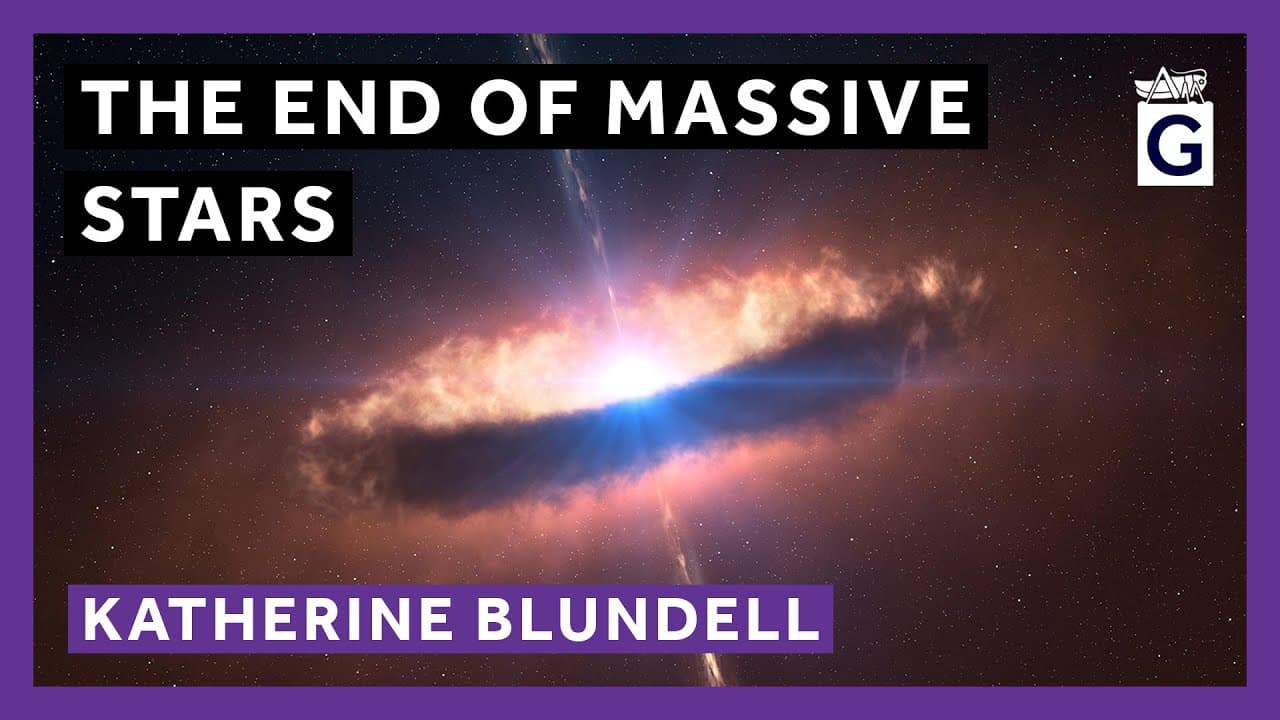
At the end of their lives, massive stars (at least 8 times the mass of our sun) exhaust their fuel through fusion reactions and undergo a supernova explosion. This explosion yields a tremendous amount of energy and creates heavy elements such as iron and gold, which are essential for life. Supernovae occur roughly once per century and play a crucial role in distributing these elements into the universe.
Transcript
(whooshing music) - It's my pleasure to talk to you this evening about the end of massive stars. Massive stars are more important for you and I than you may first appreciate, and that's because if massive stars did not evolve as they do, and if massive stars did not end as they do, then we would not be here, it's as simple as that. But let's begin ... Read More
Key Insights
- 🤩 Massive stars go through fusion reactions, starting with hydrogen and ending with heavier elements like carbon and oxygen.
- 🤩 When massive stars exhaust their fuel, they undergo a supernova explosion, releasing a massive amount of energy and creating heavy elements.
- ☠️ Supernova explosions are rare events, occurring at an average rate of one per century.
Install to Summarize YouTube Videos and Get Transcripts
Explore YouTube Video Summarizer or Get YouTube Transcript Extractor
Questions & Answers
Q: What is the significance of the Tarantula Nebula in the lecture?
The Tarantula Nebula is significant because it is one of the most active regions of ongoing star formation, and it played a role in a supernova explosion that occurred in February 1987.
Q: How do scientists detect supernova explosions?
Scientists can detect supernova explosions through various methods, including observing the sudden increase in brightness of a star, detecting neutrinos emitted during the explosion, and studying the spectrum of light emitted by the explosion.
Q: What happens to a star after it undergoes a supernova explosion?
After a supernova explosion, the central core of a star can collapse to form a neutron star or a black hole. The explosion also releases heavy elements into the interstellar medium, which can later form new stars and planets.
Q: Why are supernova explosions important for life?
Supernova explosions create heavy elements like iron and gold, which are essential for life as we know it. Without these elements, complex biological processes would not be possible.
Summary & Key Takeaways
-
Massive stars, which are at least 8 times the mass of our sun, go through a series of fusion reactions, starting with hydrogen and ending with heavier elements like carbon and oxygen.
-
When massive stars use up all their fuel, they undergo a supernova explosion, releasing a tremendous amount of energy and creating heavy elements like iron and gold.
-
Supernova explosions are rare, occurring at an average rate of one per century. They are crucial for life to exist as they distribute heavy elements into the interstellar medium.
Read in Other Languages (beta)
Share This Summary 📚
Summarize YouTube Videos and Get Video Transcripts with 1-Click
Try YouTube Summary with ChatGPT & Claude or YouTube Transcript Generator
Explore More Summaries from Gresham College 📚


Summarize YouTube Videos and Get Video Transcripts with 1-Click
Try YouTube Summary with ChatGPT & Claude or YouTube Transcript Generator