How Does Oil Price Decline Impact Market Recovery?

TL;DR
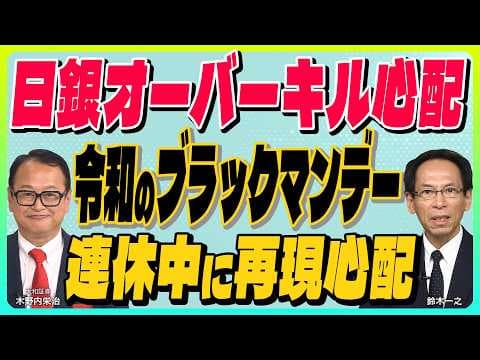
Oil prices have peaked and are now declining, leading to a market recovery ahead of schedule. The influence of China and Iran on oil prices is significant, and geopolitical factors, such as U.S.-Iran negotiations, play a crucial role. The market is expected to stabilize as monetary policies adjust to these changes.
Transcript
Well, another week has begun on the Kino Channel. Uh, I'm Kazu Suzuki, and ... Hello. I'm Kiuchi from Daiwa Securities . Hello. Nice to be with you. We are recording this on the afternoon of Friday, September 25th, and we had a five-day holiday this week. Yes, the five-day break ended, it's Thursday and today is Friday; you mentioned there ... Read More
Key Insights
- Oil prices have peaked and are now declining, suggesting a market recovery ahead of schedule.
- China and Iran significantly influence global oil prices, impacting market dynamics.
- U.S.-Iran negotiations, especially before the midterm elections, are key to understanding oil price movements.
- The U.S. defense stocks' decline indicates a potential ceasefire agreement, affecting geopolitical risk assessment.
- U.S. interest rates are unlikely to rise as much as expected, easing monetary policy pressures.
- Long-term U.S. interest rates are rising, but not due to economic strength, suggesting other underlying factors.
- Quarter-end supply-demand imbalances lead to market volatility, impacting both stocks and bonds.
- BOJ's monetary policy and QT considerations could influence long-term interest rates and market stability.
Install to Summarize YouTube Videos and Get Transcripts
Explore YouTube Video Summarizer or Get YouTube Transcript Extractor
Questions & Answers
Q: How do declining oil prices affect market recovery?
Declining oil prices signal a market recovery ahead of schedule as they ease inflationary pressures and allow for more accommodative monetary policies. The influence of China and Iran on oil prices is significant, and geopolitical factors, such as U.S.-Iran negotiations, play a crucial role. As oil prices stabilize, markets tend to recover, supported by adjusted monetary policies.
Q: What role do China and Iran play in oil price movements?
China and Iran significantly influence global oil prices through their supply and demand dynamics. China's purchasing volume is a key determinant of crude oil prices, while Iran's supply restrictions impact the market. These countries' actions, along with geopolitical negotiations, such as those involving the U.S., shape the overall direction of oil prices.
Q: Why did U.S. defense stocks decline, and what does it indicate?
U.S. defense stocks declined, indicating a potential ceasefire agreement and reduced geopolitical risk. Historically, defense stocks serve as indicators of geopolitical tensions; their decline suggests that a resolution, such as a ceasefire, might be near. This development can lead to a more stable market environment as geopolitical risks diminish.
Q: Are U.S. interest rates expected to rise significantly?
U.S. interest rates are unlikely to rise significantly, as the current consensus suggests only one more hike instead of the expected 1.5 hikes. This easing of monetary policy pressures is due to the market's anticipation of stabilizing oil prices and geopolitical negotiations. As a result, monetary policies may become more accommodative, supporting market recovery.
Q: What factors are causing long-term U.S. interest rates to rise?
Long-term U.S. interest rates are rising, but not due to economic strength. Factors such as quarter-end supply-demand imbalances, tax-loss selling by mutual funds, and geopolitical uncertainties contribute to this trend. These underlying factors create volatility in the market and influence long-term interest rate movements.
Q: How do quarter-end supply-demand imbalances affect the market?
Quarter-end supply-demand imbalances lead to market volatility as investors adjust their portfolios. Stock buybacks are suspended, and passive funds must maintain tracking by buying futures, creating a distorted supply-demand situation. This volatility impacts both stocks and bonds, contributing to fluctuations in interest rates and market stability.
Q: What is the Bank of Japan's approach to monetary policy and QT?
The Bank of Japan is considering the impact of QT on long-term interest rates and market stability. While they may raise short-term rates to address inflation concerns, they aim to keep long-term rates suppressed to support economic growth. This approach reflects a balance between tightening and maintaining stability in the face of global economic challenges.
Q: What is the expected market outlook for the coming months?
The market outlook for the coming months is positive, with expectations of improved stability as oil prices decline and geopolitical tensions ease. Monetary policies are likely to become more accommodative, supporting recovery. The end of quarter supply-demand imbalances will resolve, reducing volatility. Overall, the market is anticipated to recover as these factors stabilize.
Summary & Key Takeaways
-
Oil prices have peaked and are now declining, indicating a market recovery ahead of schedule. The influence of China and Iran on oil prices is significant, and geopolitical factors, such as U.S.-Iran negotiations, play a crucial role. The market is expected to stabilize as monetary policies adjust to these changes.
-
U.S. defense stocks have declined, suggesting a potential ceasefire agreement and reduced geopolitical risk. U.S. interest rates are unlikely to rise significantly, easing monetary policy pressures. Long-term interest rates are rising, but not due to economic strength, indicating other factors at play.
-
Quarter-end supply-demand imbalances create market volatility, impacting stocks and bonds. The Bank of Japan's monetary policy and QT considerations could influence long-term interest rates and market stability. The market is expected to improve as these factors stabilize.
Read in Other Languages (beta)
Share This Summary 📚
Summarize YouTube Videos and Get Video Transcripts with 1-Click
Try YouTube Summary with ChatGPT & Claude or YouTube Transcript Generator
Explore More Summaries from マーケットマスターズ 📚
Summarize YouTube Videos and Get Video Transcripts with 1-Click
Try YouTube Summary with ChatGPT & Claude or YouTube Transcript Generator