What Are 5 Unique Animals That Fly and Inspire Technology?
TL;DR
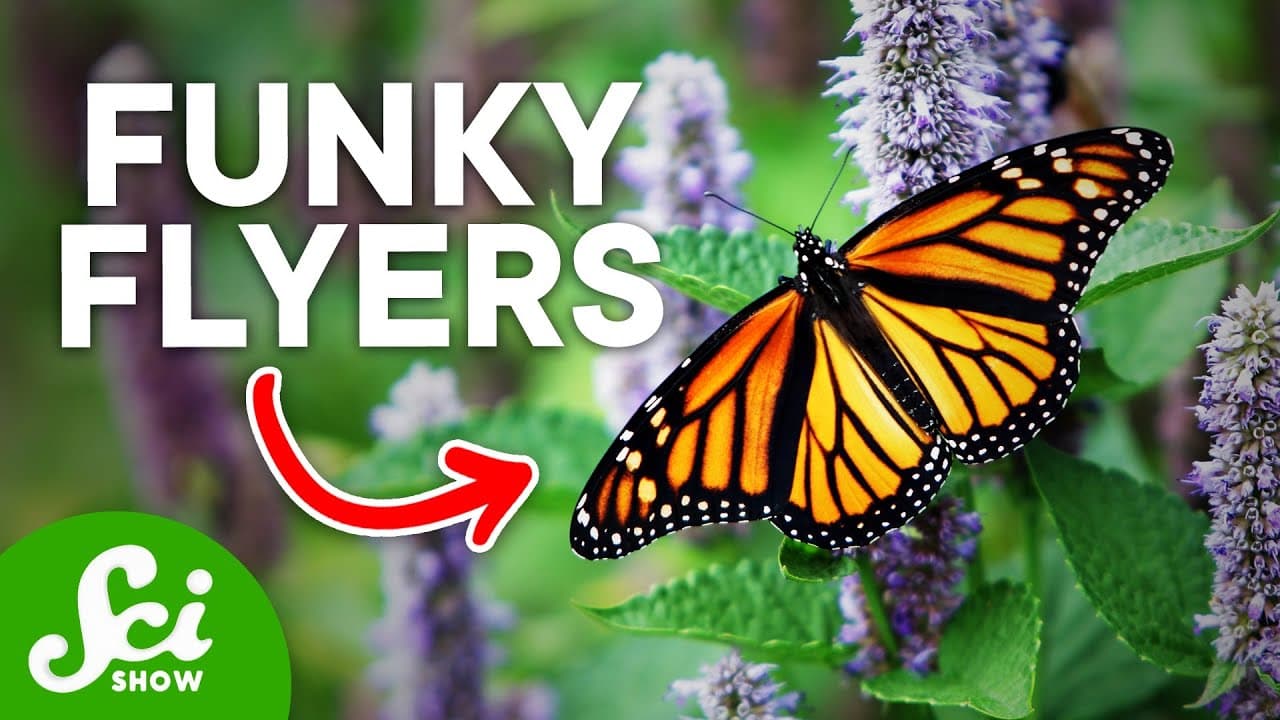
Flying fish, squid, butterflies, mosquitoes, and dandelion seeds each employ unique flying strategies that inspire technological innovations. For instance, flying fish use their fins to glide efficiently, while squid jet themselves out of water. Butterflies' clapping wings improve drone efficiency, mosquitoes' aerodynamics can aid stealth robotics, and the flight of dandelion seeds challenges conventional flight principles.
Transcript
This episode is supported by Himalaya Learning, an audio-first education platform with courses taught by world class experts and industry leaders. Go to Himalaya.comSciShow to sign up for an 90-day free membership. [♪ INTRO] Many creatures in the world can fly. And some have that sleek, aerodynamic shape that tells you they were destined to so... Read More
Key Insights
- 🛸 Flying fish use a unique flying technique that can be applied to develop more efficient boatplanes.
- 🤖 Squid have inspired the creation of submersible robots capable of transitioning from underwater to air.
- 😘 The clapping motion and flexible wings of butterflies can greatly enhance the efficiency of small drones.
- 🤖 Understanding mosquito aerodynamics can aid in the development of stealth robots.
- 🪽 Dandelion seeds challenge traditional flight principles and suggest the importance of filament-like structures in flying creatures.
- 🛟 Nature serves as a great innovator and inspiration for flight technologies.
- 🥺 The study of unconventional flyers can lead to advancements in various industries, including transportation and defense.
Install to Summarize YouTube Videos and Get Transcripts
Explore YouTube Video Summarizer or Get YouTube Transcript Extractor
Questions & Answers
Q: How do flying fish achieve long-distance gliding?
Flying fish are excellent gliders due to their large pectoral and pelvic fins, which act like wings in the air. They position their bodies close to the water's surface, maximizing lift-to-drag ratios and utilizing the ground effect for efficient flight.
Q: What makes squid capable of flight?
Squid fly by shooting jets of water from their siphons to launch themselves above the ocean. By spreading out their fins and arms, they generate lift and glide in a graceful arc. This flight behavior is believed to save energy during long-distance travel.
Q: How do butterflies achieve efficient flight?
Butterflies have large, flexible wings that create an air-filled pocket between them. As the wings clap together, a jet of air propels the butterfly forward. This clapping method makes them 28% more efficient at flying compared to rigid-winged insects.
Q: How do mosquitoes fly without detection?
Mosquitoes generate tiny low-pressure swirls of air called leading-edge vortices, which create lift under their wings. They flap their wings in a figure-eight pattern to catch the wake of the previous wing stroke, providing additional lift. Additionally, they beat their wings over 500 times per second to avoid detection during takeoff.
Q: What enables dandelion seeds to stay afloat?
Dandelion seeds rely on vortices created by the air swirling around the filaments that radiate from the central stalk. By creating drag and preventing them from falling to the ground, these vortices allow the seeds to stay airborne and disperse.
Summary & Key Takeaways
-
Flying fish use their large fins to glide through the air, positioning their bodies parallel to the water's surface and utilizing the ground effect for better lift-to-drag ratios. This knowledge can be applied to develop more efficient boatplanes.
-
Certain squid species can fly short distances above the water by shooting powerful jets of water from their siphons. Researchers have created submersible robots inspired by flying squid to improve underwater-to-air transition.
-
Butterflies have large, flexible wings that create an air-filled pocket between them, resulting in an efficient clapping motion that propels them forward. Applying this flight and wing flexibility to drones can enhance their efficiency and range.
-
Mosquitoes generate lift under their wings by creating leading-edge vortices and take advantage of figure-eight wing flapping motion. Understanding mosquito aerodynamics can be useful in developing stealth robots.
-
Dandelion seeds utilize vortices created by the space between their wispy filaments for sustained flight. Mimicking this design could be beneficial for developing flight technologies.
Read in Other Languages (beta)
Share This Summary 📚
Summarize YouTube Videos and Get Video Transcripts with 1-Click
Try YouTube Summary with ChatGPT & Claude or YouTube Transcript Generator
Explore More Summaries from SciShow 📚


Summarize YouTube Videos and Get Video Transcripts with 1-Click
Try YouTube Summary with ChatGPT & Claude or YouTube Transcript Generator