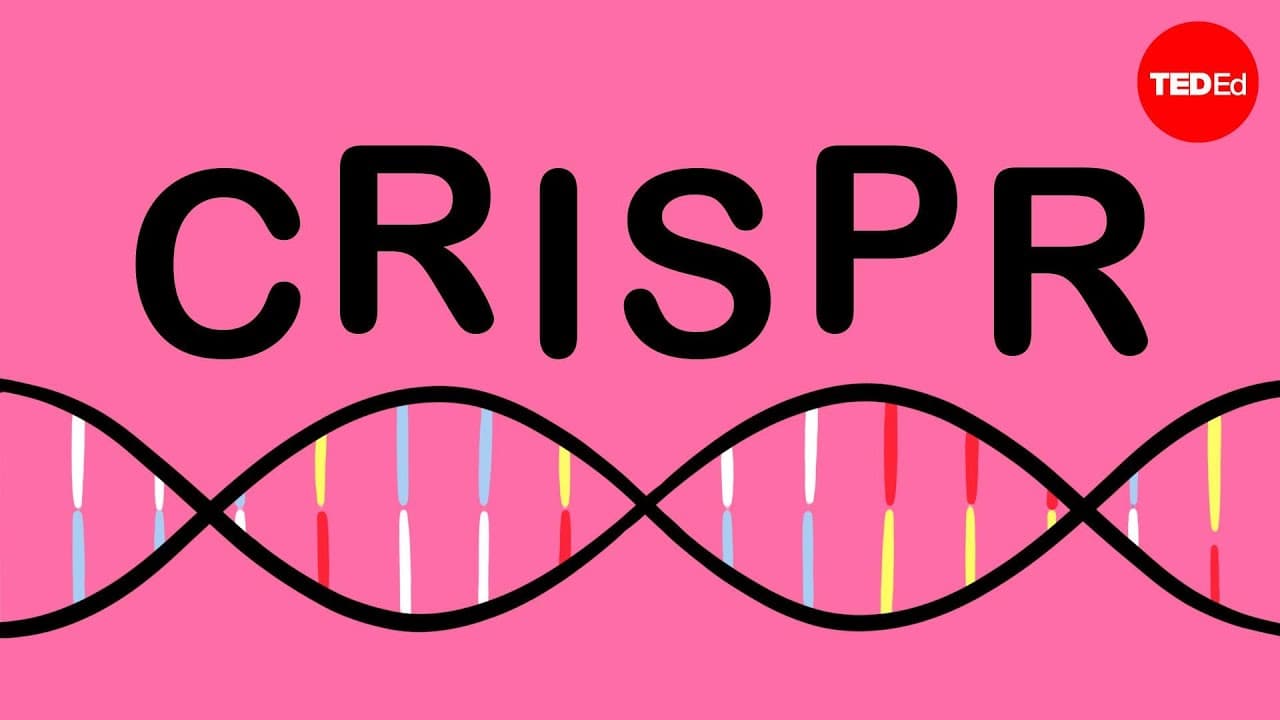
What Is CRISPR and How Does It Edit DNA?
TL;DR
CRISPR is a revolutionary gene-editing tool that allows precise alterations to DNA by using a natural bacterial immune system. It functions by employing guide RNA and Cas9 proteins to target specific genes, enabling scientists to correct genetic errors and create enhanced organisms. Its wide-ranging applications could lead to treatments for genetic diseases and advancements in agriculture.
Transcript
From the smallest single-celled organism to the largest creatures on earth, every living thing is defined by its genes. The DNA contained in our genes acts like an instruction manual for our cells. Four building blocks called bases are strung together in precise sequences, which tell the cell how to behave and form the basis for our every trait. ... Read More
Key Insights
- 👻 CRISPR is a revolutionary gene editing tool that allows scientists to alter DNA in organisms.
- 🧘 It is based on a natural bacterial immune system and can target and edit any DNA in almost any organism.
- 🛟 CRISPR has the potential to treat genetic diseases, enhance agricultural crops and animal populations, and serve as a powerful tool for studying the genome.
Install to Summarize YouTube Videos and Get Transcripts
Explore YouTube Video Summarizer or Get YouTube Transcript Extractor
Questions & Answers
Q: What is CRISPR and how does it work?
CRISPR is a gene editing tool that uses a natural bacterial immune system. It comprises short repetitive DNA sequences (CRISPRs) and proteins called Cas, which can cut out and destroy viral DNA. Scientists have harnessed this system to edit genes by designing a guide RNA to direct Cas9 to the target gene and snip the DNA.
Q: What are the potential applications of CRISPR?
CRISPR has numerous potential applications. It can create drought-resistant crops, prevent the spread of infectious outbreaks, and develop cures for genetic diseases. It could also be used to enhance plants and animals, create disease-resistant mosquitoes, and serve as a powerful tool for studying the genome.
Q: How does CRISPR repair DNA?
After Cas9 cuts the DNA, the repair process starts. Nonhomologous end joining (NHEJ) is the default repair process but often leads to mistakes, resulting in an unusable gene. However, scientists can introduce a separate sequence of template DNA to guide a more accurate repair process called homology directed repair (HDR).
Q: What are the challenges and ethical concerns associated with CRISPR?
CRISPR doesn't always make the intended changes and has unknown long-term implications. This raises ethical questions about using it in humans and other organisms. The potential for unintended consequences and the responsibility to use CRISPR wisely require careful consideration.
Summary & Key Takeaways
-
Every living thing is defined by its genes, and with advancements in gene editing tools like CRISPR, scientists can now change an organism's fundamental features in record time.
-
CRISPR is a natural process found in bacteria and archaea that uses repetitive DNA sequences (CRISPRs) and CRISPR-associated proteins (Cas) to defend against viruses.
-
By hijacking this bacterial immune system, scientists can use CRISPR to target and edit any DNA in almost any organism, making it a powerful gene editing tool with wide-ranging applications.
Read in Other Languages (beta)
Share This Summary 📚
Summarize YouTube Videos and Get Video Transcripts with 1-Click
Try YouTube Summary with ChatGPT & Claude or YouTube Transcript Generator
Explore More Summaries from TED-Ed 📚



Summarize YouTube Videos and Get Video Transcripts with 1-Click
Try YouTube Summary with ChatGPT & Claude or YouTube Transcript Generator