What Were the Key Challenges in Developing GPT-4.5?
TL;DR
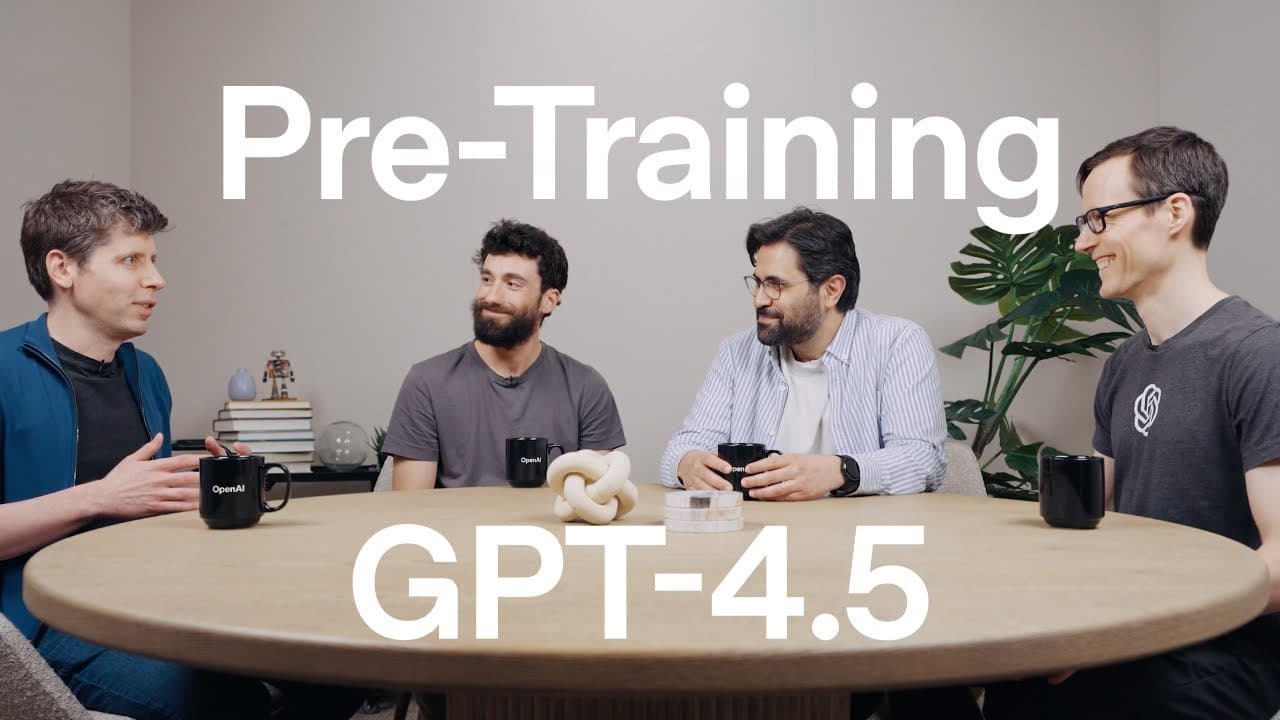
The development of GPT-4.5 involved extensive research over two years, during which the team faced numerous unforeseen technical challenges that required real-time adaptability. Key improvements in the model's intelligence came from efficiently leveraging data and compute resources, emphasizing the importance of collaborative problem-solving and proactive issue resolution throughout the training process.
Transcript
How many parameters is it still or do we not care? I think we should just Okay, so usually when we do these, it's to talk about a new product that we're about to launch. Um, but we're gonna do something a little bit different today, which is to talk about the research that went into our product. When we launched GPT4.5, we thought people were going... Read More
Key Insights
- 😤 The GPT-4.5 project drew on extensive research spanning two years, highlighting the collaborative efforts among various specialized teams.
- 😤 The team faced unexpected technical challenges that required them to adapt their strategies in real time during the training process.
- 🪡 Improvements in model performance are closely tied to advancements in data efficiency, emphasizing an ongoing need for algorithmic innovation.
- 🖐️ Scaling laws play a crucial role in the ability to produce more advanced AI models, suggesting a predictable trajectory for future developments.
- 😤 Successful model deployment relies on thorough planning, proactive issue resolution, and continuous collaboration among interdisciplinary teams.
- 💁 Lessons learned from the development of GPT-4.5 will inform the design and execution of future AI projects, creating pathways for increasingly sophisticated models.
- 😀 The experience emphasized the need for adaptability and innovation in approach when facing the challenges of large-scale AI training.
Install to Summarize YouTube Videos and Get Transcripts
Explore YouTube Video Summarizer or Get YouTube Transcript Extractor
Questions & Answers
Q: What were the initial expectations for GPT-4.5's reception?
The team anticipated positive feedback for GPT-4.5 but were surprised by the extent of user enthusiasm and satisfaction. Users described it as a highly improved model compared to GPT-4, indicating enhancements that were both obvious and nuanced. This feedback highlighted the importance of continuous evolution and user experience in AI development.
Q: Can you explain the collaborative process involved in creating GPT-4.5?
The development of GPT-4.5 involved extensive collaboration between various teams, including machine learning and system architecture specialists. The interdisciplinary approach commenced approximately two years prior to the launch, incorporating rigorous de-risking runs and planning. This teamwork ensured that all components worked seamlessly together during the project's execution, facilitating a successful outcome.
Q: What were some of the challenges faced during the training run?
The team encountered numerous challenges during the GPT-4.5 training run, primarily related to unexpected system failures and performance discrepancies. These issues required the team to balance between delaying the launch for further issue resolution and proceeding with identified risks. This dynamic approach emphasized the necessity of problem-solving and adaptability amid unforeseen complications.
Q: How did the team ensure the data efficiency during the training of the model?
Data efficiency was a major consideration in the training of GPT-4.5, encouraging algorithmic innovations to improve how the model absorbed information. The researchers discovered that as compute increased, the model's learning efficiency from the existing data became a bottleneck, demanding new strategies to maximize outcomes from the available resources while minimizing waste.
Q: How did the scaling laws influence the development of larger models like GPT-4.5?
Scaling laws indicated that larger models yield better performance, driving the decision to push the boundaries of compute resources and complexity. The consistent returns on increasing scale suggest a predictable pathway to enhancing model intelligence, emphasizing an approach of progressively testing and validating these laws through extensive iterative processes.
Q: What lessons were learned regarding model training from the GPT-4.5 experience?
The training team learned several vital lessons, including the complexities involved in scaling up model size and the necessity for thorough planning and adaptive methodologies to mitigate unforeseen issues. Additionally, they recognized that prior experiences greatly inform future efforts, refining their methodologies for increased efficiency and effectiveness in upcoming projects.
Summary & Key Takeaways
-
The discussion revolves around the intricate research and substantial effort that went into developing GPT-4.5, including collaboration among team members specializing in various areas like pre-tuning and data efficiency.
-
The team faced numerous unforeseen challenges during the training run, emphasizing the importance of adaptability and problem-solving in real-time to ensure successful deployment despite complications.
-
Key takeaways include the realization that improving model intelligence relies significantly on efficient use of data and compute, with insights suggesting future pathways for enhancing pre-training models' effectiveness.
Read in Other Languages (beta)
Share This Summary 📚
Summarize YouTube Videos and Get Video Transcripts with 1-Click
Try YouTube Summary with ChatGPT & Claude or YouTube Transcript Generator
Explore More Summaries from OpenAI 📚





Summarize YouTube Videos and Get Video Transcripts with 1-Click
Try YouTube Summary with ChatGPT & Claude or YouTube Transcript Generator