Why Are Particle Accelerators Used in Hospitals?
TL;DR
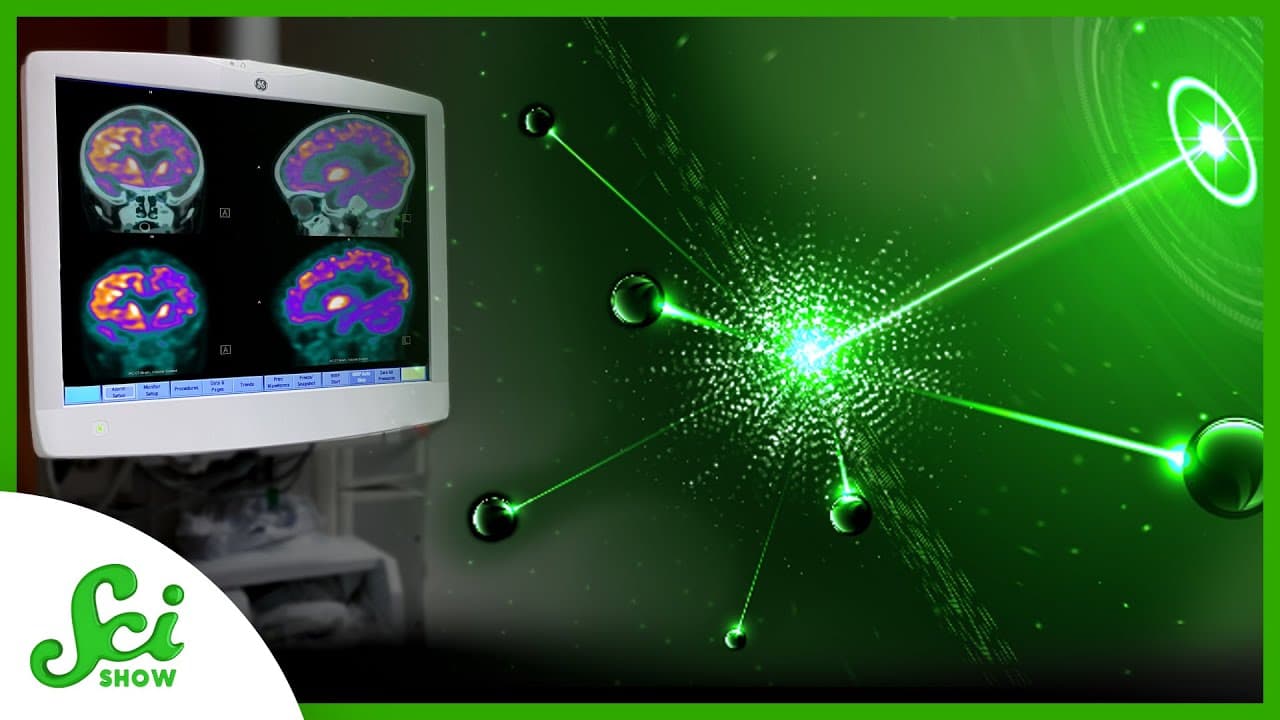
Particle accelerators, specifically cyclotrons, produce positron-emitting radiotracers like fluorodeoxyglucose (FDG) for PET scans, enabling doctors to visualize tumors and diagnose diseases. These radiotracers accumulate in areas with higher metabolic activity, such as tumors, allowing for precise medical imaging within a short lifespan of about 110 minutes.
Transcript
Thanks to CuriosityStream for supporting this episode! Go to CuriosityStream.com/SciShow to start streaming thousands of documentaries and nonfiction TV shows. [♪ INTRO] When doctors need to quickly identify tumors, diagnose heart diseases and even watch our brains at work, they use the by-products of something called radioactive decay. The decay c... Read More
Key Insights
- 😷 Radioactive isotopes that emit positrons are crucial for medical imaging techniques like PET scans, allowing doctors to detect and diagnose diseases.
- 🥳 The production of radiotracers is a time-sensitive process due to their short half-life and the need for fresh molecules to be made every day.
- 🫥 Radioactive decay and the accumulation of radiotracers in specific areas of the body create contrast in PET scans, making diseases and abnormalities more visible.
- 🗺️ The most commonly used radiotracer for PET scans is FDG, which is incorporated into the body through chemical reactions and travels to areas such as tumors.
- 🫀 Cyclotrons are used to create radioisotopes by accelerating and steering hydrogen atoms, enabling the production of positron-emitting radiotracers.
- 🛩️ Radioactive molecules used in PET scans emit small amounts of radiation that are not harmful to patients.
- 🥰 PET scans are a valuable tool for diagnosing various diseases, including cancer, heart disease, and Alzheimer's.
Install to Summarize YouTube Videos and Get Transcripts
Explore YouTube Video Summarizer or Get YouTube Transcript Extractor
Questions & Answers
Q: How do doctors use radioactive isotopes and PET scans to diagnose diseases?
Doctors use radioactive isotopes, known as positron-emitting radiotracers, in PET scans to detect and visualize tumors, heart diseases, and brain activity. The radiotracers accumulate in specific areas of the body, allowing doctors to identify abnormalities.
Q: How are radiotracers made and incorporated into the body?
Radiotracers are made by incorporating radioactive isotopes, such as fluorine-18, into chemical compounds like fluorodeoxyglucose (FDG). These compounds are then injected into the patient's body, where they are metabolized and accumulate in specific areas, helping doctors to identify and monitor diseases.
Q: Is radioactivity dangerous for patients undergoing PET scans?
The amount of radiation emitted by radiotracers used in PET scans is minimal and poses no significant risks to patients. The radioactive molecules have a short half-life, meaning that they decay quickly and only emit small amounts of radiation for a short period of time.
Q: What role does a cyclotron play in the production of radiotracers?
A cyclotron is a compact particle accelerator used to create a beam of positively charged hydrogen atoms (protons). Scientists use the cyclotron to speed up and steer negatively charged hydrogen atoms, creating a proton beam that is used to produce radioisotopes like fluorine-18.
Summary & Key Takeaways
-
Radioactive isotopes that emit positrons, called positron-emitting radiotracers, are used in PET scans to detect and visualize tumors and other abnormalities in the body.
-
The radiotracers are made by incorporating radioactive isotopes into chemical compounds, which accumulate in specific areas of the body, such as tumors, creating a contrast in radioactive decay.
-
The most commonly used radiotracer for PET scans is fluorodeoxyglucose (FDG), with a half-life of about 110 minutes, requiring quick production and administration to patients.
Read in Other Languages (beta)
Share This Summary 📚
Summarize YouTube Videos and Get Video Transcripts with 1-Click
Try YouTube Summary with ChatGPT & Claude or YouTube Transcript Generator
Explore More Summaries from SciShow 📚


Summarize YouTube Videos and Get Video Transcripts with 1-Click
Try YouTube Summary with ChatGPT & Claude or YouTube Transcript Generator