Products
Features
YouTube Video Summarizer
Summarize YouTube videos
Web & PDF Highlighter
Highlight web pages & PDFs
Chat with PDF
Ask any PDF questions with AI
Ask AI Clone
Chat with your highlights & memories
Audio Transcriber
Transcribe audio files to text
Glasp Reader
Read and highlight articles
Kindle Highlight Export
Export your Kindle highlights
Idea Hatch
Hatch ideas from your highlights
Integrations
Obsidian Plugin
Notion Integration
Pocket Integration
Instapaper Integration
Medium Integration
Readwise Integration
Snipd Integration
Hypothesis Integration
Apps & Extensions
Chrome Extension
Safari Extension
Edge Add-ons
Firefox Add-ons
iOS App
Android App
Discover
Discover
Ideas
Discover new ideas and insights
Articles
Curated articles and insights
Books
Book recommendations by great minds
Posts
Essays and notes from readers
Quotes
Inspiring quotes collection
Videos
Curated videos and summaries
Explore Glasp
Glasp Story
How we grew from 0 to 3 million users
Glasp Newsletter
Weekly insights and updates
Glasp Talk
Interview series with great minds
Glasp Blog
Latest news and articles
Glasp Use Cases
Learn how others use Glasp
Build & Support
Glasp API
Access Glasp's API for developers
MCP Connector
Connect Glasp to Claude & ChatGPT
Community
Glasp Reddit Community
Students
Student discount and benefits
FAQs
Frequently Asked Questions
AboutPricing
DashboardLog inSign up

3 Facts About Dust Mites You'll Wish You Never Knew
652.2K views
•
November 17, 2014
by
SciShow
YouTube video player
3 Facts About Dust Mites You'll Wish You Never Knew

TL;DR

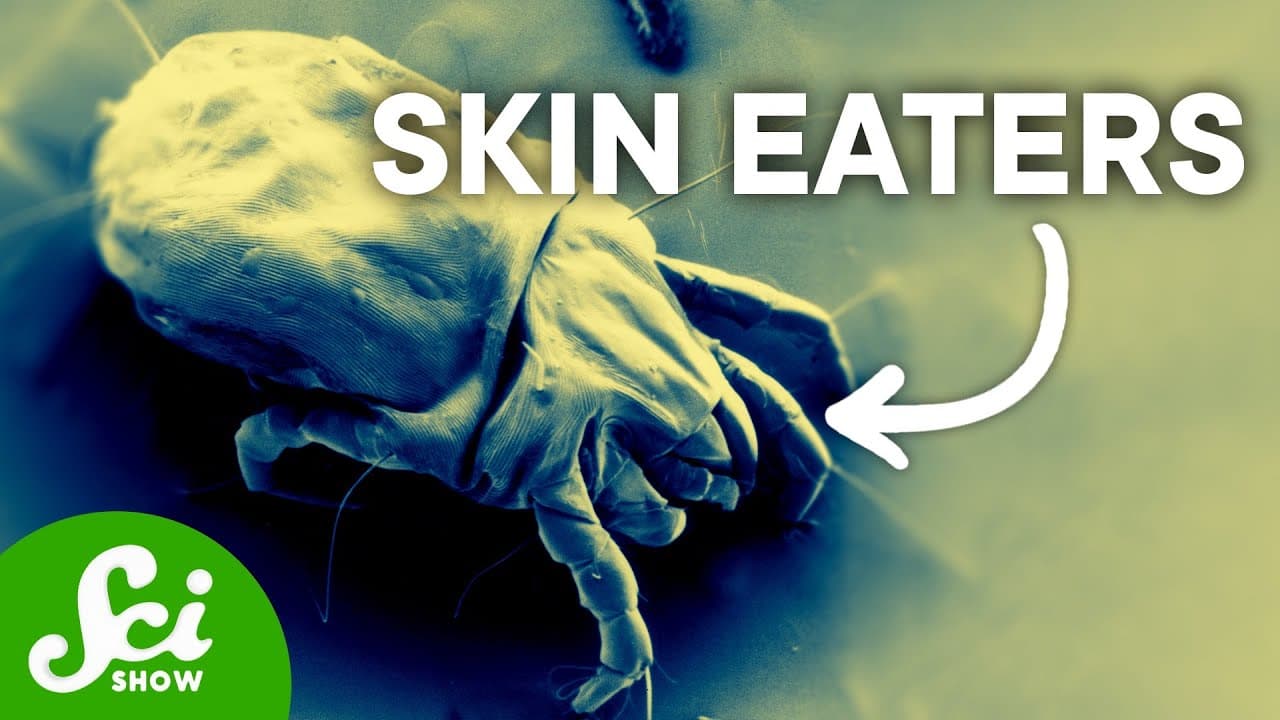
Dust mites are small arachnids that feed on dead skin cells and live in mattresses and pillows. Their feces contain enzymes that can cause allergic reactions in humans.

Transcript

As you probably have noticed from your existence on the planet as a human, there's dust everywhere. It's probably around you right now, and you might have heard that it is made of human skin cells. But that's not quite true. Some studies have found that more than 60% of household dust comes from outdoors, like pollen and dirt and sand and even tiny... Read More

Key Insights

  • ☄️ More than 60% of household dust comes from outdoor sources.
  • 😯 Dust mites feed on dead skin cells shed by humans.
  • ❓ Dust mite feces contain enzymes that can cause allergic reactions.
  • 🪡 Dust mites need at least 50% humidity to survive.
  • 🌸 Dust mites can gather together to decrease water loss during low humidity.
  • 😘 Dust mite populations decrease in colder months when humidity is lower.
  • #️⃣ There are methods to decrease dust mite numbers, but complete eradication is difficult.

Install to Summarize YouTube Videos and Get Transcripts

Explore YouTube Video Summarizer or Get YouTube Transcript Extractor

Questions & Answers

Q: What is dust made of?

Dust is mostly made up of outdoor particles like pollen and dirt, but it also contains dead skin cells and feces from dust mites.

Q: Why do dust mites live in mattresses and pillows?

Dust mites live in mattresses and pillows because they feed on human skin cells, which are shed during sleep.

Q: Can dust mite feces cause allergies?

Yes, dust mite feces contain proteases that can cause allergic reactions in humans, such as asthma and allergy symptoms.

Q: How can I reduce dust mite populations in my home?

Washing bedsheets and pillows in hot water, using mattress covers and pillowcases made of polyester, getting rid of carpets, and using vacuum cleaners with special filters can help reduce dust mite numbers.

Summary & Key Takeaways

  • Over 60% of household dust comes from outdoor sources such as pollen, dirt, sand, and meteorite particles.

  • Dust mites are microscopic arachnids that feed on human skin cells and their population can grow rapidly.

  • Dust mite feces contain proteases, which can cause allergic reactions such as wheezing, sneezing, and itching.


Read in Other Languages (beta)

English

Share This Summary 📚

Summarize YouTube Videos and Get Video Transcripts with 1-Click

Download browser extensions on:

Try YouTube Summary with ChatGPT & Claude or YouTube Transcript Generator

Explore More Summaries from SciShow 📚

What Penguin Bones Can Tell Us About Dying Glaciers thumbnail
What Penguin Bones Can Tell Us About Dying Glaciers
SciShow
A Timeline of Life on Earth: 4 Billion Years of History thumbnail
A Timeline of Life on Earth: 4 Billion Years of History
SciShow

Summarize YouTube Videos and Get Video Transcripts with 1-Click

Download browser extensions on:

Try YouTube Summary with ChatGPT & Claude or YouTube Transcript Generator

Apps & Extensions

  • Chrome Extension
  • Safari Extension
  • Edge Add-ons
  • Firefox Add-ons
  • iOS App
  • Android App

Key Features

  • YouTube Video Summarizer
  • Web & PDF Summarizer
  • Web & PDF Highlighter
  • Chat with PDF
  • Ask AI Clone
  • Audio Transcriber
  • Glasp Reader
  • Kindle Highlight Export
  • Idea Hatch

Integrations

  • Obsidian Plugin
  • Notion Integration
  • Pocket Integration
  • Instapaper Integration
  • Medium Integration
  • Readwise Integration
  • Snipd Integration
  • Hypothesis Integration

More Features

  • APIs
  • MCP Connector
  • Blog & Post
  • Embed Links
  • Image Highlight
  • Personality Test
  • Quote Shots
  • Open Graph Checker

Company

  • About us
  • Our Story
  • Blog
  • Community
  • FAQs
  • Job Board
  • Newsletter
  • Pricing
Terms

•

Privacy

•

Guidelines

© 2026 Glasp Inc. All rights reserved.
