What Makes Daenerys Targaryen a Good or Bad Leader?
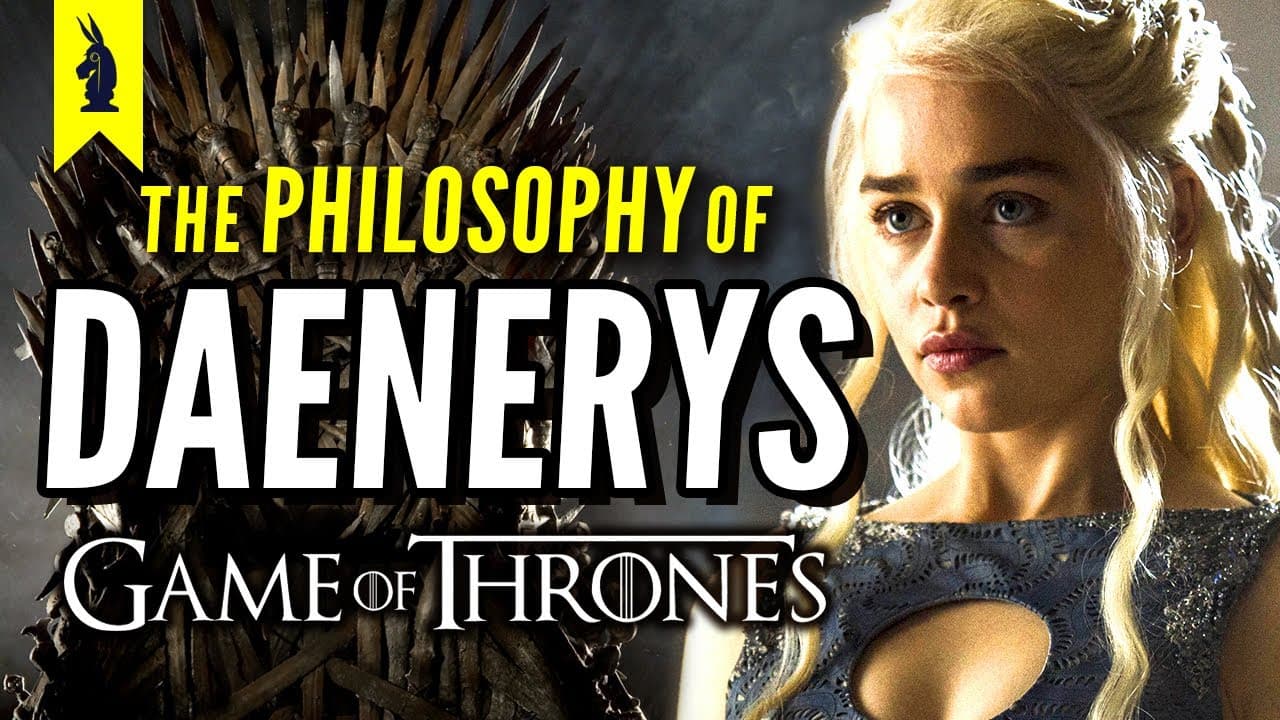
TL;DR
Daenerys Targaryen's leadership is characterized by strong charisma and a commitment to anti-slavery but often falters due to her rigid moral code and inability to adapt. While she earns public support, her lack of effective governance and failure to establish stable power structures undermine her achievements, leading to chaos in places like Slaver's Bay.
Transcript
Hey Wisecrack, Jared again. Today we’re talking about one fierce lady with a lot of names: Daenerys Stormborn of the House Targaryen, Mother of Dragons, First of Her Name, the Unburnt, Queen of the Andals and the First Men, Khaleesi of the Great Grass Sea, Breaker of Chains, and Subject of A Thousand Fantasies. "Take off your clothes." I don’t need... Read More
Key Insights
- 💪 Daenerys demonstrates strong charisma and vision but struggles with implementing sustainable governance.
- 🥅 Her moral absolutism can undermine her political goals, revealing a tension between idealism and practicality.
- 🖤 Machiavelli's concept of Virtù highlights the necessity of adaptability in leadership, which Daenerys lacks in critical scenarios.
- 🇨🇫 Public support is essential; however, her approach often alienates crucial factions, such as former slave masters.
- 😉 Daenerys's dramatic tactics may win battles but do not ensure long-term loyalty or governance.
- 📏 She exhibits a tendency to prioritize personal glory over community welfare, impacting her effectiveness as a ruler.
- 🥺 The analysis implies that her entitlement to rule leads to neglect of a coherent strategy for governance.
Install to Summarize YouTube Videos and Get Transcripts
Explore YouTube Video Summarizer or Get YouTube Transcript Extractor
Questions & Answers
Q: What philosophical framework is used to evaluate Daenerys's leadership?
The evaluation is grounded in Niccolò Machiavelli's political philosophy, particularly his discussions on Virtù, liberty, and the importance of public support. Machiavelli's texts reflect on what constitutes good governance, focusing on adaptability in leadership and how decisions should be made for both the state and the individuals governed.
Q: How does Daenerys's moral compass impact her ruling style?
Daenerys's uncompromising adherence to her moral principles results in significant challenges as a ruler. While her anti-slavery stance is admirable, it often clouds her decision-making process, leading to rigid positions that disregard necessary compromises. This dogmatism can jeopardize the stability and welfare of the communities she aims to protect.
Q: What role does Virtù play in assessing Daenerys's effectiveness?
Virtù, as defined by Machiavelli, encompasses the ability to adapt and respond effectively to changing circumstances. In Daenerys's case, her leadership style reflects a struggle to adapt her moral convictions in the face of political realities, which leads to missed opportunities for consolidating power and ensuring the well-being of her subjects.
Q: In what ways does Daenerys show a lack of foresight in governance?
Daenerys demonstrates poor foresight by failing to create sustainable power structures after liberating cities like Yunkai and Astapor. Instead of implementing systems to ensure the continuation of freedom, she leaves, culminating in a regression to former oppressive practices. Her reliance on visual spectacle rather than strategic governance highlights her lack of planning.
Q: How does Daenerys's view of herself influence her actions?
Daenerys’s belief in her divine right to rule contributes to her precarious leadership. She often emphasizes her ancestry and entitlement to the Iron Throne, neglecting the importance of actively earning and maintaining the loyalty of her subjects through governance that addresses their immediate needs and concerns.
Q: What strategies does Daenerys employ to gain support from her followers?
Daenerys employs bold and dramatic strategies, such as displaying her power through fire and dragons, to garner loyalty from groups like the Dothraki and the Unsullied. However, while these tactics initially secure support, they do not replace the need for comprehensive governance or consider the long-term implications of her rule.
Q: How does her leadership compare to that of Tyrion Lannister?
Tyrion Lannister embodies a pragmatic approach grounded in the principles of Virtù, demonstrating flexibility and a willingness to negotiate for stability. In contrast, Daenerys frequently holds to her rigid moral code, limiting her effectiveness in leadership and governance, which ultimately leads to conflict and instability in her territories.
Q: Overall, how does the analysis grade Daenerys as a leader?
The analysis assigns Daenerys a C+ grade in leadership, citing her struggle with key aspects of Virtù, her failure to create stable governance after conquest, and a tendency toward self-serving motives rather than the common good of her people. Her effectiveness diminishes in the shift from conquest to governance, indicating a gap between her identity as a conqueror and a ruler.
Summary & Key Takeaways
-
The analysis critiques Daenerys Targaryen's leadership qualities by evaluating them through the lens of Machiavelli’s principles, focusing on her ability to adapt, her moral absolutism, and overall effectiveness as a ruler.
-
While she earns admiration for her stance against slavery and her charismatic speeches, her inability to establish stable power structures results in the collapse of her achievements in locations like Slaver's Bay.
-
Daenerys's rigid moral code and limited flexibility in negotiations often undermine her goals, indicating a struggle between her commands of idealism and the harsh realities of governance.
Read in Other Languages (beta)
Share This Summary 📚
Summarize YouTube Videos and Get Video Transcripts with 1-Click
Try YouTube Summary with ChatGPT & Claude or YouTube Transcript Generator