What Was the New Deal's Impact on America?
TL;DR
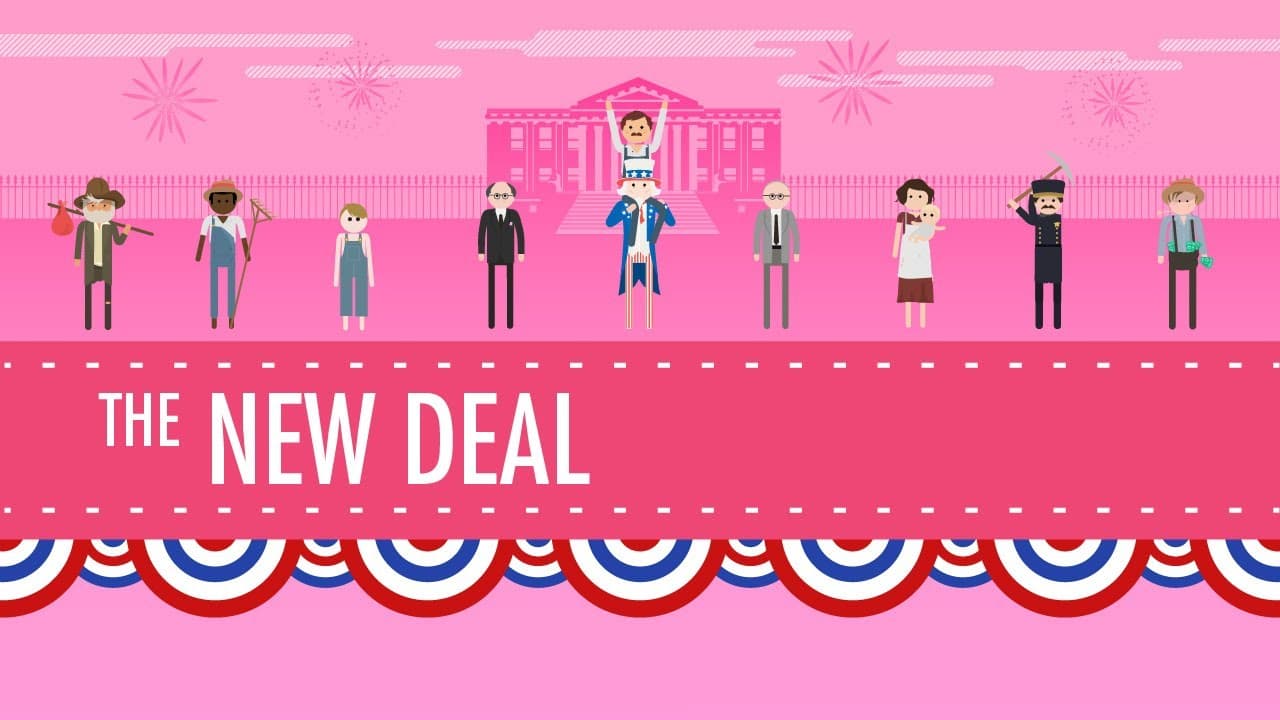
The New Deal was a series of programs and reforms implemented by FDR to address the Great Depression. It redefined the role of the federal government, leading to significant political realignments and setting the stage for modern American liberalism. Although it didn't end the Depression, it established social security and labor rights, fundamentally altering Americans' expectations of government.
Transcript
Episode 34 – The New Deal Hi, I’m John Green, this is CrashCourse U.S. history, and today we’re going to get a little bit controversial, as we discuss the FDR administration’s response to the Great Depression: the New Deal. That’s the National Recovery Administration, by the way, not the National Rifle Association or the No Rodents Allowed Club, wh... Read More
Key Insights
- The New Deal was a response to the Great Depression, aiming to provide relief, recovery, and reform.
- FDR's administration implemented the New Deal, but Congress passed the necessary laws.
- The New Deal led to a realignment in the Democratic Party, forming the New Deal coalition.
- Key programs included Social Security, the National Industrial Recovery Act, and the Works Progress Administration.
- The New Deal did not end the Depression; World War II's government spending did.
- The New Deal changed Americans' expectations, making government intervention in economic crises standard.
- Supreme Court challenges led to FDR's court-packing plan, which faced backlash but ultimately shifted court decisions.
- The New Deal's legacy includes expanded government roles and the concept of economic security as a form of liberty.
Install to Summarize YouTube Videos and Get Transcripts
Explore YouTube Video Summarizer or Get YouTube Transcript Extractor
Questions & Answers
Q: What was the purpose of the New Deal?
The New Deal aimed to address the economic hardships of the Great Depression through a series of government programs and reforms. Its goals were to provide immediate relief to the poor, stimulate economic recovery, and implement reforms to prevent future depressions. It fundamentally changed the role of the federal government in American life.
Q: How did the New Deal change the Democratic Party?
The New Deal led to the formation of the New Deal coalition, which brought together urban progressives, unionized workers, African Americans, and other groups under the Democratic Party. This realignment shifted the party's focus towards more active government intervention in the economy and social welfare, solidifying its base among diverse constituencies.
Q: What were the key programs of the New Deal?
Key programs of the New Deal included the Social Security Act, which provided retirement benefits and unemployment insurance, the National Industrial Recovery Act, which aimed to stimulate industrial recovery, and the Works Progress Administration, which created jobs through public works projects. These programs sought to provide economic security and reduce unemployment.
Q: Did the New Deal end the Great Depression?
The New Deal did not end the Great Depression. While it provided significant relief and reforms, unemployment remained high until World War II, when massive government spending for the war effort ultimately ended the Depression. However, the New Deal's legacy includes lasting social programs and a shift in government responsibility for economic welfare.
Q: What was the impact of the Social Security Act?
The Social Security Act of 1935 established a system of unemployment insurance, aid to the disabled, and retirement benefits funded by payroll taxes. It marked a significant transformation in the relationship between the federal government and citizens, providing a safety net during economic hardship and establishing the principle of government responsibility for social welfare.
Q: How did the New Deal affect labor rights?
The New Deal significantly advanced labor rights through the Wagner Act, which guaranteed workers the right to unionize and bargain collectively. It also established the National Labor Relations Board to address unfair labor practices. These measures empowered workers and contributed to the growth of union membership, shaping labor relations in the United States.
Q: What was the controversy surrounding FDR's court-packing plan?
FDR proposed the court-packing plan to add more justices to the Supreme Court after it struck down several New Deal laws. Although constitutional, the plan faced backlash as a blatant power grab, leading to political controversy. Ultimately, the court began upholding New Deal legislation, and the plan was dropped, but it marked a significant moment in judicial politics.
Q: How did the New Deal change American expectations of government?
The New Deal shifted American expectations by establishing the federal government's role in providing economic security and addressing social welfare. Before the New Deal, government intervention was limited; afterward, citizens expected government action during economic crises. This change laid the foundation for modern liberalism, emphasizing government responsibility for citizens' well-being.
Summary & Key Takeaways
-
The New Deal, initiated by FDR, aimed to combat the Great Depression through relief, recovery, and reform programs. It redefined the federal government's role in citizens' lives, establishing social security and labor rights. Although it didn't end the Depression, it significantly altered political landscapes and public expectations of government intervention.
-
FDR's New Deal led to the formation of the New Deal coalition, bringing together diverse groups under the Democratic Party. Key programs, such as the Social Security Act and Works Progress Administration, aimed to provide economic security and job creation, although they faced challenges from the Supreme Court.
-
The New Deal's long-term impact includes changing the perception of government responsibility during economic downturns and shifting the political landscape. While it didn't end the Depression, it laid the groundwork for modern liberalism, emphasizing government action to ensure economic stability and security for citizens.
Read in Other Languages (beta)
Share This Summary 📚
Summarize YouTube Videos and Get Video Transcripts with 1-Click
Try YouTube Summary with ChatGPT & Claude or YouTube Transcript Generator
Explore More Summaries from CrashCourse 📚
Summarize YouTube Videos and Get Video Transcripts with 1-Click
Try YouTube Summary with ChatGPT & Claude or YouTube Transcript Generator