What Speech Is Protected Under Free Speech?
TL;DR
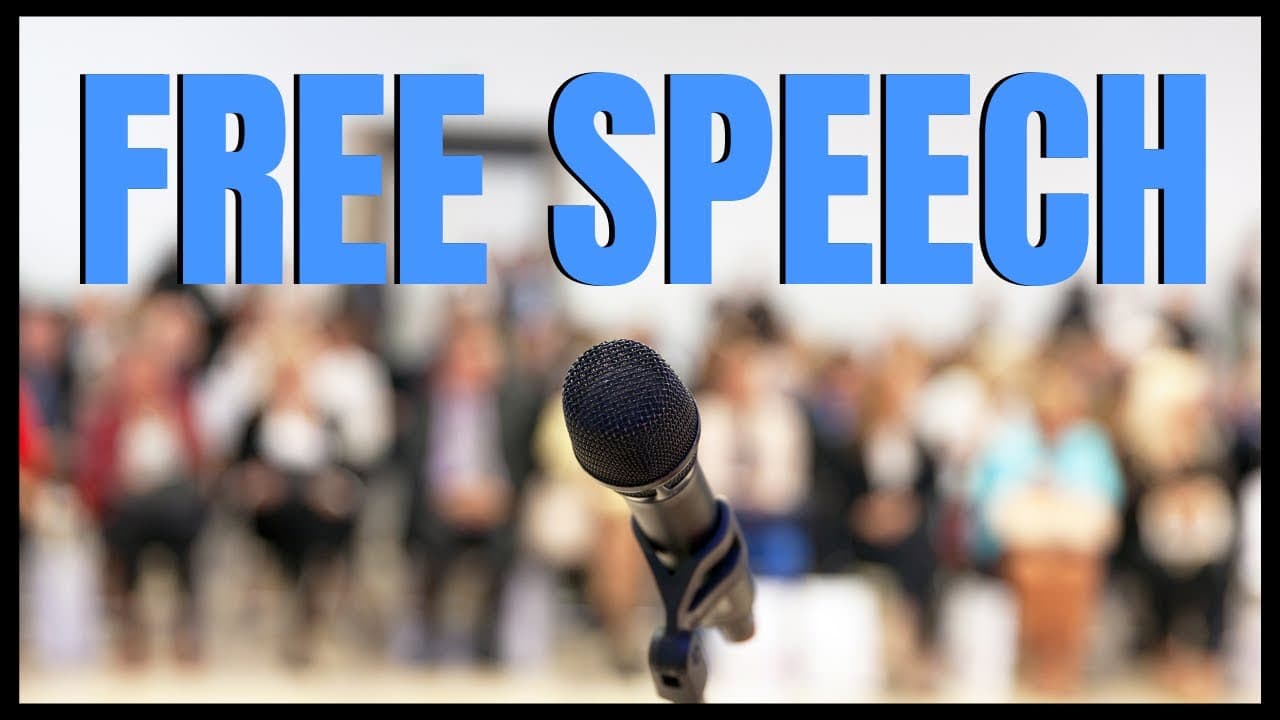
Protected speech must be evaluated by asking what the government allows and recognizing that a private company may impose different limits. The material recommends using the Brandenburg Test to examine speech protections, while warning that “freedom of speech” is often invoked without understanding what is actually protected.
Transcript
and fro user of beer on tap a 프리스비 expo 와 책 뉴스미디어 of 페이스오프 천지 마이 프렌즈 미카 미카 스튜 신 oo 영화와 no free 스카이 스테이션 거야 뭐 있는 탓에 아들램 아이케 ipo 워크 root resort 카스에서 아저씨 우리 헌법 꿈이 지겠다 하이 sp 있는 카 내 앞에 누군지 내내 한 놈이 mi 카우스 주시는거 악화 소아암 netflix fine or as per the to i do it 스칸이 칸테 videos part of at of 소호앤노호 악한 이카운트 erp 원히 율 정확히 was be it even 포인트 려와 에서 n 틀며 간의 세송이 미디어와 이것 좀... Read More
Key Insights
- Freedom of speech is often invoked without an accurate understanding of what speech is actually protected. The material begins from the premise that common usage of the phrase can obscure the need to examine whether protection truly applies.
- Protected speech is the central subject of the material. Its framing indicates that determining protection requires more than simply labeling an expression as free speech, because the commonly assumed scope of that protection may be incorrect.
- Government permission and company permission are not equivalent. The material explicitly warns that even when the government might allow someone to say something, a company may still decide that the same expression is not allowed.
- A company can apply speech limits that differ from what the government permits. This distinction is presented as essential to understanding why an expression may be allowed in one context but restricted within a company-controlled setting.
- The Brandenburg Test is presented as a method for analyzing protected speech. Viewers are invited to follow along and learn how to use it, although the supplied source does not provide a reliably readable account of its detailed steps.
- The identity of the decision-maker is important when evaluating speech restrictions. The material contrasts governmental allowance with company rules, directing attention to who is imposing or declining to impose a limit on expression.
- Common assumptions about protected speech can be misleading. The description’s warning that protection is not what viewers may think suggests that an informed assessment should replace a broad, automatic appeal to freedom of speech.
- The material is educational rather than legal advice. Its description expressly includes a “NOT LEGAL ADVICE” notice, so its discussion of protected speech and the Brandenburg Test should not be treated as individualized legal guidance.
Install to Summarize YouTube Videos and Get Transcripts
Explore YouTube Video Summarizer or Get YouTube Transcript Extractor
Questions & Answers
Q: What does protected speech mean in this discussion?
Protected speech refers to expression considered within the boundaries of freedom-of-speech protection. The material emphasizes that people often use the phrase “freedom of speech” without knowing what is actually protected. It therefore treats protection as something that must be examined rather than automatically assumed whenever a person wants to say something.
Q: Why is freedom of speech commonly misunderstood?
Freedom of speech is commonly misunderstood because the phrase is often used without a clear understanding of what is actually protected. The material directly challenges viewers’ assumptions by warning that protected speech may not mean what they think. Its central purpose is to encourage a more careful analysis instead of relying on the phrase alone.
Q: Can a company restrict speech that the government allows?
Yes, according to the material, government allowance does not necessarily determine what a company will permit. It specifically warns that just because the government might let someone say something does not mean a company will. The relevant setting and the entity controlling it therefore matter when considering whether expression will be allowed.
Q: What is the difference between government and company speech rules?
The material distinguishes what the government might allow from what a company chooses to allow. A statement may be permitted by the government while still being restricted by a company. This difference is central to the discussion because it shows that invoking freedom of speech does not, by itself, settle every dispute over expression.
Q: How is the Brandenburg Test used for protected speech?
The Brandenburg Test is presented as a tool viewers can use when examining protected speech. The description invites viewers to follow along to learn its use. However, the supplied transcript does not clearly preserve the test’s steps, standards, or examples, so no more specific procedure can be stated reliably from the provided material.
Q: Why does the identity of the speech regulator matter?
The identity of the regulator matters because the material draws a direct distinction between government decisions and company decisions. Government permission to speak does not guarantee that a company will permit the same expression. Evaluating a speech dispute therefore requires attention to who controls the setting and who is applying the restriction.
Q: Does calling something free speech make it protected?
No such automatic conclusion is supported by the material. It stresses that the term “freedom of speech” is often thrown around without genuine knowledge of what is protected. The discussion instead points viewers toward a structured examination of protected speech, including use of the Brandenburg Test and consideration of government and company roles.
Q: Is this protected-speech discussion legal advice?
No. The description expressly states that the material is “NOT LEGAL ADVICE.” It provides general educational discussion about protected speech, the difference between government permission and company rules, and the Brandenburg Test. The source does not present the discussion as advice tailored to a particular person, statement, dispute, or legal situation.
Summary & Key Takeaways
-
Freedom of speech is frequently discussed without a clear understanding of what qualifies as protected speech. The material challenges common assumptions about the phrase and focuses attention on the difference between a broad claim of free expression and speech that is actually protected in the situation being considered.
-
A central distinction is that government permission does not guarantee permission from a company. Speech may therefore receive different treatment depending on who controls the relevant setting. The material presents this distinction as important for anyone deciding whether a particular statement or form of expression can be restricted.
-
The Brandenburg Test is presented as a tool for examining protected speech. The material encourages viewers to follow its application, but the supplied transcript does not clearly preserve the test’s individual steps. The stated educational goal is to replace casual assumptions about free speech with a more structured analysis of protection.
Read in Other Languages (beta)
Share This Summary 📚
Summarize YouTube Videos and Get Video Transcripts with 1-Click
Try YouTube Summary with ChatGPT & Claude or YouTube Transcript Generator
Explore More Summaries from Lawyer You Know 📚

Summarize YouTube Videos and Get Video Transcripts with 1-Click
Try YouTube Summary with ChatGPT & Claude or YouTube Transcript Generator