The Nativity in Art - The Rt Hon the Lord Richard Harries
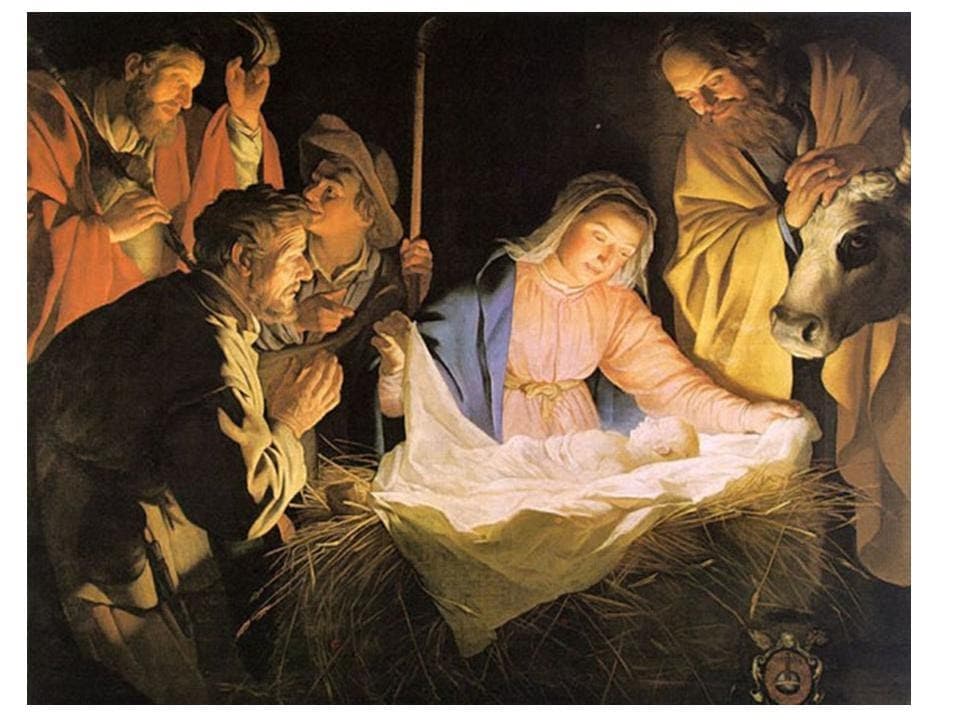
TL;DR
The Nativity in art developed by joining Christian belief with earlier symbols, biblical interpretation, and Roman culture. Lord Richard Harries examines a funeral plaque dated 330, where Mary, Joseph, and three Magi appear, and explains how the star and wise men conveyed Christ’s triumph over ancient magical power. Read on for the artwork’s details, the history of halos, and the origins of Christmas dating.
Transcript
good afternoon everybody just one or two points uh from uh from last time uh we had a bit of a discussion didn't we uh about when uh Halos first started to appear in Christian art as suggested soort of late fourth early fifth century and that was basically uh correct um but I I I my authorities suggest that the very earliest Halo is on an ivory pla... Read More
Key Insights
- 🥰 The earliest known depiction of the Nativity in Christian art dates back to the 4th century, with an ivory plaque of the Ascension of Christ.
- 😇 The concept of the halo in Christian art originated in earlier cultures and was later adopted by the Romans and the Christian church.
- 🥰 The depiction of the Nativity in Christian art has varied across different cultures and time periods, with influences from Byzantine, Renaissance, and modern art styles.
- 😒 The use of animals in Nativity scenes carries symbolic meanings, representing the presence of Christ and alluding to biblical references.
- 😒 The tradition of depicting the Nativity expanded through the use of mediums like tapestries, prints, and stained glass, allowing for wider accessibility and personal devotion.
- 🥰 The theme of the Nativity in Christian art often conveyed theological ideas, such as the incarnation of Christ and the redemption of humankind.
- 🧑🎨 The representation of the Nativity increasingly included elements of social and cultural context, reflecting the beliefs and practices of the artists and their communities.
Install to Summarize YouTube Videos and Get Transcripts
Explore YouTube Video Summarizer or Get YouTube Transcript Extractor
Questions & Answers
Q: How did the Nativity develop as a subject in early Christian art?
Early Christian artists combined figures from the Nativity story with biblical symbolism and features familiar to Roman viewers. A funeral plaque dated 330 shows Mary seated, three Magi approaching, Joseph pointing to a star, and the Roman woman Severa beside the scene.
Q: What early Nativity artwork does Lord Richard Harries discuss?
He discusses a funeral plaque made for a woman named Severa and dated to 330. Found in the Catacomb of Priscilla beneath Rome, it was held in the Vatican’s Museum of Christian Art.
Q: Who appears in the Nativity scene on Severa’s funeral plaque?
Mary sits on a basket seat while three Magi, astrologers, or wise men approach her. Joseph points toward a star, and Severa stands to one side in the clothing of a prosperous Roman.
Q: What do the Magi symbolize in this early Christian artwork?
The Magi represent seers or wise men laying their knowledge, wisdom, and gifts before Christ. Harries says early Christians understood them as symbolizing the magical power of the ancient world being broken and brought to Christ’s feet.
Q: What biblical passage helps explain the star in the Nativity image?
Harries connects the star with Numbers 24:17, where Balaam blesses Israel instead of cursing it. The passage foretells that a star will come forth from Jacob and a comet will arise from Israel.
Q: When did halos first appear in Christian art?
Harries places their adoption in Christian iconography around the late fourth or early fifth century. He identifies the earliest halo cited by his sources on an ivory plaque of the Ascension of Christ dated about 400.
Q: Where did the halo symbol originate before Christian artists adopted it?
The idea of placing halos on gods first emerged in India and China, according to Harries. Romans later used it in Hellenistic times for gods, especially sun gods or figures associated with the sun, before Roman emperors and the Christian church adopted it in the fourth century.
Q: Why did December 25 become the date associated with Christ’s birth?
The earliest mention Harries gives for December 25 as Christ’s birthday is 336. He explains that the date was eventually adopted partly because it coincided with Roman midwinter observances connected with Sol Invictus and followed the Saturnalia beginning on December 17, allowing the fourth-century Christian church to appropriate or “baptize” established festivals.
Summary & Key Takeaways
-
Christian art depicting the Nativity has evolved over time, with the first known depiction dating back to the 4th century.
-
The concept of the halo in Christian art was appropriated from earlier cultures, such as India and China, and became a prominent symbol in Roman and Christian iconography.
-
The depiction of the Nativity varied in different cultures and time periods, with influences from Byzantine, Renaissance, and modern art styles.
Read in Other Languages (beta)
Share This Summary 📚
Summarize YouTube Videos and Get Video Transcripts with 1-Click
Try YouTube Summary with ChatGPT & Claude or YouTube Transcript Generator
Explore More Summaries from Gresham College 📚


Summarize YouTube Videos and Get Video Transcripts with 1-Click
Try YouTube Summary with ChatGPT & Claude or YouTube Transcript Generator