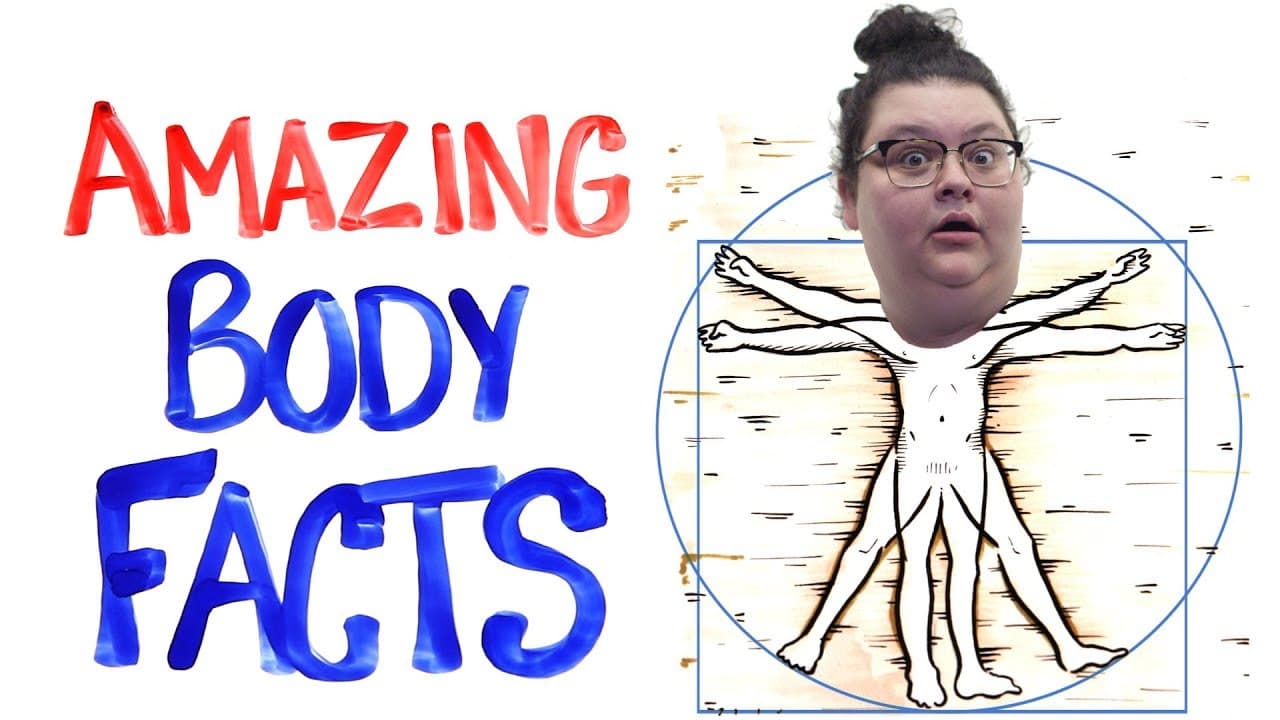
YOUR BODY IS AMAZING ft. Christine Sydelko
TL;DR
The human body is composed of trillions of cells and exhibits incredible abilities and complexities.
Transcript
Did you know that you are made of trillions of cells but only around 200 different types? For example, the cells inside your cheek are made up of stratified squamous epithelium cells designed to handle constant abrasion. These type of cells are not only in your cheeks, but also in your vagina and anus as well. Hey guys, I'm Christine Sydelko and I'... Read More
Key Insights
- 🅰️ The human body is composed of trillions of cells, but only around 200 different types.
- 🍵 Cells in the cheeks, vagina, and anus are specialized to handle constant abrasion.
- ❓ Fetal Maternal Microchimerism is a process where fetal cells can persist in the mother's tissues for years.
- ❓ The transfer of fetal cells to the mother during pregnancy may have evolutionary benefits.
- 😤 The human body has incredible information storage capabilities, with the binary code equivalent of nose receptors being 46 petabytes.
- 🥹 All the cells in the human body combined hold an immense amount of information, totaling 91.44 zettabytes.
- 👶 Fetal Maternal Microchimerism showcases the interconnectedness between mother and baby during pregnancy.
Install to Summarize YouTube Videos and Get Transcripts
Explore YouTube Video Summarizer or Get YouTube Transcript Extractor
Questions & Answers
Q: What type of cells are found in the cheeks, vagina, and anus?
The cells in these areas are called stratified squamous epithelium cells, which are designed to handle constant abrasion.
Q: What is Fetal Maternal Microchimerism?
Fetal Maternal Microchimerism is the process where fetal cells can transfer to the mother during pregnancy. These cells can persist in maternal tissues for decades.
Q: Why do fetal cells transfer to the mother during pregnancy?
The exact reason is unclear, but one hypothesis suggests that the transfer of fetal cells to the mother may increase the baby's chances of survival.
Q: What is the significance of the first opening that develops in an embryo being the anus?
The fact that the first opening developed is the anus classifies humans as Deuterostomes, similar to sea urchins, and showcases the incredible diversity of life.
Summary & Key Takeaways
-
The human body is made up of trillions of cells, with only around 200 different types.
-
The cells in the cheeks, vagina, and anus are stratified squamous epithelium cells, designed to handle constant abrasion.
-
During pregnancy, fetal cells can transfer to the mother, a process known as Fetal Maternal Microchimerism.
Read in Other Languages (beta)
Share This Summary 📚
Summarize YouTube Videos and Get Video Transcripts with 1-Click
Try YouTube Summary with ChatGPT & Claude or YouTube Transcript Generator
Explore More Summaries from AsapSCIENCE 📚



Summarize YouTube Videos and Get Video Transcripts with 1-Click
Try YouTube Summary with ChatGPT & Claude or YouTube Transcript Generator