What Is SEO and Why Is It Important for Websites?
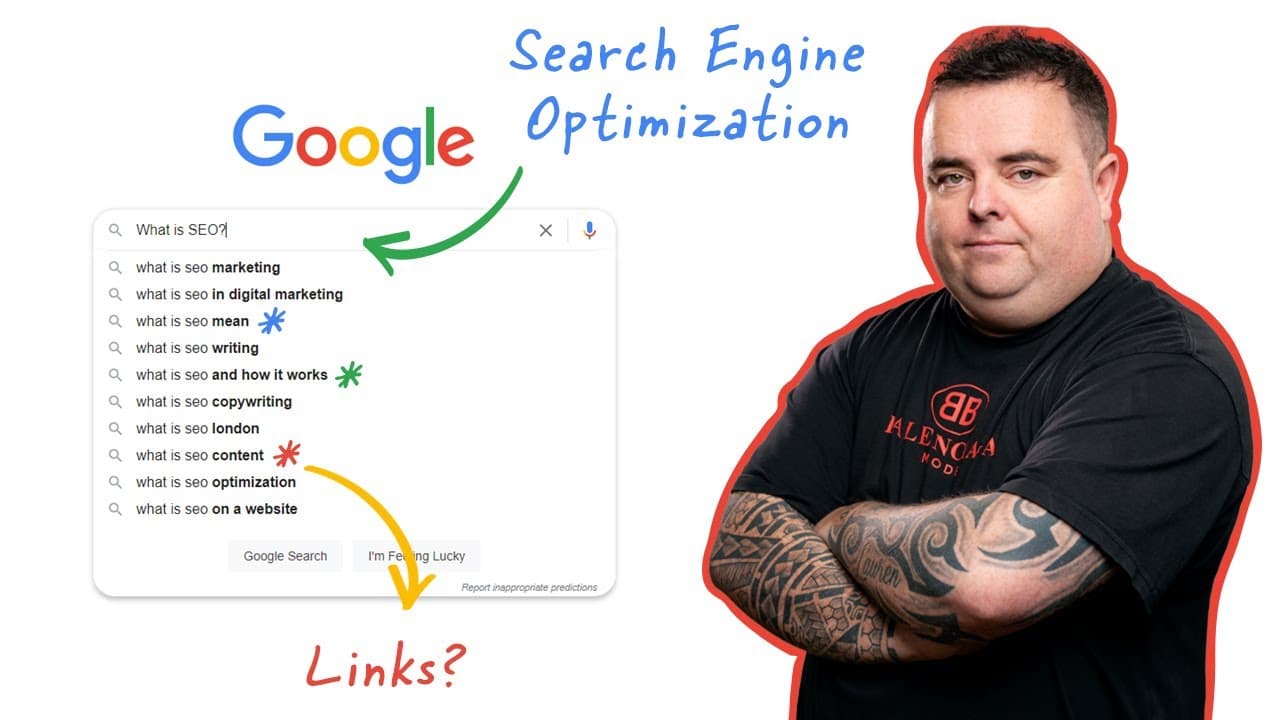
TL;DR
SEO, or Search Engine Optimization, is crucial for improving a website's visibility in search engine results by focusing on high-quality content and effective link-building strategies. While elements like user engagement and site speed are gaining importance, quality content and relevant links remain the foundational factors for successful SEO.
Transcript
So what is SEO is a question that we always get and regularly when I talk to people in the outside world they're like what is it you do. You say SEO and they're like, what is that and that's a very common question. Obviously, for anyone starting out, you guys will know what SEO is; search engine optimization. But I want to go into what it is, w... Read More
Key Insights
- SEO, or Search Engine Optimization, aims to improve website rankings on search engines like Google by focusing on content and links.
- The foundations of SEO include having a well-hosted website with a good domain name and design, followed by strong content and link strategies.
- Google's algorithm changes are not aimed at penalizing quality websites but rather at eliminating spam and low-quality content.
- Content and links remain the most crucial elements of SEO, though factors like user engagement and site speed have gained importance.
- SEO strategies should focus on quality and relevance, rather than minor technical details that have minimal impact on overall performance.
- Good SEO requires understanding what content to create, how much to write, and which keywords to use, often aided by content analysis tools.
- Many experienced SEO practitioners still struggle with on-page SEO due to a lack of proper tools, processes, and scalability strategies.
- A successful SEO approach involves focusing on effective strategies that work, such as quality content and links, rather than obsessing over minor technical metrics.
Install to Summarize YouTube Videos and Get Transcripts
Explore YouTube Video Summarizer or Get YouTube Transcript Extractor
Questions & Answers
Q: What is the primary goal of SEO?
The primary goal of SEO is to improve a website's ranking on search engines like Google. By optimizing content and building quality links, a website can attract more traffic, generate leads, and ultimately increase revenue. SEO focuses on making a website more visible and accessible to users searching for relevant information.
Q: How does Google's algorithm affect SEO?
Google's algorithm affects SEO by determining how websites are ranked in search results. While the algorithm undergoes regular updates, these changes aim to eliminate spam and low-quality content, not to penalize quality websites. SEO strategies must adapt to these changes by focusing on quality content and relevant links.
Q: What are the foundational elements of SEO?
The foundational elements of SEO include having a well-hosted website with a good domain name and design, followed by strong content and link-building strategies. These elements form the basis of an effective SEO approach, helping a website rank higher in search engine results and attract more traffic.
Q: Why are content and links important in SEO?
Content and links are important in SEO because they are the primary factors that search engines use to evaluate a website's relevance and authority. Quality content provides valuable information to users, while links from reputable sources signal trustworthiness. Together, they help improve a website's search engine ranking.
Q: What should be the focus of an effective SEO strategy?
An effective SEO strategy should focus on creating high-quality, relevant content and building strong, authoritative links. While technical aspects like site speed and user engagement are important, the core focus should remain on content and links, as these have the most significant impact on search engine rankings.
Q: How can content analysis tools aid in SEO?
Content analysis tools aid in SEO by providing insights into what content to create, how much to write, and which keywords to use. These tools help optimize content for search engines, ensuring that it meets user needs and aligns with SEO best practices, ultimately improving a website's ranking and visibility.
Q: What challenges do SEO practitioners face with on-page SEO?
SEO practitioners face challenges with on-page SEO due to a lack of proper tools, processes, and scalability strategies. Many struggle to effectively optimize content and use the right techniques, which can hinder their ability to improve rankings and drive traffic. Addressing these challenges requires a focus on effective tools and processes.
Q: Why is it important to focus on effective SEO strategies?
Focusing on effective SEO strategies is important because it ensures that efforts are directed towards activities that drive results, such as creating quality content and building strong links. By avoiding distractions from minor technical details, practitioners can achieve better rankings, attract more traffic, and ultimately increase revenue.
Summary & Key Takeaways
-
SEO is the process of optimizing a website to rank higher in search engine results. The core components of SEO include high-quality content and strong link-building strategies. Google's algorithm changes aim to eliminate spam, not penalize quality sites.
-
While user engagement and site speed are important, content and links remain the most critical factors in SEO. Effective SEO requires focusing on strategies that drive results, rather than minor technical details with limited impact.
-
Many SEO practitioners still struggle with on-page SEO due to inadequate tools and processes. A successful approach involves understanding what content to create, how to optimize it, and using tools to enhance efficiency and scalability.
Read in Other Languages (beta)
Share This Summary 📚
Summarize YouTube Videos and Get Video Transcripts with 1-Click
Try YouTube Summary with ChatGPT & Claude or YouTube Transcript Generator