How to Build Wealth With Simple Business Habits
TL;DR
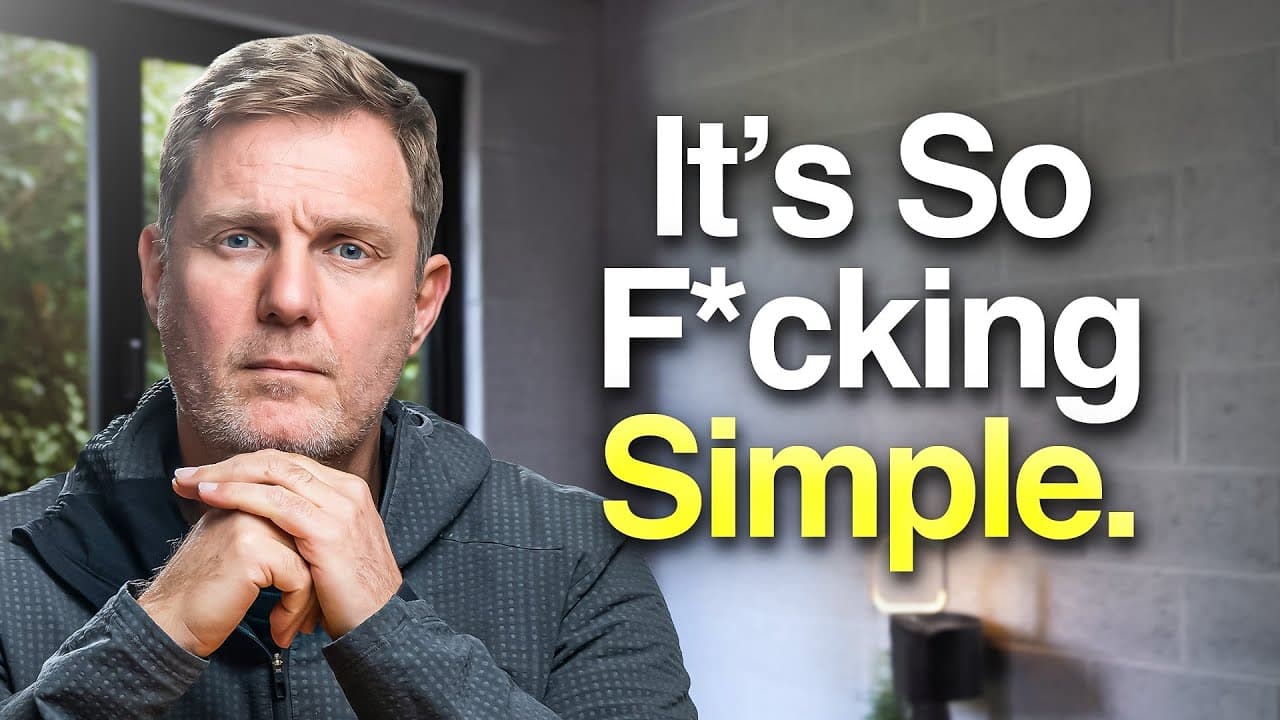
Getting rich comes from simple habits that compound over time, not from 18-hour workdays or a perfect morning routine. Simon Squibb, who built 19 companies and sold three, says to keep ideas simple, master one thing before adding more, avoid becoming the bottleneck in your own business, and treat sales as essential, spending most of your time talking to customers.
Transcript
The key to getting rich isn't what you've been told. It isn't working 18 hours a day or having some perfect morning routine. It's actually about building simple habits. Tiny habits that compound over time and make success almost inevitable. I'm Simon Squib. I built 19 companies and sold three for more money than I'll ever need. And today I'm sharin... Read More
Key Insights
- Keeping it simple is the first habit for building wealth, because complexity kills ideas while simplicity builds momentum. Start with one clear pain point you can solve, as Squibb did when he focused Help Bank only on credible business knowledge.
- Earning $1 before trying to earn a million dollars is the key to scaling. Squibb suggests putting a pattern on a t-shirt and selling it for a dollar profit, then scaling once you understand how to make that first dollar.
- A good business idea should be explainable to an 8-year-old. Squibb described Help Bank to his son as: press a button, you get help; press a button, you give help. People do not have time for long explanations.
- Mastery beats multitasking, so pick one product or service and make it world class. WhatsApp started with just messaging, not stories, calls, and payments, and Amazon started by selling only books.
- Shiny object syndrome distracts founders from the problem they are solving. Squibb advises saying no more than yes, even to trendy things like AI, and building a repeatable system before adding new products or features.
- Progress should be measured by results delivered, not busyness. Squibb argues that luck is not about how hard you work but about how much risk you take, so working nonstop is not a sign of progress.
- Founders who are the only ones working on a business become its bottleneck. Squibb recommends documenting systems with tools like Notion and Loom, delegating tasks you are not expert in, trusting your team with small decisions, and asking weekly what you are holding up.
- Sales is oxygen for a business, and everyone, introverts and extroverts alike, can learn it. Squibb recommends spending 80% of your time talking to customers, tracking daily outreach, and treating rejection as useful customer feedback.
Install to Summarize YouTube Videos and Get Transcripts
Explore YouTube Video Summarizer or Get YouTube Transcript Extractor
Questions & Answers
Q: What habits help entrepreneurs get rich?
According to Simon Squibb, who built 19 companies and sold three, getting rich comes from simple habits that compound over time rather than working 18 hours a day or following a perfect morning routine. His habits include keeping it simple, doing one thing well, not being the bottleneck, being obsessed with sales, starting with people rather than products, not rushing to raise investment, building around purpose, and hiring for heart, not just skills.
Q: How do you keep a business idea simple?
Squibb gives four ways to keep it simple. First, start with one clear pain point you can solve. Second, cut out every extra feature or idea that distracts you, since one killer feature can be enough for a digital platform. Third, focus on earning $1 before trying to earn a million dollars. Fourth, explain your idea so an 8-year-old understands it, boiling it down to a single sentence.
Q: Why should you earn $1 before trying to earn a million?
Squibb says many people want to scale from day one and fail because they do not keep things simple. He recommends first learning to take a product or service and sell it for a $1 profit, for example by putting your pattern on a t-shirt and selling it. Once you have figured out how to make that first dollar, you can scale up. He says this is how he eventually earned a million dollars a month.
Q: What does doing one thing well mean in business?
Doing one thing well means choosing one product or service and making it world class before expanding. Squibb points to WhatsApp, which started with just messaging, not stories, calls, and payments. He advises avoiding shiny object syndrome by saying no more than yes, building a repeatable system before adding new products, and measuring progress by results delivered rather than by how busy you are.
Q: How do you avoid being the bottleneck in your business?
Squibb admits he was the reason some of his early businesses did not scale. To avoid this, document systems others can follow using tools like Notion and Loom, delegate tasks where you are not the expert such as accounting, trust your team with small decisions because freedom builds responsibility, and ask yourself weekly what you are holding up, then hand it off instead of micromanaging.
Q: Why is sales so important for entrepreneurs?
Squibb calls sales oxygen: without it, a business dies. He believes everyone, introverts and extroverts, can learn sales and that everyone is a salesperson whether they like it or not, since convincing a partner, co-founder, or client is selling. He says schools teach people to look down on sales, which he considers a huge mistake for anyone building a business.
Q: How much time should founders spend talking to customers?
Squibb recommends spending 80% of your time talking to customers. He describes a founder who spent four months building a beautiful product but spoke to zero customers, so she did not know what customers needed, what they would pay, how or when they would pay, or whether a market existed. Talking to customers reveals these answers before you invest heavily in building.
Q: How should you approach sales outreach and rejection?
Squibb advises tracking daily outreach, such as 10 messages, five calls, and two meetings, and holding yourself accountable with a systematic, mathematical approach. He claims that reaching 100 people through emails, calls, DMs, and social replies yields one customer. He also urges learning to handle rejection, citing Dyson's 5,000 failed prototypes, because rejection works like customer feedback that provides knowledge and insight.
Summary & Key Takeaways
-
Squibb, who built 19 companies and sold three, argues that wealth comes from tiny habits that compound, not 18-hour days. His first habit is keeping it simple: solve one clear pain point, cut distracting features, earn $1 before chasing a million, and explain your idea so an 8-year-old understands it instantly.
-
The second habit is doing one thing well. Pick one product and make it world class, as WhatsApp did with messaging. Avoid shiny object syndrome by saying no more often, create a repeatable system before adding products, and measure progress by results delivered rather than how busy you appear.
-
The third and fourth habits are not being the bottleneck and becoming obsessed with sales. Document systems, delegate, trust your team, and hand off what you hold up. Spend 80% of your time with customers, treat sales as problem solving, track daily outreach numbers, and learn from rejection.
Read in Other Languages (beta)
Share This Summary 📚
Summarize YouTube Videos and Get Video Transcripts with 1-Click
Try YouTube Summary with ChatGPT & Claude or YouTube Transcript Generator
Explore More Summaries from Simon Squibb 📚


Summarize YouTube Videos and Get Video Transcripts with 1-Click
Try YouTube Summary with ChatGPT & Claude or YouTube Transcript Generator