How to Pick the Right AI Agent for Your Work?
TL;DR
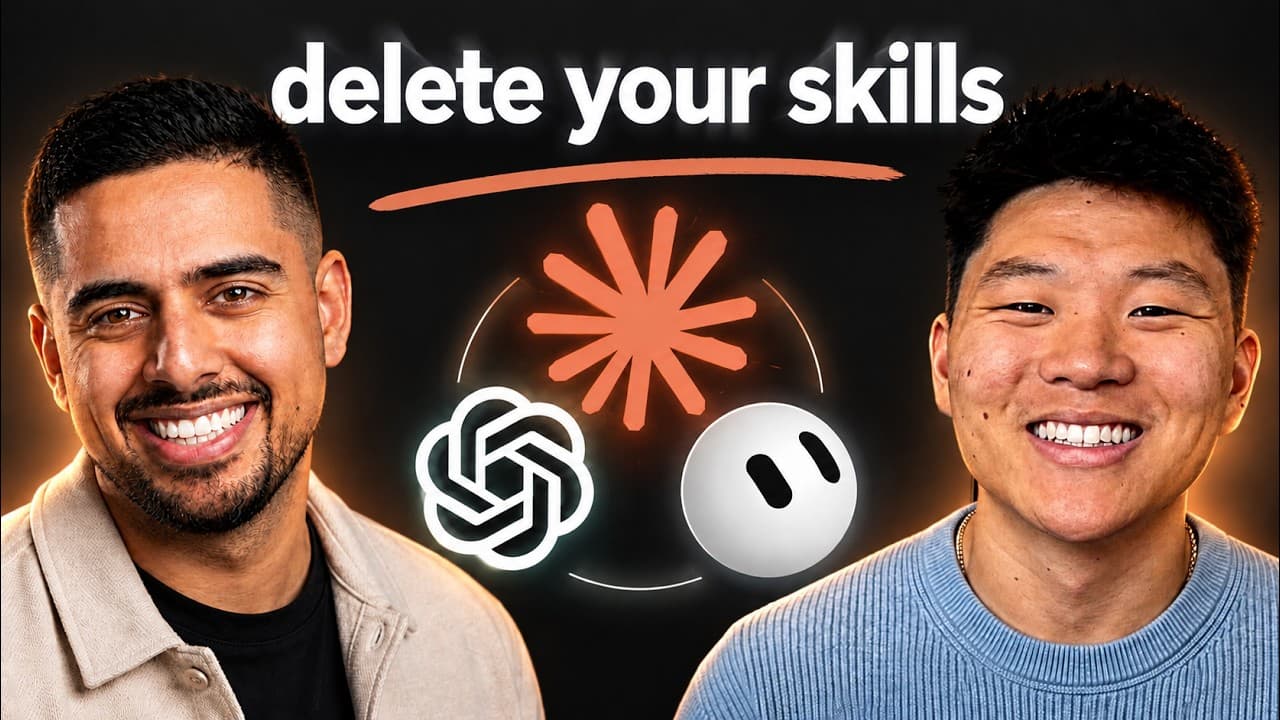
The core idea is that the harness around the model matters more than the model itself. A strong harness lets the AI act with hands and tools, enabling local or cloud workflows. Keep skills portable and design an Agentic loop that iterates on results to stay relevant as tools evolve.
Transcript
All right, so Marge, by the end of today's episode, what will everyone have learned from you? >> My goal is that by the end of this video, you understand that the harness of a model is much more important than the model itself. >> It feels to me like Claude Code is like a wise old owl and then it feels like Codex is like the Rottweiler. It'll obey ... Read More
Key Insights
- The brain is not enough without the surrounding harness that enables interaction and output.
- Local versus cloud models offer different degrees of access to files and systems, shaping practical use cases.
- A harness makes the AI capable of performing tasks beyond text output, including file manipulation and running programs.
- Skills decay rapidly, so portability and regular skill refreshes are essential.
- An agentic loop repeats tasks based on feedback, improving results over time.
- Modular plugins and tools extend the base capabilities of the brain, creating an ecosystem.
- The goal is to have a harness that can work with multiple brains, enabling switching as needed.
- Organization and governance rules help keep projects coherent across evolving toolchains.
Install to Summarize YouTube Videos and Get Transcripts
Explore YouTube Video Summarizer or Get YouTube Transcript Extractor
Questions & Answers
Q: How does the harness change what an AI can do compared to the brain alone?
The harness provides the means for the AI to interact with external systems, files, and the internet, turning outputs into tangible actions. While the brain can generate ideas or code, the harness enables it to read, write, and execute tasks on a computer or in the cloud. This combination dramatically expands practical capability.
Q: What is the difference between Claude Code and Claude Chat in practical terms?
Claude Chat on the web can research and generate outputs but may struggle with touching local files or running programs. Claude Code, as a harness, can interact with a local computer and cloud environments, enabling actions like editing files and spawning servers. The distinction lies in the ability to act, not just think.
Q: Why is portability of skills emphasized in this approach?
Skills decay quickly, and tooling evolves rapidly. By keeping skills portable and decoupled from any single harness or model, you can switch brains or harnesses without losing capabilities. This protects IP and ensures continuity as new tools emerge in the AI ecosystem.
Q: What role do local models play in the strategy?
Local models provide offline capability and lower risk for sensitive tasks. They can handle a majority of day-to-day work with proper hardware, while higher-level tasks and planning are handled by more capable brains via the harness. This balance optimizes performance and control.
Q: What is meant by the term agentic loop?
An agentic loop is a feedback-driven process where the AI proposes a plan, executes it through the harness, observes the result, and iterates. The loop continues until the task succeeds or an error is resolved, enabling adaptive behavior and improved outcomes over time.
Q: How should projects be organized when using AI agents?
Projects should be structured with global rules and modular blocks, including clear inputs, outputs, and failure handling. Keeping the workflow organized helps manage multiple tools, keeps settings consistent, and makes it easier to switch harnesses or brains without breaking the system.
Q: Why is it important to think of the brain as a “brain in a jar”?
The analogy reinforces that the real power comes from what surrounds the brain—the tools, permissions, and interfaces that let it act. Without limbs, the brain outputs ideas but cannot implement them. The harness is what turns thought into tangible results.
Q: What is the recommended stance toward tool selection and loyalty?
Be loyal to your harness and your assets, not to a single provider. The goal is to protect your IP and remain flexible enough to switch brains and harnesses as the ecosystem evolves. This approach sustains long-term relevance and competitive advantage.
Summary & Key Takeaways
-
A practical framework emphasizes that the harness and tool integration around the AI brain determine real capability, not the brain alone. The discussion contrasts local models with cloud powered agents and highlights the importance of integrating hands, files, and execution environments.
-
The conversation stresses portability of skills, encouraging you to rotate between harnesses while preserving core capabilities. It also introduces the idea of an agentic loop that continuously processes results and adapts to new tools.
-
The takeaway is a playbook for building a resilient AI agency: design modular, portable skills, and orchestrate a system where the brain collaborates with an actionable harness to deliver tangible outputs.
Read in Other Languages (beta)
Share This Summary 📚
Summarize YouTube Videos and Get Video Transcripts with 1-Click
Try YouTube Summary with ChatGPT & Claude or YouTube Transcript Generator
Explore More Summaries from Nate Herk | AI Automation 📚





Summarize YouTube Videos and Get Video Transcripts with 1-Click
Try YouTube Summary with ChatGPT & Claude or YouTube Transcript Generator