How to Navigate Misinformation and Trust in Media
TL;DR
To effectively navigate misinformation in today's fast-paced information landscape, prioritize reliable sources and engage with diverse perspectives. Understand that the erosion of trust in institutions complicates factual consensus, so approach discussions critically. Emphasizing transparency and open dialogue can help mitigate the challenges posed by misinformation and echo chambers.
Transcript
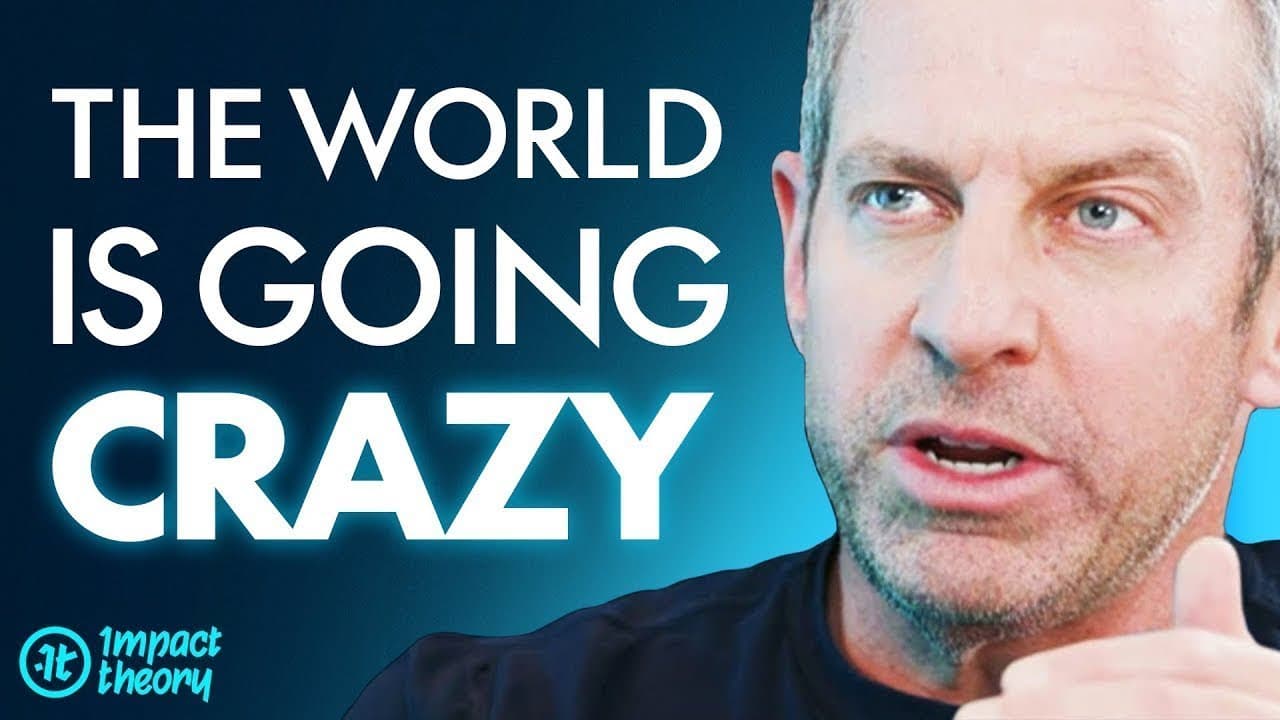
culture is software we know it's continually failing us we should not have a significant number of Americans alleging the election was stolen there was a pretty gnarly one-two punch between covet and Trump that I really think caused a sense-making apparatus to fall apart in some way yeah my question is can we stop the rise of evil or is that alread... Read More
Key Insights
- 👾 The fast-paced and algorithm-driven nature of information flow exacerbates the spread of misinformation and amplifies outrage.
- 😯 Private companies have the right to set their own terms of service, including content moderation policies, while governments should uphold principles of freedom of speech.
- 🔉 Trust in institutions is crucial for a functional society, but recent events and biases within mainstream media have challenged this trust.
Install to Summarize YouTube Videos and Get Transcripts
Explore YouTube Video Summarizer or Get YouTube Transcript Extractor
Questions & Answers
Q: Can we stop the rise of misinformation and the belief in conspiracy theories?
The lack of consensus and the fragmented information landscape make it challenging to combat misinformation. However, promoting critical thinking, fact-checking, and relying on trusted sources can help address the issue.
Q: What is the role of experts in navigating this complex information landscape?
Experts play a crucial role in providing reliable and evidence-based information. While expertise is not foolproof, it provides a foundation from which to understand complex topics and guide decision-making.
Q: Should freedom of speech be limited to prevent the spread of misinformation?
While private entities have the right to establish their own terms of service and limit certain speech, imposing top-down restrictions on freedom of speech can be detrimental. A balance between open discourse and responsible platforms is necessary.
Q: How can we find a sense-making apparatus in a world of information overload?
Navigating the information landscape requires a critical mindset, seeking diverse perspectives, and engaging in constructive dialogue. Emphasizing transparency and fact-checking can help establish trust and ensure the dissemination of accurate information.
Summary & Key Takeaways
-
The current information landscape is plagued by the spread of misinformation, fueled by fast-paced information flow and the monetization of attention.
-
The lack of consensus and convergence on factual understanding has led to the rise of echo chambers and the inability to discern truth from falsehood.
-
The erosion of trust in institutions and the mainstream media has further complicated the search for an objective understanding of reality.
Read in Other Languages (beta)
Share This Summary 📚
Summarize YouTube Videos and Get Video Transcripts with 1-Click
Try YouTube Summary with ChatGPT & Claude or YouTube Transcript Generator
Explore More Summaries from Full Episodes of Impact Theory 📚


Summarize YouTube Videos and Get Video Transcripts with 1-Click
Try YouTube Summary with ChatGPT & Claude or YouTube Transcript Generator