NASA Budget Hearings Continue on This Week @NASA – March 18, 2016
TL;DR
NASA’s $19 billion Fiscal Year 2017 budget proposal would fund initiatives including sending American astronauts to Mars in the 2030s, expanding knowledge of the universe, and improving life on Earth. This Week @NASA also covers the Expedition 47/48 Soyuz launch, Saffire-1, NASA Women in Action, ExoMars 2016, and Jason-3. Read on for the key dates, crews, missions, and research goals.
Transcript
“Here’s some of the stories trending This Week at NASA!” NASA Administrator Charlie Bolden was back on Capitol Hill during the week of March 13 for more Congressional hearings on the agency’s $19 billion dollar Fiscal Year 2017 budget proposal. On Tuesday, Bolden testified before the House Appropriations Subcommittee on Commerce, Justice, Science a... Read More
Key Insights
- 💅 NASA is actively engaging with Congress to secure funding for its ambitious goals, including a manned mission to Mars.
- 👾 International partnerships, like the one with Russia for the Soyuz launch and the European Space Agency for the ExoMars mission, are essential for advancing space exploration.
- 👨🔬 Research experiments like the Saffire-1 experiment help NASA scientists understand the behavior of fire in space and improve safety measures.
- 🧔♀️ Celebrating women in STEM careers is a priority for NASA, highlighting their contributions and achievements.
Install to Summarize YouTube Videos and Get Transcripts
Explore YouTube Video Summarizer or Get YouTube Transcript Extractor
Questions & Answers
Q: Why did NASA Administrator Charlie Bolden testify before Congress in March 2016?
Charlie Bolden testified at Congressional hearings about NASA’s $19 billion Fiscal Year 2017 budget proposal. He appeared before a House Appropriations subcommittee on Tuesday and answered questions from the House Science Subcommittee on Space on Thursday.
Q: What would NASA’s proposed Fiscal Year 2017 budget fund?
The proposal would fund initiatives to send American astronauts to Mars in the 2030s. It would also support efforts to expand knowledge about the universe, improve life on Earth, and protect the planet’s health.
Q: Who launched toward the International Space Station aboard the Soyuz spacecraft?
NASA astronaut Jeff Williams launched with Roscosmos crew members Alexey Ovchinin and Oleg Skripochka. They departed from Kazakhstan’s Baikonur Cosmodrome on March 18 Eastern time and reached the orbiting laboratory after a six-hour trip.
Q: What records was Jeff Williams expected to set during the six-month mission?
Williams was expected to reach 534 cumulative days in space, setting an American record and surpassing Scott Kelly’s Expedition 46 record. The flight was also his third space station expedition, another record.
Q: What is the purpose of NASA’s Saffire-1 experiment?
Saffire-1 is designed to help researchers understand how fire behaves aboard a spacecraft outside Earth’s atmosphere. Developed at Glenn Research Center, it was scheduled to fly on Orbital ATK’s Cygnus resupply mission alongside a second-generation 3-D printer for the ISS.
Q: What was the focus of the NASA Women in Action program?
The March 16 program at Goddard Space Flight Center celebrated Women’s History Month. Organized by NASA with the White House Council on Women and Girls, it focused on women making an impact in science, technology, engineering, and mathematics careers.
Q: What did NASA contribute to the European Space Agency’s ExoMars 2016 mission?
NASA supplied two Electra ultra-high frequency radios designed to relay communications for Mars rovers and landers. ExoMars launched from Kazakhstan on March 14, and the radios’ first in-flight test was scheduled for about six weeks later.
Q: What did Jason-3’s first complete science map show?
The map showed global sea surface height and the state of the ongoing El Niño event. It used the first 10 days of observations after Jason-3 reached operational orbit, supporting more accurate weather, ocean, climate, and tropical-cyclone forecasts.
Summary & Key Takeaways
-
NASA Administrator, Charlie Bolden, testifies before Congressional hearings on the agency's budget proposal.
-
Soyuz spacecraft launches with NASA astronaut and Russian crewmates towards the International Space Station.
-
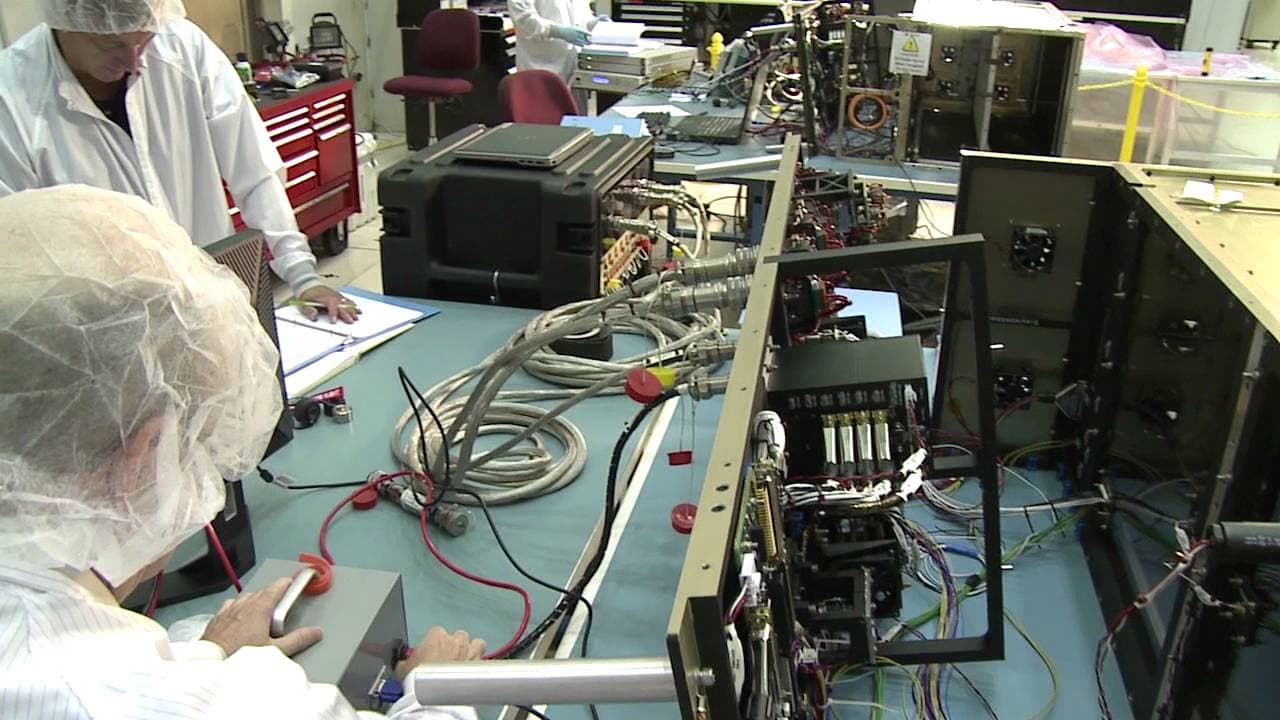
Saffire-1 experiment to study spacecraft fires and the delivery of a second-generation 3-D printer on the upcoming Cygnus cargo spacecraft resupply mission.
-
NASA celebrates Women's History Month with an event focusing on women in STEM careers.
-
European Space Agency's ExoMars 2016 mission launches with NASA radios on board for communication relay service.
-
Jason-3 satellite produces its first complete science map of global sea surface height, aiding in weather and climate forecasts.
Read in Other Languages (beta)
Share This Summary 📚
Summarize YouTube Videos and Get Video Transcripts with 1-Click
Try YouTube Summary with ChatGPT & Claude or YouTube Transcript Generator
Explore More Summaries from NASA 📚
Summarize YouTube Videos and Get Video Transcripts with 1-Click
Try YouTube Summary with ChatGPT & Claude or YouTube Transcript Generator