How to Make Fresh Starts Lead to Lasting Change
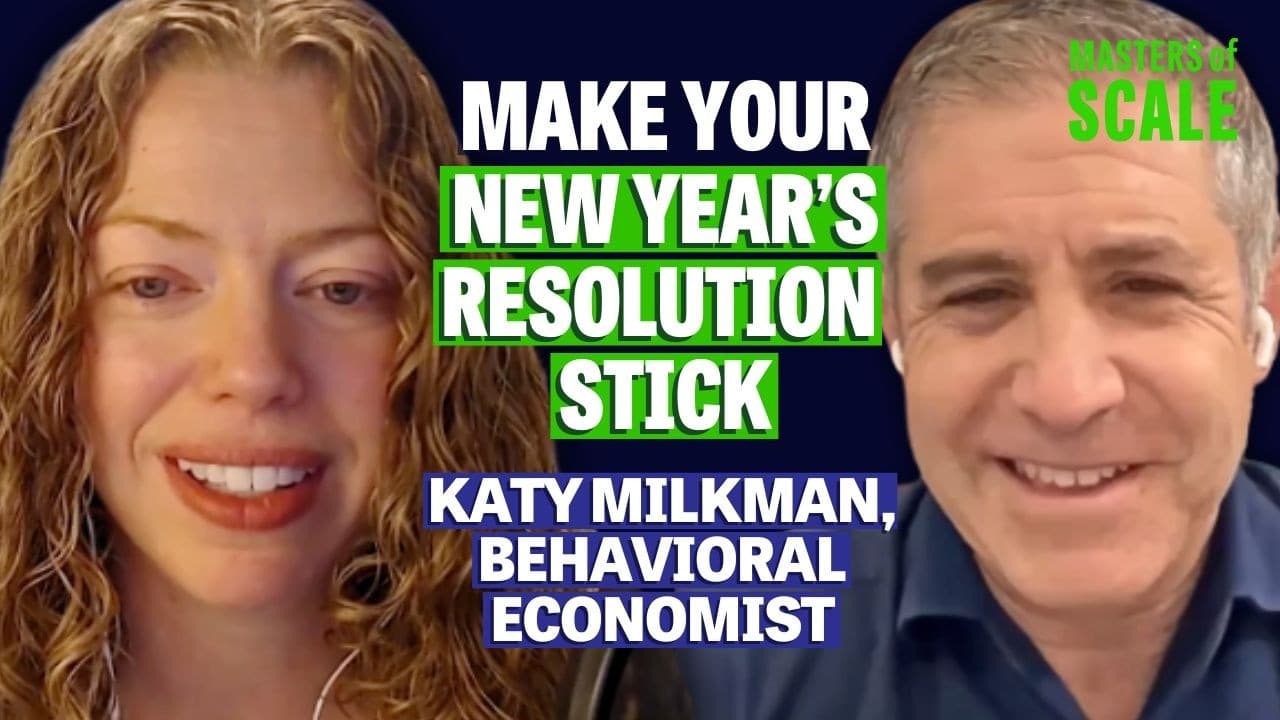
TL;DR
Use fresh-start motivation for one-time actions that create lasting benefits, such as enrolling in automatic paycheck deductions or scheduling an important screening. Goals requiring repeated effort need additional behavioral strategies because motivation fades. Temptation bundling can help by pairing a dreaded chore with an enjoyable activity available only while completing that chore.
Transcript
imagine there is some chore that you are struggling to motivate yourself to pursue in my case when I started doing this it was exercising regularly I was just really you know dreading that but knew I needed to do it it was important for my mental health and good for me in the long run and it felt great afterwards it's just that at the end of a long... Read More
Key Insights
- Behavioral science studies systematic and predictable mistakes people make while trying to decide rationally, including impulsivity, heightened sensitivity to losses, and unusual responses to probabilities. Recognizing these recurring patterns can help researchers design practical methods for improving personal and organizational choices.
- Daily behavior is linked to more than 40% of premature deaths in the United States, according to the research chart Milkman encountered. Relevant choices included obtaining cancer screenings, taking medications, eating healthfully, avoiding cigarettes and alcohol, and buckling seat belts.
- Fresh starts are moments that feel like chapter breaks, such as the beginning of a year, week, or month, as well as birthdays and holidays associated with renewal. They create a sense of turning the page and separating from one’s previous identity.
- January 1 is presented as the largest fresh-start moment, when 40% of Americans step back and set resolutions. Its power is psychological rather than practical because the transition from December 31 to January 1 does not inherently change a person’s circumstances.
- Fresh-start motivation is temporary, making it best suited to one-time decisions that generate continuing benefits. Enrolling in automatic paycheck deductions uses a brief motivational surge to establish retirement contributions that continue without requiring the same decision during every pay period.
- Long-term resolutions require more than a fresh start because repeated behaviors demand continuing effort. Gym attendance illustrates the limitation: facilities become crowded in January, but attendance declines after the sense of beginning again has faded by February.
- Temptation bundling is the practice of pairing a beneficial chore with an enjoyable indulgence and allowing the indulgence only during the chore. This arrangement changes the immediate experience of the task and makes impulsive desires support, rather than obstruct, beneficial behavior.
- Temptation bundling can transform anticipation of an unpleasant activity. Milkman reserved entertaining audiobooks for gym visits, so curiosity about favorite characters gave her a reason to look forward to exercising even after a long day when motivation was otherwise low.
Install to Summarize YouTube Videos and Get Transcripts
Explore YouTube Video Summarizer or Get YouTube Transcript Extractor
Questions & Answers
Q: What is the fresh-start effect in behavioral science?
The fresh-start effect is a temporary increase in motivation at moments that feel like chapter breaks. Examples in the conversation include January 1, the beginning of a week or month, birthdays, and holidays associated with new beginnings. These boundaries make people feel more separated from who they previously were and encourage goal setting, even though their underlying circumstances may remain unchanged.
Q: Why do New Year’s resolutions often lose momentum?
New Year’s resolutions often lose momentum because a fresh start provides only a temporary motivational boost. January 1 can feel like a clean slate, but that feeling weakens as the year progresses. By February, the beginning no longer feels fresh. Goals requiring repeated effort therefore need more than initial enthusiasm, which helps explain why January gym crowds later decline.
Q: When are fresh starts most useful for changing behavior?
Fresh starts are most useful when a person needs enough motivation to complete one important action that will continue producing benefits. Enrolling in automatic paycheck deductions is one example because retirement contributions then occur with each paycheck. Scheduling an important cancer screening is another. In both cases, a temporary motivational boost can overcome delay without requiring the same decision every day.
Q: How does temptation bundling help build good habits?
Temptation bundling helps by linking a chore someone dreads with an indulgence they strongly enjoy. Access to the indulgence is permitted only while completing the chore. This changes the immediate experience and makes the beneficial activity more appealing. It also redirects impulsivity, since the desire for immediate enjoyment becomes a reason to begin the task instead of avoiding it.
Q: What is an example of temptation bundling for exercise?
Katy Milkman paired gym visits with entertaining audiobooks, including popular novels she strongly wanted to continue. Her rule allowed her to listen only while she was at the gym. Curiosity about what happened next made her anticipate exercise, transforming an activity she dreaded after a long day into an opportunity to reconnect with favorite characters and enjoy herself.
Q: How can someone create a temptation bundle?
Identify a beneficial chore that feels difficult to begin, then identify an enjoyable temptation that you might otherwise consume too freely. Combine them by making the temptation available only while doing the chore. The restriction is central because it makes completing the beneficial task the gateway to immediate enjoyment, changing both anticipation and the experience of the chore.
Q: What kinds of decisions does behavioral science examine?
Behavioral science examines systematic and predictable errors people make even when they intend to act rationally. The conversation identifies impulsivity, stronger reactions to losses than to equivalent gains, and unusual evaluations of probabilities. Rather than assuming perfectly rational decision makers, the field studies recurring imperfections that shape choices and uses those patterns to understand how behavior might change.
Q: Why can behavior-change research have a major health impact?
Behavior-change research can have a major health impact because more than 40% of premature deaths in the United States were attributed to behaviors people could change, according to a research chart Milkman encountered. The relevant daily choices included cancer screening, medication adherence, healthy eating, avoiding cigarettes and alcohol, and wearing seat belts, so improved decisions could support longer and healthier lives.
Summary & Key Takeaways
-
Fresh starts occur at perceived chapter breaks, including January 1, Mondays, birthdays, new months, and holidays associated with new beginnings. These moments create psychological distance from a person’s past identity and provide a temporary motivational boost. However, the underlying circumstances may not have changed, so motivation alone rarely sustains repeated behavior.
-
Fresh-start motivation works particularly well for actions that need to happen only once but produce continuing benefits. Enrolling in automatic paycheck deductions can establish ongoing retirement contributions, while scheduling an important cancer screening can overcome procrastination. The initial burst of motivation is valuable when one completed decision carries progress forward without repeated effort.
-
Temptation bundling makes an unpleasant but beneficial activity more attractive by combining it with a desired indulgence. Katy Milkman listened to enjoyable audiobooks only while exercising, which made her anticipate gym visits. The method can be applied whenever someone can reserve a tempting experience exclusively for the time spent completing a dreaded chore.
Read in Other Languages (beta)
Share This Summary 📚
Summarize YouTube Videos and Get Video Transcripts with 1-Click
Try YouTube Summary with ChatGPT & Claude or YouTube Transcript Generator