How Do Radio Receivers Work and Select Signals?
TL;DR
Radio receivers work by using a regenerative circuit to select and amplify a specific radio frequency from a sea of signals. This circuit consists of an antenna, a tuned circuit with an inductor and capacitor, and a vacuum tube amplifier that enhances the desired signal while dampening unwanted frequencies. Key to its operation is positive feedback, which reinforces the selected frequency for clearer reception.
Transcript
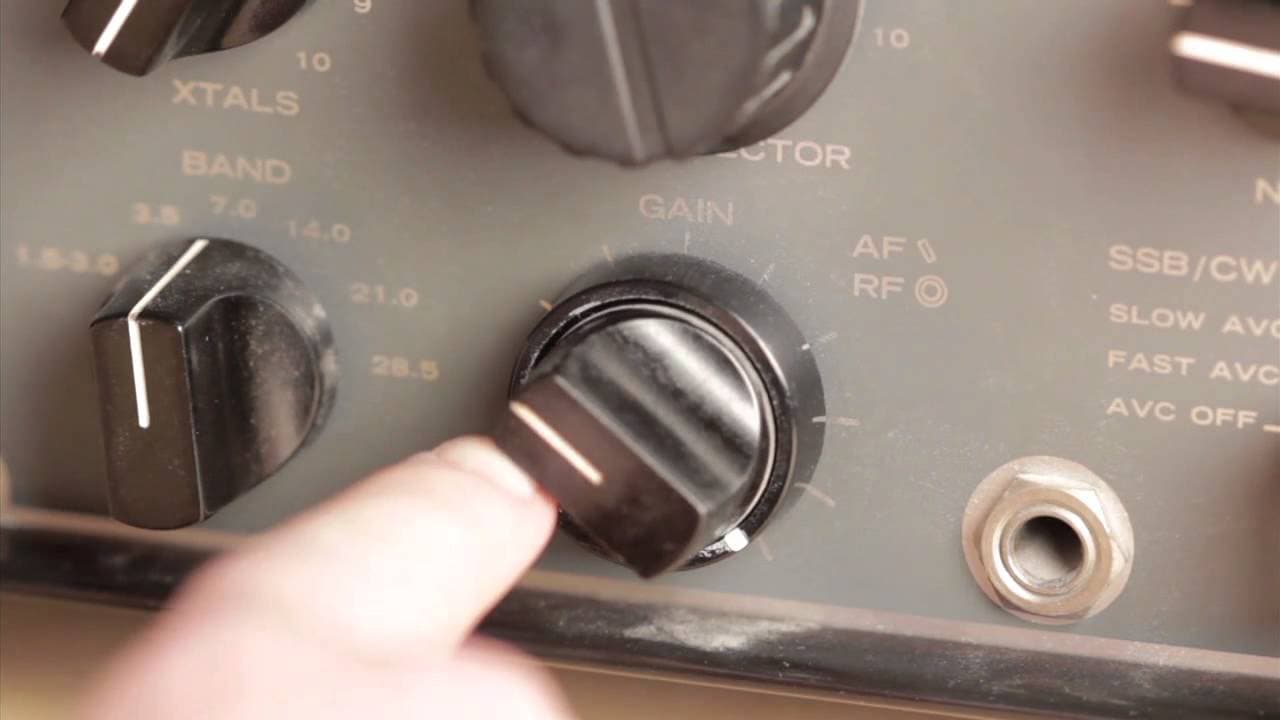
Lot's of things in our lives transmit signals. From your cell phone when it's making a call, to your computer when it's sending an email, to your local radio station when it's broadcasting. Here you see two objects that receive signals
- they are radio receivers. Have you ever wondered how they pick out the signal they want out of all of the radio ... Read More
Key Insights
- 📻 Radio receivers use a combination of components, including an antenna, tuned circuit, amplifier, and positive feedback, to select and amplify specific radio wave frequencies.
- 📻 The regenerative circuit, invented by Edwin Armstrong, was a breakthrough in radio technology for its ability to achieve amplification and selectivity.
- 👋 Radio waves can transmit various types of data by modulating the amplitude or switching the carrier signal on and off.
- 🖐️ Amateur radio operators play a crucial role in emergency situations when other communication networks are down.
- 📻 Radio receivers have been continuously improved, incorporating more advanced circuitry while operating on the same basic principles.
- 📻 The radio spectrum is divided into different ranges for various uses such as AM and FM broadcasting, mobile phones, amateur radio, and space research.
Install to Summarize YouTube Videos and Get Transcripts
Explore YouTube Video Summarizer or Get YouTube Transcript Extractor
Questions & Answers
Q: How do radio waves transmit different types of data?
Radio waves can transmit data by modulating the amplitude of the carrier wave, known as Amplitude Modulation (AM), or by switching the carrier signal on and off for continuous wave modulation (CW).
Q: What is the purpose of the regenerative circuit in a radio receiver?
The regenerative circuit amplifies the radio signal, selects a specific frequency, and provides positive feedback to reinforce the desired frequency, improving selectivity in picking out one frequency from all the signals.
Q: How does the vacuum tube amplifier work in the regenerative circuit?
The vacuum tube acts as an amplifier, reproducing the signal applied to its input with greater magnitude. It receives the radio waves from the tuned circuit and amplifies them, allowing for stronger reception.
Q: Can modern radio receivers still use the regenerative circuit?
While more sophisticated circuitry is used in modern radio receivers, they are still based on the same principles as the regenerative circuit. Digital circuits are often used to achieve the same amplification and demodulation processes.
Summary & Key Takeaways
-
Radio waves are electromagnetic waves that can transmit different types of data by modulating some property of the wave.
-
The regenerative circuit, invented by Edwin Armstrong in 1914, amplifies while selecting a specific radio wave frequency.
-
The circuit consists of an antenna, a tuned circuit with an inductor and variable capacitor, a vacuum tube amplifier, and positive feedback to reinforce the desired frequency.
Read in Other Languages (beta)
Share This Summary 📚
Summarize YouTube Videos and Get Video Transcripts with 1-Click
Try YouTube Summary with ChatGPT & Claude or YouTube Transcript Generator
Explore More Summaries from MIT OpenCourseWare 📚


Summarize YouTube Videos and Get Video Transcripts with 1-Click
Try YouTube Summary with ChatGPT & Claude or YouTube Transcript Generator