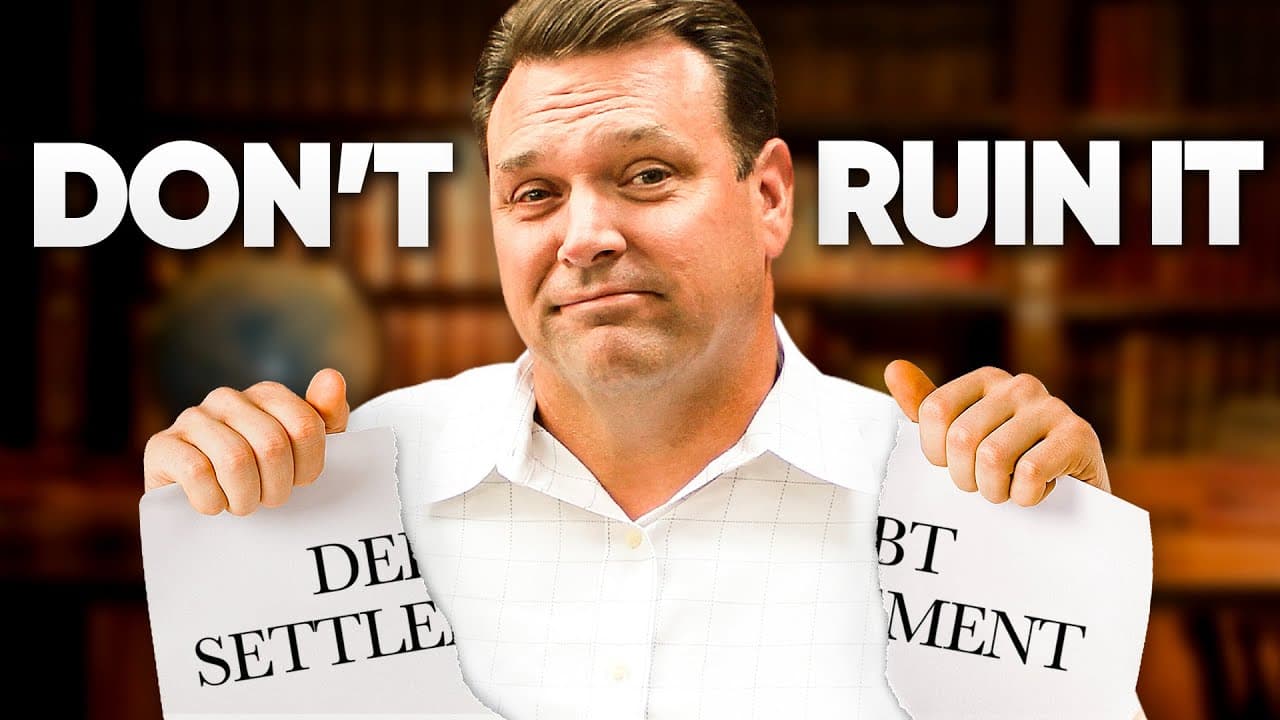
3 Ways to RUIN Your Debt Settlement
TL;DR
Protect your chances of a good debt settlement by limiting the personal information you give collectors, responding before a default judgment is entered, and acting before wage garnishment begins. John Skiba explains that collectors may use pay stubs or bank statements to identify wages and accounts they can pursue. Read on to understand when negotiating leverage disappears and what options may remain.
Transcript
hey everybody John skiba here from the consumer Warrior YouTube channel and in this video I'm going to share with you three things that if you do you are going to destroy your chances by getting a good settlement with your creditors but if this is your first time here to my YouTube Channel please click subscribe check on that little bell that way y... Read More
Key Insights
- 🤝 Taking action is crucial when dealing with delinquent debts, regardless of the chosen approach (settlement or bankruptcy).
- 💁 Debt collectors may request excessive personal information to gather evidence for potential garnishments or asset seizure.
- 🪘 Waiting too long can result in a default judgment, reducing negotiation opportunities.
- 🥇 Once a garnishment is in place, your options are limited to paying the judgment in full or filing for bankruptcy.
- ❓ Seeking assistance from a professional, such as John Skiba, can provide guidance and support specific to the state of Arizona.
- 💋 Engaging debt collectors early, ideally during the six-month mark after the debt is charged off, increases the likelihood of negotiating a favorable settlement.
- 🥺 Providing unnecessary personal information may lead to debt collectors escalating the situation by suing and obtaining a judgment.
Install to Summarize YouTube Videos and Get Transcripts
Explore YouTube Video Summarizer or Get YouTube Transcript Extractor
Questions & Answers
Q: What can ruin your chances of getting a good debt settlement?
Providing excessive personal information, waiting until a collector obtains a default judgment, and delaying until wage garnishment begins can undermine a settlement. Each mistake gives the collector more information or enforcement power and leaves you with less negotiating leverage.
Q: How much personal information should you provide when negotiating with a debt collector?
You can be honest and upfront without giving the collector every document requested. John Skiba advises against supplying details such as pay stubs and bank statements merely to negotiate a settlement.
Q: Why might a debt collector request pay stubs or bank statements?
The collector may use those documents to identify where you work, what is in your account, and which assets it could pursue. According to John Skiba, that evidence could later help the collector garnish wages or levy a bank account.
Q: Can you negotiate a debt settlement without providing detailed financial records?
Yes, John Skiba says it is possible to negotiate without giving collectors all the financial details they request. Collectors may already have substantial information from reports based largely on credit-report data.
Q: How does a default judgment affect debt-settlement negotiations?
A default judgment causes you to lose substantial negotiating leverage. Once the collector has a judgment, it may pursue wage garnishment, a bank levy, or a lien on your home and may be less willing to offer a favorable settlement.
Q: When should you engage a collector about settling a seriously delinquent debt?
Engage before a lawsuit or near the beginning of one rather than ignoring the matter. Waiting until a default judgment is entered makes resolving the debt on favorable terms much more difficult.
Q: What happens if wage garnishment is already in place?
John Skiba says the realistic options are paying the judgment in full through the garnishment or filing bankruptcy to stop it completely. At that stage, the collector may demand full payment as an upfront lump sum instead of accepting a lower settlement paid over time.
Q: What is the most important first step when dealing with serious debt?
Take action instead of continuing to wait. John Skiba says action may involve pursuing a settlement, considering bankruptcy, or fighting a lawsuit, depending on the situation.
Summary & Key Takeaways
-
Taking action is crucial when dealing with delinquent debts, whether through settlement or bankruptcy.
-
Avoid giving debt collectors unnecessary personal information when negotiating a settlement.
-
Waiting too long can result in a default judgment, reducing your chances of negotiating a favorable settlement.
-
If a garnishment is placed on your wages, your options are limited to paying the judgment in full or filing for bankruptcy.
Read in Other Languages (beta)
Share This Summary 📚
Summarize YouTube Videos and Get Video Transcripts with 1-Click
Try YouTube Summary with ChatGPT & Claude or YouTube Transcript Generator
Explore More Summaries from Consumer Warrior 📚

Summarize YouTube Videos and Get Video Transcripts with 1-Click
Try YouTube Summary with ChatGPT & Claude or YouTube Transcript Generator