Why women in STEM feel imposter syndrome | Swathi Shyam Sunder | TEDxMAHE Bengaluru

TL;DR
This is a personal story highlighting the challenges faced by a woman in the STEM field due to gender bias and the importance of diversity and inclusion for better innovation and problem-solving.
Transcript
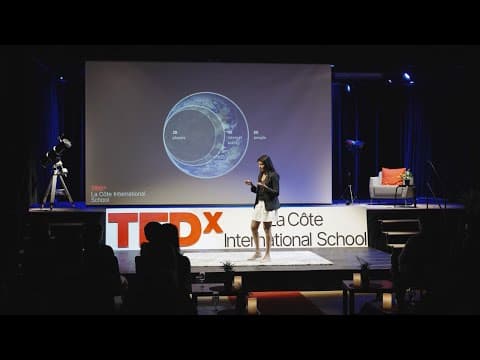
look at this image for a moment and think about what you see are you all confused stay with me for the next few minutes and you'll understand this is my story a story I wish to share with you all today now you may be wondering if this is my story where am I in this picture look CL do you see the blue girl in the last row that's me right there and t... Read More
Key Insights
- ✋ Gender bias in STEM fields starts with the shift in gender balance during higher education.
- 🕵️♀️ Imposter syndrome is more common among women in male-dominated fields and can hinder their confidence.
- ❎ Workplace exclusion and biases have negative consequences on employee motivation and performance.
- 🔨 Biased algorithms and automated tools can perpetuate gender discrimination in recruitment processes.
- 🥺 A diverse and inclusive workforce leads to enhanced problem-solving skills, innovation, and quality in scientific research.
- 🤦♀️ Women face additional challenges in reaching top leadership positions due to biased promotion practices.
- 🧔♀️ Women often have to prove past and current performance, while men are promoted based on perceived potential.
Install to Summarize YouTube Videos and Get Transcripts
Explore YouTube Video Summarizer or Get YouTube Transcript Extractor
Questions & Answers
Q: Why did the gender balance shift in science and engineering majors during college?
The narrator suggests that societal biases and perceptions, along with lack of representation, may have discouraged more girls from pursuing STEM fields.
Q: How did imposter syndrome affect the narrator's experience in college?
Imposter syndrome led to self-doubt, questioning whether the narrator belonged in the field, and feeling hesitant to ask questions in class.
Q: What negative impact did workplace exclusion have on the narrator?
Feeling left out and excluded from conversations caused the narrator to doubt their competence and fear missing out on opportunities for growth.
Q: How did the narrator work to overcome biases and build confidence?
The narrator focused on personal growth by voicing opinions, coaching and mentoring other women in tech, and becoming an advocate for workplace diversity.
Summary & Key Takeaways
-
The narrator shares their experience of being born into a lower middle-class family, emphasizing the importance of education.
-
Despite equal opportunities in primary and secondary education, a noticeable gender disparity emerges in science and engineering majors during college.
-
The narrator highlights the impact of imposter syndrome and explores workplace biases, such as exclusion from conversations and proximity bias.
Read in Other Languages (beta)
Share This Summary 📚
Summarize YouTube Videos and Get Video Transcripts with 1-Click
Try YouTube Summary with ChatGPT & Claude or YouTube Transcript Generator
Explore More Summaries from TEDx Talks 📚





Summarize YouTube Videos and Get Video Transcripts with 1-Click
Try YouTube Summary with ChatGPT & Claude or YouTube Transcript Generator