What Can We Learn from Recent Cyberattacks?
TL;DR
Key takeaways from recent cyberattacks highlight the increasing prevalence of breaches and the critical role of building security into systems and supply chains. Major incidents underscore that organizations must implement effective detection tools, prioritize cybersecurity funding, and regularly patch vulnerabilities to safeguard against attacks.
Transcript
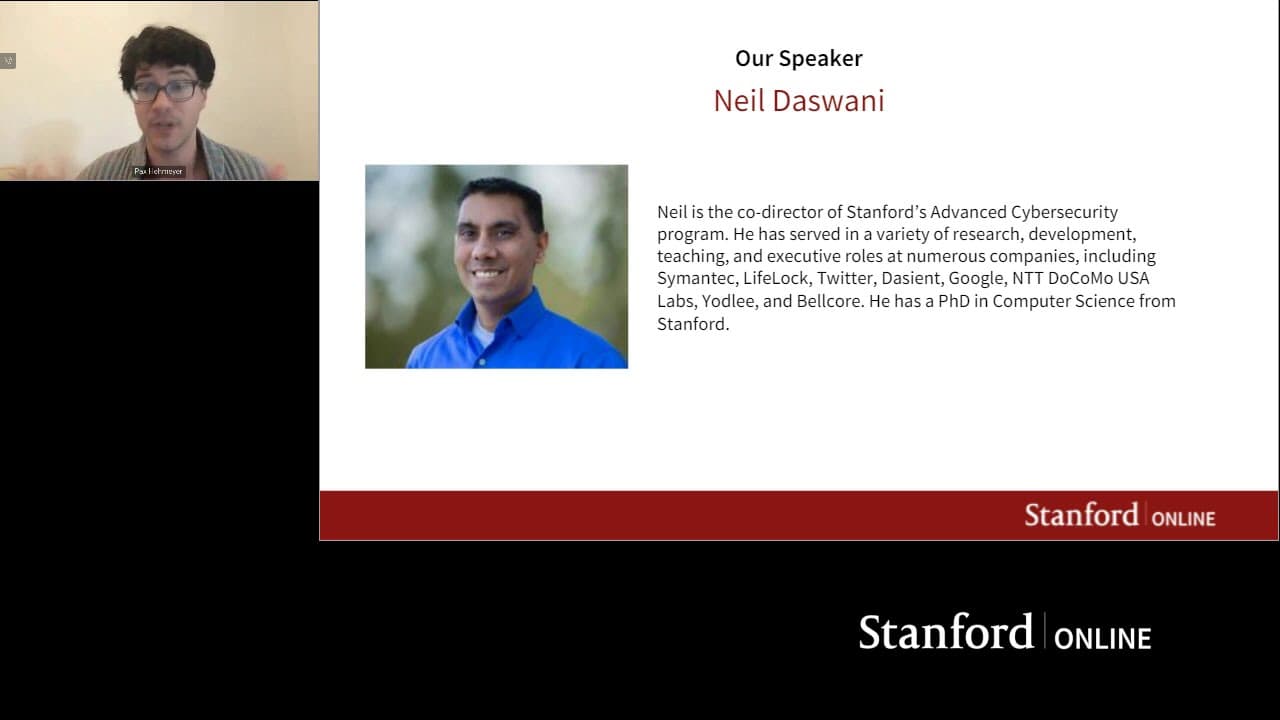
it's my pleasure to introduce neil de swani neil is the co-director and the co-founder of the stanford advanced cyber security program he is an accomplished technical visionary angel investor internet security thought leader and he served in a variety of research development teaching and executive roles at organizations from twitter and google to y... Read More
Key Insights
- 😮 Cybersecurity breaches have significantly increased over the years, with a rise in stolen records per breach.
- 🏛️ Building security into software development and the supply chain is crucial to prevent breaches.
- 🥳 Third-party compromises pose a significant risk, emphasizing the need for thorough vetting and continuous monitoring.
- ❓ Effective detection and response systems, along with proactive threat hunting, are essential to minimize the impact of breaches.
- 🖐️ Metrics and measurement play a vital role in assessing the effectiveness of cybersecurity initiatives.
- 🪡 Patching and updating software regularly is crucial, even though there might be rare instances where caution is needed.
Install to Summarize YouTube Videos and Get Transcripts
Explore YouTube Video Summarizer or Get YouTube Transcript Extractor
Questions & Answers
Q: What were the main takeaways from the Target breach?
The breach highlighted the importance of cybersecurity as a board-level issue, not just an IT problem. It also emphasized the need for network segmentation and effective alert management systems to detect and respond to breaches in a timely manner.
Q: How did the Yahoo breach compromise three billion accounts?
The attackers reverse-engineered Yahoo's cookie generation algorithm, allowing them to gain unauthorized access to any Yahoo account just by knowing the email address. This highlights the criticality of secure cookie generation and authentication practices.
Q: How can organizations better protect themselves against third-party compromises?
Companies should thoroughly vet third-party suppliers and partners, conduct security audits, and ensure that strict access controls and two-factor authentication are in place. Regular monitoring and threat hunting can help detect any unauthorized activities.
Q: What are the key insights from the SolarWinds hack?
The breach highlighted the significance of securing the software supply chain. Organizations should prioritize prevention, implement secure authentication and authorization practices, and continuously monitor for potential compromises.
Summary & Key Takeaways
-
The session covered various major cyber breaches, including those at Target, JPMorgan Chase, Office of Personnel Management, Yahoo, Equifax, Marriott, Capital One, and SolarWinds.
-
The prevalence of breaches has increased over the years, with a significant rise in the number of stolen records per breach.
-
The root causes of breaches are multi-faceted, including hacking, malware, physical loss, unintended disclosure, and software vulnerabilities.
Read in Other Languages (beta)
Share This Summary 📚
Summarize YouTube Videos and Get Video Transcripts with 1-Click
Try YouTube Summary with ChatGPT & Claude or YouTube Transcript Generator
Explore More Summaries from Stanford Online 📚





Summarize YouTube Videos and Get Video Transcripts with 1-Click
Try YouTube Summary with ChatGPT & Claude or YouTube Transcript Generator