What Are Sea Angels and How Do They Hunt?
TL;DR
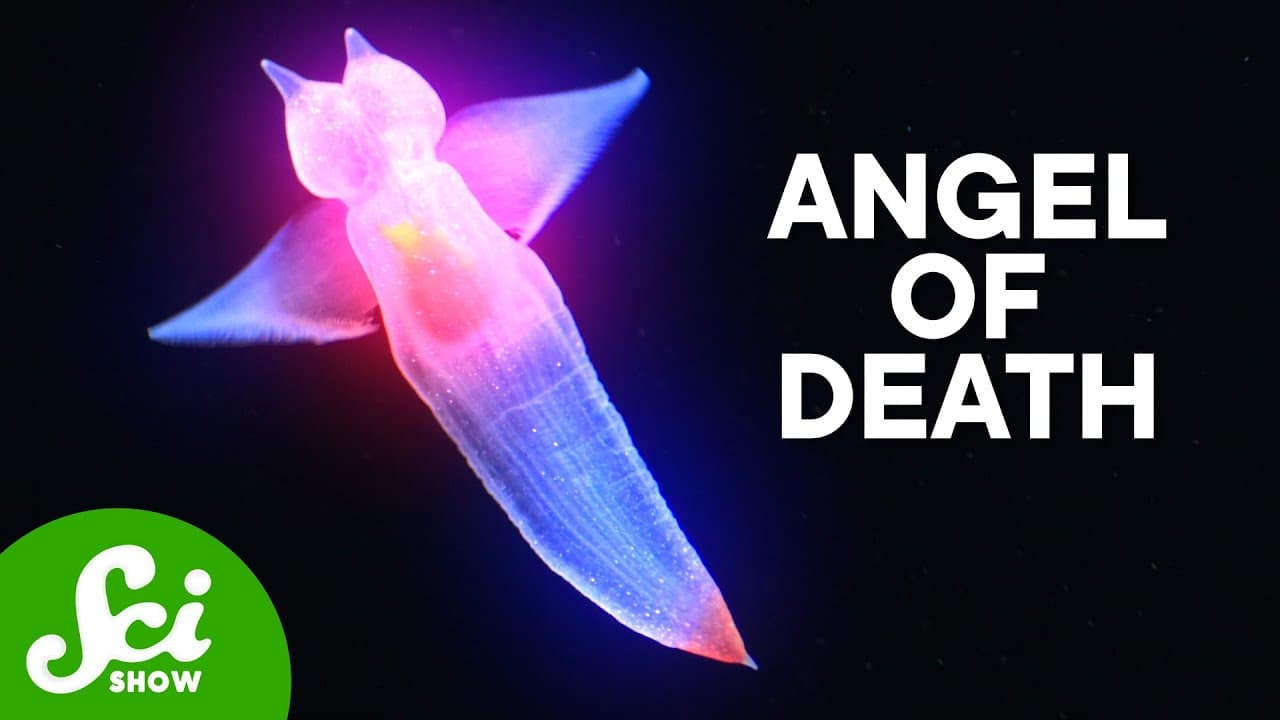
Sea angels are tiny, transparent sea slugs that hunt actively and passively. They can swim at speeds of 10 centimeters per second using wing-like appendages, while some species conserve energy by attaching to the mucus webs of sea butterflies, allowing their prey to reel them in. Their unique tentacles, called buccal cones, are equipped with hooks and barbs to extract sea butterflies from their shells quickly.
Transcript
Thanks to the Monterey Bay Aquarium and their research and technology partner MBARI for partnering with us on this episode of SciShow. They are super excited for folks to learn about the deep sea.
[ intro ] In ocean waters around the world, from the poles to the tropics, you can find tiny, nearly transparent sea slugs with a pair of a... Read More
Key Insights
- 🤢 Sea angels are small, almost transparent sea slugs with wings that make them fast swimmers, allowing them to outpace their prey, sea butterflies.
- 🤢 Some sea angels have developed a passive hunting technique where they attach themselves to the mucus web of sea butterflies and get reeled in, conserving energy while capturing their prey.
- 🐚 Sea angels have specialized tentacles, called buccal cones, equipped with various structures like hooks, barbs, and suction cups, to extract the sea butterfly from its shell and consume it.
Install to Summarize YouTube Videos and Get Transcripts
Explore YouTube Video Summarizer or Get YouTube Transcript Extractor
Questions & Answers
Q: How do sea angels capture their prey?
Sea angels capture their prey through their speed and agility, using their wings to swim rapidly and outpace their prey. They can also attach themselves to the mucus web of sea butterflies and wait to be reeled in, enabling them to catch their prey effortlessly.
Q: What do sea angels eat?
Some species of sea angels exclusively feed on sea butterflies. These sea butterflies use mucus webs to catch plankton and other particles, and occasionally, a sea angel attaches itself to the web and consumes the sea butterfly when it gets reeled in.
Q: How do sea angels extract their meal from the sea butterfly's shell?
Sea angels have specialized tentacles called buccal cones, which they extend into the opening of the sea butterfly's shell. These tentacles are armed with hooks, barbs, and suction cups, allowing the sea angel to yank tissue from the sea butterfly and consume it efficiently.
Q: Why have sea angels evolved such specific and ferocious hunting tactics?
Sea angels developed their hunting tactics because they eat an incredibly specific diet, primarily consisting of sea butterflies. As sea butterflies evolved to outsmart sea angels, the sea angels evolved further to keep up with their prey, resulting in their unique hunting adaptations.
Summary & Key Takeaways
-
Sea angels, despite their small size, are expert hunters that can swim at a speed of 10 centimeters per second using their wings, which act like oars on a boat.
-
Some species of sea angels have developed a passive hunting technique where they attach themselves to the mucus web of sea butterflies and get reeled in, allowing them to conserve energy while capturing their prey.
-
Sea angels use tentacles called buccal cones, equipped with hooks, barbs, and suction cups, to extract the sea butterfly from its shell and consume it within minutes.
Read in Other Languages (beta)
Share This Summary 📚
Summarize YouTube Videos and Get Video Transcripts with 1-Click
Try YouTube Summary with ChatGPT & Claude or YouTube Transcript Generator
Explore More Summaries from SciShow 📚
Summarize YouTube Videos and Get Video Transcripts with 1-Click
Try YouTube Summary with ChatGPT & Claude or YouTube Transcript Generator