How Does China Compete Without Military War?
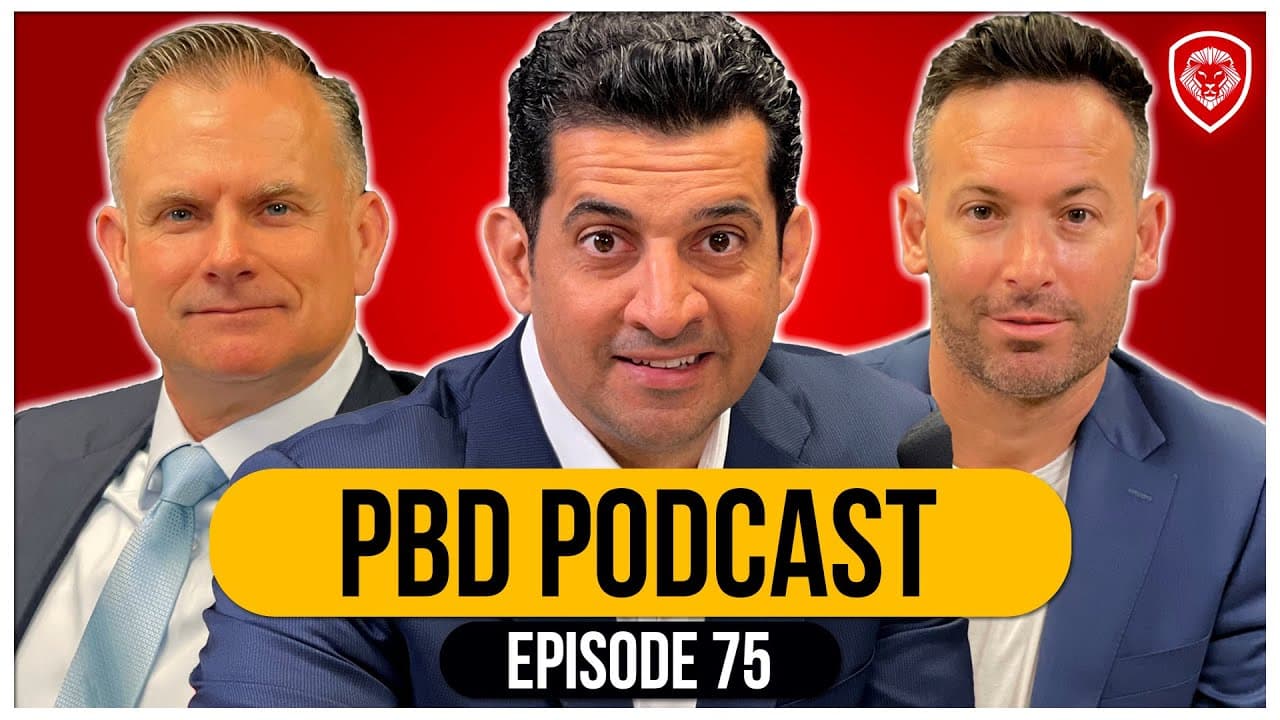
TL;DR
China can compete against the United States without conventional weapons by exploiting economics, finance, trade, political division, and information, according to General Spalding. He argues that American leaders must recognize these methods, reduce dependence on a globalization model that benefits the Chinese Communist Party, and resist domestic polarization that distracts attention from the external challenge.
Transcript
tell me we're back. If we're frozen, we have to figure out a, a, a different system. Is our- What's happening? Is the server we're using a Chinese-owned company? I think we're dying. Maybe the server we're using is a Chinese-owned company. Is that what it is? Ah, shit. Who are we with? What's the server we're using? We're back, sir. Slink. Yeah. Sl... Read More
Key Insights
- General Spalding defines winning without war as weakening or defeating a country through economics, finance, trade, lawfare, psychological warfare, and political warfare rather than conventional weapons. He created a White House briefing series around these methods so officials could examine and debate them.
- The White House briefing series included administration officials, national security personnel, outside experts, and think-tank representatives. Each invited participant received about 45 minutes to present a topic, after which attendees debated the argument and its implications for United States policy toward China.
- Political division is presented as a strategic vulnerability because Americans who treat domestic opponents as the principal enemy lose focus on external competition. Spalding says the Chinese Communist Party benefits when disputes undermine the United States economy, social cohesion, and political system.
- Access to China can influence Washington expertise because analysts may need continued travel to maintain their professional standing. Spalding argues that experts who criticize the Chinese Communist Party too strongly can lose invitations, creating incentives for restrained or accommodating analysis.
- Globalization is criticized as an establishment worldview shared by political and financial leaders rather than as a simple quid pro quo arrangement. Spalding argues that continued openness enables China to benefit disproportionately while American leaders continue describing global connectivity as mutually beneficial.
- The Chinese Communist Party is described by Spalding as an enemy because he says it openly regards America as an adversary and seeks its destruction. His use of the term rests on the party's stated intentions as he interprets them, not merely on economic competition.
- Eli Ratner is identified as a Democratic-aligned national security specialist whose comments in White House meetings impressed Spalding. Spalding says Ratner understood the China problem clearly, while arguing that the broader Democratic Party did not consistently reflect that understanding.
- Both major American political parties are portrayed as internally divided between people who believe mainstream America is being harmed and people who want to preserve a system that benefits them. Spalding attributes defense of the existing system to interests involving power and greed.
Install to Summarize YouTube Videos and Get Transcripts
Explore YouTube Video Summarizer or Get YouTube Transcript Extractor
Questions & Answers
Q: What does winning without war mean in China strategy?
Winning without war means weakening or overcoming another country without relying on conventional military weapons. General Spalding says the available methods include economics, finance, trade, lawfare, psychological warfare, and political warfare. He used this phrase as the name of a White House briefing series designed to help national security officials understand and debate how such forms of competition operate.
Q: How did General Spalding brief the White House about China?
General Spalding organized a series of briefings called Winning Without War in the old Executive Office Building, where the National Security Council was located. He invited administration officials, national security professionals, think-tank representatives, and other specialists. Presenters discussed subjects such as economic, political, psychological, and legal warfare for about 45 minutes before participants debated their arguments.
Q: Why does General Spalding call China an enemy?
General Spalding uses the word enemy because he says Xi Jinping and the Chinese Communist Party openly identify America as an enemy and seek to destroy it. He argues that American leaders should take such statements seriously rather than treating the relationship as ordinary friendship or commerce. The interview presents this as Spalding's assessment of the party's beliefs and rhetoric.
Q: How can political division benefit a foreign competitor?
Political division can benefit a foreign competitor by directing citizens and leaders toward attacking one another instead of recognizing an external challenge. Spalding argues that division can weaken economic performance, social cohesion, and trust in the political system. He tells officials that the enemy is not inside the briefing room and warns that losing this focus serves the competitor's objectives.
Q: Why might China experts avoid criticizing the Chinese Communist Party?
Spalding argues that Washington specialists often maintain their status as China experts by traveling to China and preserving access to Chinese institutions. According to him, people who make statements that anger the Chinese Communist Party may no longer receive invitations. This creates a professional incentive to moderate criticism, even when an analyst publicly presents a position as critical of the party.
Q: What role does globalization play in Spalding's argument?
Spalding says globalization became a shared worldview among establishment politicians and financial institutions over roughly 25 years. He rejects the claim that continued global openness necessarily benefits all participants equally. In his account, American leaders defend connectivity as mutually beneficial while the Chinese Communist Party uses that openness to take knowledge, resources, or advantages from the United States.
Q: What did General Spalding say about Eli Ratner?
General Spalding describes Eli Ratner as a highly capable national security specialist associated with Biden who later worked at the Pentagon. He says Ratner's comments during White House meetings about China were consistently focused and well informed. Spalding uses Ratner as an example of someone on the political left who understood the challenge, even though he believed the broader party did not.
Q: When did General Spalding move from Beijing to the White House?
General Spalding says he left China in April 2017 after serving as a senior defense official in Beijing. He then went to the White House to work on the national security strategy and remained there until February 2018. During that period, he organized discussions intended to improve officials' understanding of the Chinese Communist Party and nonmilitary forms of competition.
Summary & Key Takeaways
-
General Spalding describes organizing White House briefings called Winning Without War after returning from Beijing in April 2017. Experts, officials, and think-tank representatives examined lawfare, psychological warfare, political warfare, economic warfare, and other nonmilitary methods through presentations followed by debates among participants with differing views on China.
-
Spalding argues that the Chinese Communist Party seeks to weaken the United States by exploiting economic openness, social vulnerabilities, and political divisions. He characterizes the coronavirus period as an example of vulnerabilities becoming exposed and says Americans risk helping an external opponent whenever they redirect their attention toward fighting one another.
-
The discussion criticizes the long-standing establishment belief that globalization and economic connectivity are mutually beneficial. Spalding contends that influential political and financial institutions adopted this worldview without requiring direct payments or explicit favors. He also distinguishes individual officials, including Eli Ratner, whose analysis of China he considered focused and credible.
Read in Other Languages (beta)
Share This Summary 📚
Summarize YouTube Videos and Get Video Transcripts with 1-Click
Try YouTube Summary with ChatGPT & Claude or YouTube Transcript Generator