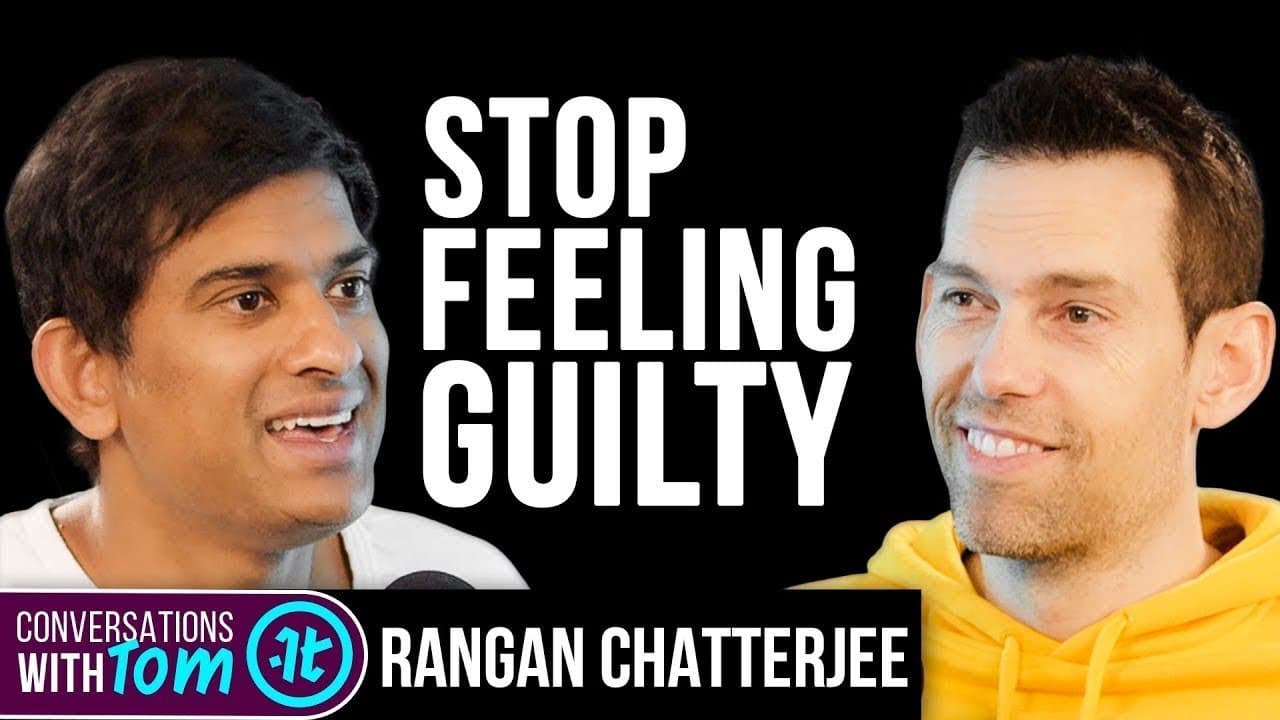
How to Let Go of Toxic Emotions | Rangan Chatterjee on Conversations with Tom
TL;DR
Letting go of toxic emotions requires a long process of self-reflection, learning how emotions arise, and recognizing that familiar reactions may be absorbed patterns rather than fixed personality traits. Dr. Rangan Chatterjee describes releasing guilt linked to his son’s near-fatal vitamin deficiency and becoming less dependent on compensatory behaviors. Read on to see how awareness, underlying stress, and feeling whole shape lasting change.
Transcript
you strike me as somebody who is very even keel very sweet-natured what what's an example of a toxic emotion you've held on to guilts as like a parent or a hundred percent as a parent yeah I mean the biggest turning points in my life was when my son got sick and when he was 6 months old that is why I do what I do today so you know first child sudde... Read More
Key Insights
- 😀 Emotional growth and self-discovery are often sparked by facing adversity and questioning one's beliefs and assumptions.
- 🥺 Striving for self-awareness and recognizing patterns can lead to letting go of guilt and negative emotions.
- 🖤 Addictions and compensatory behaviors can often stem from childhood trauma or a lack of feeling whole or complete.
- 💱 Awareness and storytelling can have a profound impact on personal growth and the ability to change beliefs and behaviors.
Install to Summarize YouTube Videos and Get Transcripts
Explore YouTube Video Summarizer or Get YouTube Transcript Extractor
Questions & Answers
Q: How can you let go of toxic emotions?
Dr. Rangan Chatterjee says there is no trick or hack; letting go is a long process of self-reflection. Reading about emotions, understanding where they may come from, and recognizing their effects can create the awareness needed to change.
Q: What toxic emotion did Dr. Rangan Chatterjee hold on to?
He held on to guilt after his son nearly died from a preventable vitamin deficiency at six months old. Despite his extensive medical training, he felt responsible because he had not prevented the illness.
Q: How did Dr. Chatterjee’s son’s illness affect his view of himself as a doctor?
The experience made his qualifications feel meaningless because he had been unable to prevent his son’s life-threatening deficiency. Although modern medicine saved his son during the acute phase, Chatterjee worried about possible chronic effects from the vitamin D issue.
Q: How did guilt motivate Dr. Chatterjee after his son became ill?
His guilt drove him to investigate how to restore his son to optimal health and address concerns such as eczema and allergies. That experience also gave him the drive and mission to help as many people as possible.
Q: How did guilt affect Dr. Chatterjee’s parenting?
He realized that carrying guilt prevented him from showing up as a father in the best way he could. His emotional baggage made him overly focused on his son, who did not need his father to remain guilty.
Q: How did Dr. Chatterjee distinguish his personality from absorbed patterns?
He came to see that what he had called his personality was partly a response to what he had absorbed throughout his life. By questioning those patterns and peeling away their layers, he says he became freer and no longer carried the same guilt.
Q: How does Gabor Maté’s view of addiction connect it to trauma?
Chatterjee explains that Gabor Maté links addictions involving drugs, alcohol, sugar, sex, or shopping to childhood trauma. In this account, trauma can mean either that something bad happened or that not enough good things happened.
Q: Why can willpower fail to create lasting behavior change?
Chatterjee says willpower may help someone avoid sugar for two or three weeks, but the behavior can return if its underlying stress remains unaddressed. As people understand themselves, release negative emotions, and feel more complete, compensatory behaviors may stop feeling necessary.
Summary & Key Takeaways
-
Dr. Chatterjee's journey began when his son fell ill due to a preventable vitamin deficiency, leading him to question his abilities as a doctor and feel guilt. This experience drove him to find ways to improve his son's health and inspired his mission to help others.
-
The guilt he carried had unintended consequences and affected his parenting. Through self-reflection, reading about emotions, and recognizing patterns, he was able to let go of guilt and change his approach to parenting.
-
Dr. Chatterjee shares insights from Gabor Maté's work on addiction, trauma, and childhood experiences. He emphasizes the importance of realizing that all addictions stem from trauma and that feeling incomplete or lacking can lead to compensatory behaviors like addiction.
Read in Other Languages (beta)
Share This Summary 📚
Summarize YouTube Videos and Get Video Transcripts with 1-Click
Try YouTube Summary with ChatGPT & Claude or YouTube Transcript Generator
Explore More Summaries from Conversations with Tom 📚

Summarize YouTube Videos and Get Video Transcripts with 1-Click
Try YouTube Summary with ChatGPT & Claude or YouTube Transcript Generator