What Was in the President’s Funding Request for NASA on This Week @NASA, April 9, 2021?

TL;DR
The President’s Fiscal Year 2022 discretionary funding request proposed $24.7 billion for NASA, supporting climate research, environmentally friendly aviation, the James Webb Space Telescope, and the Artemis Moon to Mars approach. The update also covers Ingenuity’s first flight attempt, a new space station crew, an RS-25 engine test, and OSIRIS-REx’s final Bennu flyover. Read on for the missions, dates, and people involved.
Transcript
The President’s funding request for NASA … Preparing for first flight on another world … And a new crew heads to the space station … a few of the stories to tell you about – This Week at NASA! Acting NASA Administrator Steve Jurczyk discussed the President’s Fiscal Year 2022 discretionary funding request for NASA. The $24.7 billion funding request ... Read More
Key Insights
- "The $24.7 billion funding request … “Allows NASA to address the climate change challenge in more significant ways than we have in the past." (0:21)
- "Other milestones expected under the new funding request include the launch of the James Webb Space Telescope, which will look back in time to the first galaxies in the early universe." (1:03)
- "Ingenuity, a technology demonstration to test powered flight on another world for the first time, arrived at Mars on Feb. 18, with our Perseverance Mars rover." (2:21)
- "The full-duration test is the second in a scheduled series of seven tests to provide valuable data for development and production of the engines." (3:40)
- "OSIRIS-REx is scheduled to return to Earth, with the sample material it collected from Bennu, in September 2023." (4:33)
Install to Summarize YouTube Videos and Get Transcripts
Explore YouTube Video Summarizer or Get YouTube Transcript Extractor
Questions & Answers
Q: What did the President’s Fiscal Year 2022 funding request propose for NASA?
The discretionary funding request proposed $24.7 billion for NASA. It included support for climate-related work, environmentally friendly aviation, the James Webb Space Telescope, and the Artemis Moon to Mars exploration approach.
Q: How would the funding request support climate and aviation work?
The request would allow NASA to study Earth as a system, from the oceans to the atmosphere, and address climate change more significantly. It also supported aeronautics work such as the X-57 Maxwell flight demonstrator, which was designed to demonstrate electric aircraft technology and distributive propulsion.
Q: What missions and systems did the funding request support?
The request supported the James Webb Space Telescope, which would look back to the first galaxies in the early universe. It also backed the Artemis program, including the Space Launch System rocket, Orion spacecraft, Gateway in lunar orbit, and a commercial human landing system.
Q: When was Ingenuity’s first Mars flight attempt planned?
Ingenuity’s first attempt at powered, controlled flight on another planet was targeted for no earlier than Sunday, April 11. If it flew as expected, a livestream confirming the flight was targeted to begin around 3:30 a.m. EDT on April 12.
Q: Who joined the International Space Station crew on April 9?
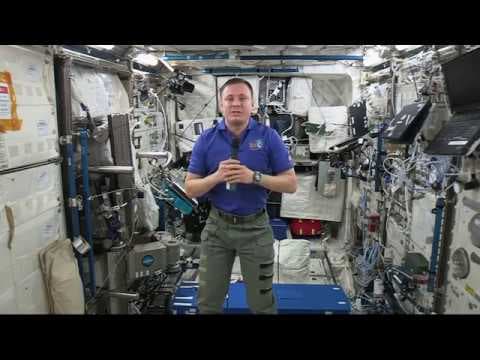
Mark Vande Hei launched from the Baikonur Cosmodrome in Kazakhstan on April 9. A few hours later, he arrived with Roscosmos crew members Oleg Novitskiy and Pyotr Dubrov.
Q: Why did Crew Dragon Resilience relocate at the International Space Station?
Crew Dragon Resilience autonomously moved from the forward port of the Harmony module to its space-facing port on April 5. The relocation would enable new solar arrays to be extracted from a SpaceX cargo spacecraft arriving after Crew-1 departed.
Q: What was the purpose of the April 6 RS-25 engine test?
Engineers conducted the test on the A-1 Test Stand at Stennis Space Center near Bay St. Louis, Mississippi. It was the second in a planned series of seven full-duration tests intended to provide data for engine development and production.
Q: What did OSIRIS-REx do during its final Bennu flyover?
OSIRIS-REx flew over asteroid Bennu on April 7 to document surface changes caused by the previous October’s sample collection maneuver. The spacecraft was scheduled to return the collected sample material to Earth in September 2023.
Summary & Key Takeaways
-
NASA's funding request for FY2022 includes funding to address climate change and develop environmentally-friendly aviation systems.
-
Milestones expected under the new funding request include the launch of the James Webb Space Telescope and advancements in the Artemis program for Moon to Mars exploration.
-
The Ingenuity Mars helicopter is set to attempt its first powered, controlled flight on another planet, and NASA's latest crew has arrived at the International Space Station.
Read in Other Languages (beta)
Share This Summary 📚
Summarize YouTube Videos and Get Video Transcripts with 1-Click
Try YouTube Summary with ChatGPT & Claude or YouTube Transcript Generator
Explore More Summaries from NASA 📚

Summarize YouTube Videos and Get Video Transcripts with 1-Click
Try YouTube Summary with ChatGPT & Claude or YouTube Transcript Generator