Do You Need to Grind 24/7 to Be Successful?
TL;DR
You do not need to grind 24/7 to succeed; focused effort, smarter priorities, and leverage can produce more useful results than mindless busyness. The speaker built side projects with 1 to 4 hours a day, later wrote two books and created over ten products, and recommends using AI to accelerate busywork. Read on for practical ideas about focused work, rest, changing workloads, and making limited time count.
Transcript
Ever since I could remember, I didn't want to work my life away. And I was pretty observant as a child. And I saw that these anti role models were all around me. I didn't want to wake up at 4 a.m., drive to work at 5 a.m., grind away and get home at 7 p.m. because I was trying to support a family working double shifts just to be met by a spouse, re... Read More
Key Insights
- Success doesn't require working 12-16 hours a day; focused work can be more effective.
- Grinding is often a status symbol rather than a productive strategy.
- AI and technology can help maximize productivity and reduce work hours.
- Leisure and rest are crucial for creativity and effective problem-solving.
- Most successful people have routines that balance intense work with leisure.
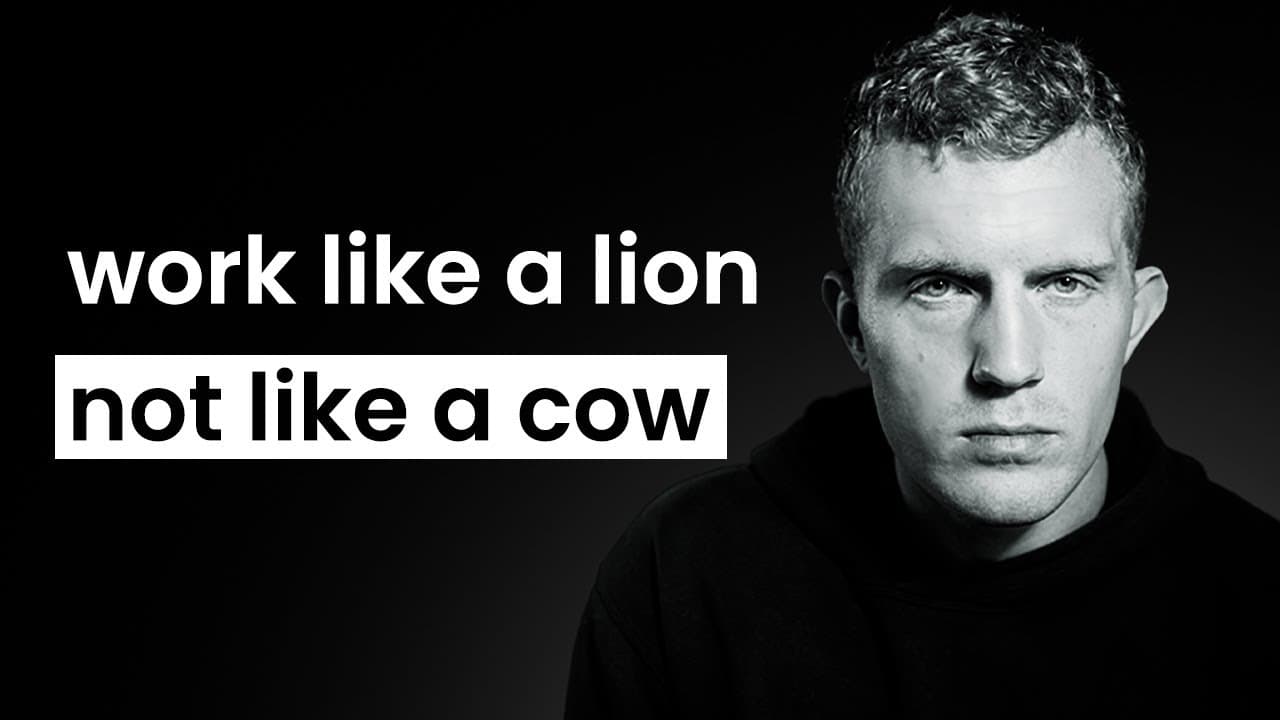
- Working like a lion, in intense bursts, is more efficient than grazing like a cow.
- Permissionless leverage, such as digital products, allows for scalable success.
- Deadlines and a clear focus on lifestyle priorities enhance productivity.
Install to Summarize YouTube Videos and Get Transcripts
Explore YouTube Video Summarizer or Get YouTube Transcript Extractor
Questions & Answers
Q: How can you succeed without working long hours?
Focus your limited time on high-impact work, personal strengths, and useful levers instead of mindless activity. The speaker built side projects while working or studying by using 1 to 4 hours a day and says time should be prioritized honestly.
Q: Do beginners need to grind 12 to 16 hours a day?
The speaker argues that beginners do not automatically need to work 12 to 16 hours daily. When he had a full-time job, he used 1 to 4 hours for his side business and treated that limitation as an advantage.
Q: Why can grinding become an ineffective strategy?
Grinding can substitute long hours for careful decisions about what work actually matters. The speaker describes mindless grinding as a status symbol and argues that people working more than four hours may still have tasks they can drop, improve, or accelerate.
Q: How can AI help you work fewer hours?
AI can speed up busywork and support activities such as developing ideas, preparing YouTube scripts or newsletters, and writing social posts. The speaker's free mini-course also demonstrates an AI-based focus coach and a tribe of mentors for improving thought and concentration.
Q: What should you do when you have only 1 to 4 hours available?
Use those hours deliberately instead of assuming progress requires an entire day. The speaker spent 2 to 3 hours daily on side projects and Udemy or YouTube learning in college, then used parts of his commute and workday to learn and build businesses.
Q: Does working fewer hours mean always following a four-hour schedule?
No. The speaker says four hours is one possible approach, not a permanent rule, because productivity comes in seasons. Depending on the season, work may last zero, two, four, six, eight, ten, or 12 to 16 hours.
Q: Why are leisure and rest important for productive work?
The page's central approach treats leisure and rest as fuel for creativity and effective problem-solving rather than as obstacles to success. It recommends balancing intense, focused work with recovery instead of treating constant busyness as proof of productivity.
Q: What results did the speaker achieve without consistently grinding all day?
The speaker says he has written two books, created over ten products, and begun working on a software startup. He presents these results as evidence that focused work, better priorities, and leverage can matter more than consistently working 12 to 16 hours.
Summary & Key Takeaways
-
Success isn't about grinding 12-16 hours daily. Instead, focus on quality work and leverage tools like AI to achieve more with less effort. Embrace focused, high-energy work sessions and prioritize rest to fuel creativity and productivity. Reevaluate the glorification of busyness and adopt a balanced work-life approach.
-
Grinding is often seen as a status symbol, but it doesn't lead to success. By focusing on quality over quantity, leveraging AI, and embracing leisure, you can achieve more. Successful people balance intense work with rest, enhancing creativity and productivity.
-
Working like a lion, in intense bursts, is more effective than grazing like a cow. Permissionless leverage, such as digital products, allows for scalable success. Deadlines and a clear focus on lifestyle priorities enhance productivity, leading to a more balanced and fulfilling life.
Read in Other Languages (beta)
Share This Summary 📚
Summarize YouTube Videos and Get Video Transcripts with 1-Click
Try YouTube Summary with ChatGPT & Claude or YouTube Transcript Generator
Explore More Summaries from Dan Koe 📚



Summarize YouTube Videos and Get Video Transcripts with 1-Click
Try YouTube Summary with ChatGPT & Claude or YouTube Transcript Generator