E150: Israel/Gaza escalating or not? EU censorship regime, Penn donors revolt, GLP-1 hype cycle
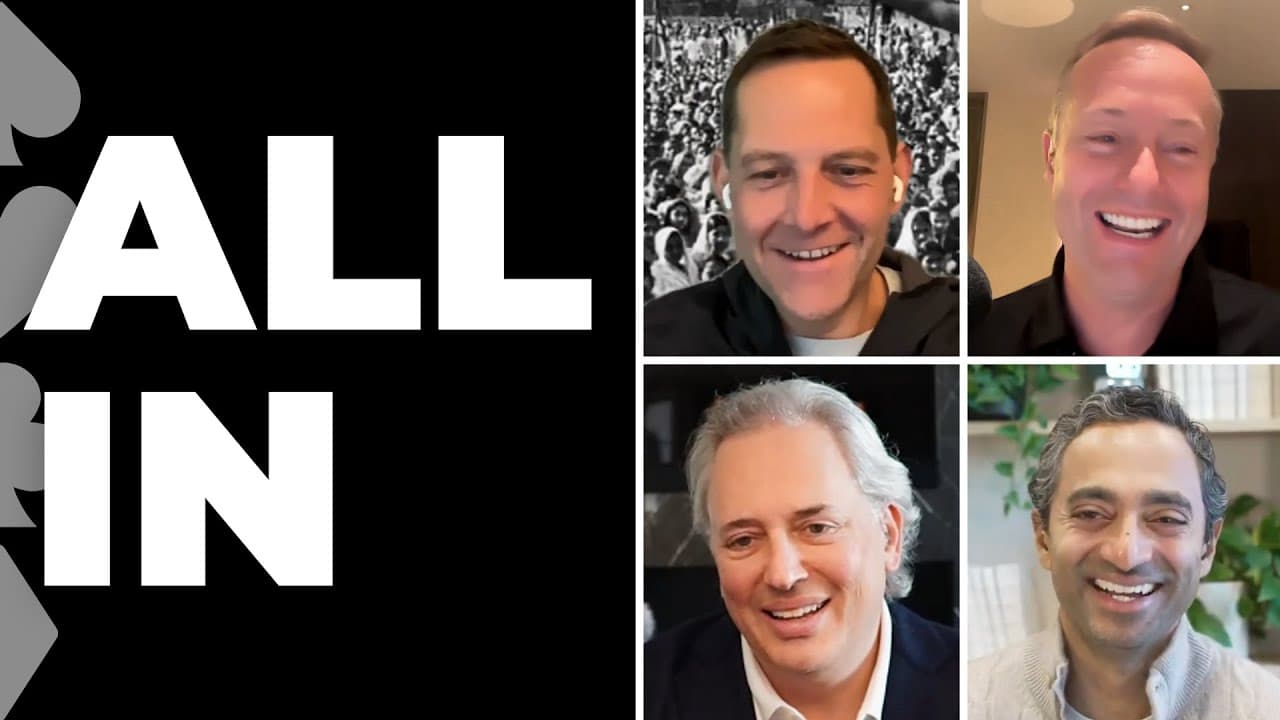
TL;DR
The hosts disagree on whether the Israel–Gaza war is escalating: one sees restraint compared with fears of a wider conflict, while another calls the situation highly volatile. All-In Podcast episode 150 also examines the EU Digital Services Act, including rules for disinformation, illegal content, advertising, algorithms, and content moderation. Read on for the episode’s competing assessments and its concerns about online regulation.
Transcript
well you're talking about three very different actors there wait David David behind you is your security cameras are on do you want to turn those off yeah I don't know how that all right hold on a second you sit there and watch those all day security apparatus Christ what is this guy the Batman he sits in that couch all day and watches his security... Read More
Key Insights
- 📬 The Digital Services Act poses a threat to the open internet, raising concerns about privacy, content moderation, and government control.
- ➗ The Israeli-Palestinian conflict highlights the complexity and deep divisions, requiring de-escalation efforts, empathy, and resolution of longstanding grievances.
- 🥶 The EU's role in regulating the internet may have repercussions on the global digital landscape, with potential impacts on innovation, user experiences, and free speech.
Install to Summarize YouTube Videos and Get Transcripts
Explore YouTube Video Summarizer or Get YouTube Transcript Extractor
Questions & Answers
Q: Is the Israel–Gaza conflict escalating or not?
The hosts offer different assessments. Chamath Palihapitiya says the conflict has not escalated as much as feared and sees people on all sides trying to maintain composure, while David Sacks argues that the situation remains incredibly volatile.
Q: Why does David Sacks consider the Israel–Gaza situation volatile?
Sacks points to disputed reports about an explosion near a Gaza hospital and the immediate protests and riots across the Middle East. Because responsibility was unclear, he says judgment should be suspended until a proper investigation establishes what happened.
Q: Why is Chamath Palihapitiya relatively optimistic about the conflict?
Palihapitiya says the feared wider contagion, including the possibility of World War III, had not occurred. Although the bloodshed had not stopped, he believes multiple actors were maintaining their composure amid numerous flashpoints.
Q: How did the war affect David Friedberg personally?
Friedberg says he skipped the previous episode because he was too emotional after seeing reports and material from the attacks in Israel. As a parent, he thought about his own children and was also deeply saddened by innocent children suffering in Gaza.
Q: What are the key elements of the EU Digital Services Act?
The DSA includes tighter rules concerning disinformation, illegal content, and transparent advertising. It also seeks algorithmic transparency, options to leave recommendation systems, and the sharing of key data with researchers and authorities.
Q: How could the Digital Services Act affect content moderation?
The DSA seeks greater transparency about how platforms make content-moderation decisions. The episode’s existing discussion raises concerns about possible bias, government oversight, privacy, and freedom of expression.
Q: Why is the Digital Services Act described as a threat to the open internet?
The episode associates the DSA with increased government influence over online content and platform decisions. Its concerns center on privacy, moderation, free speech, innovation, and users’ online experiences.
Q: What topics does All-In Podcast episode 150 cover?
Episode 150 covers technology, business, and politics, with a central discussion of Israel, the war with Hamas, Gaza, and possible downstream effects. Its title also identifies the EU censorship regime, the Penn donor revolt, and the GLP-1 hype cycle as topics.
Summary & Key Takeaways
-
The DSA aims to foster safer online environments by enforcing rules on disinformation, illegal content, and transparent advertising.
-
Questions arise regarding the potential impact on privacy, content moderation, and the role of governments in regulating the internet.
-
The Israeli-Palestinian conflict intensifies, fueled by the bombing in Israel and the suffering of innocent children in Gaza, raising concerns about the escalation and its implications for the region and the world.
Read in Other Languages (beta)
Share This Summary 📚
Summarize YouTube Videos and Get Video Transcripts with 1-Click
Try YouTube Summary with ChatGPT & Claude or YouTube Transcript Generator
Explore More Summaries from All-In Podcast 📚
Summarize YouTube Videos and Get Video Transcripts with 1-Click
Try YouTube Summary with ChatGPT & Claude or YouTube Transcript Generator