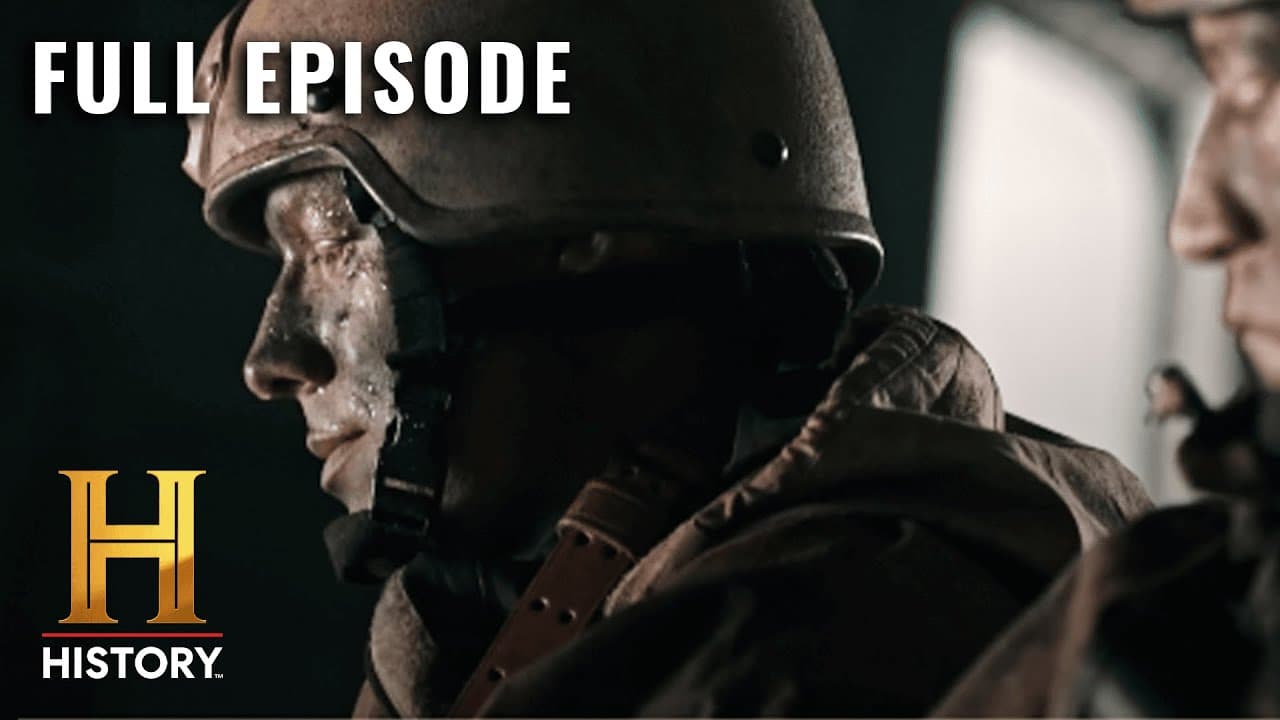
How Did Army Rangers Secure Haditha Dam?
TL;DR
U.S. Army Rangers secured Haditha Dam by capturing its elevated structures, using the high ground to observe and engage Iraqi forces, and continuing to fight despite being heavily outnumbered. The mission was intended to last about 30 hours before relief arrived, but it escalated into a prolonged battle involving gunfire, RPGs, casualties, artillery, deprivation, and evacuation.
Transcript
There is no going back to the person that I was before Haditha Dam. This was unlike any mission we'd been taught about in Ranger history. We sent a hundred guys, and they had like a battalion, so we were outnumbered. My chief fear was, am I gonna have the guts to go forward? Am I gonna have the courage? I was a 19-year-old private. What I was ... Read More
Key Insights
- Haditha Dam was a strategically important objective because it carried one of the main highways across the Euphrates, generated hydroelectric power for western Iraq, and could potentially be sabotaged to flood Haditha and interfere with the invasion.
- The original mission was expected to be straightforward: Rangers would seize the fortified location and hold it for about 30 hours until conventional forces arrived. That expectation collapsed when the operation developed into an intense and extended battle.
- The Ranger force consisted of roughly a hundred soldiers facing an Iraqi force described as approximately battalion-sized. Despite being outnumbered, the Rangers captured the structure relatively easily because Iraqi troops had not fully secured the dam’s high ground.
- High ground was central to the Rangers’ defense because positions on and near the dam provided observation and broad fields of fire. The bunker called the Eagles Nest overlooked the valley and enabled Rangers to relay valuable information about the unfolding battle.
- Matthew Sanders was a 19-year-old private whose squad assigned him to learn emergency medical skills even though he had entered the Army as an infantryman. He concealed his fear that he might be unable to help someone under combat conditions.
- Sanders’s first combat medical response involved treating a soldier who had been shot in the foot after a vehicle passed through an ambush and returned through the same kill zone. He applied a pressure dressing, while the wounded soldier declined pain medication.
- The battle began after the Rangers detained Iraqi soldiers and moved to secure the remaining hydroelectric facility. Gunfire and airbursting RPGs followed, while aircraft conducted gun runs overhead and enemy fire reached the Rangers from multiple directions.
- Combat changed Sanders’s understanding of violence because his first engagement did not produce the emotions he had anticipated. Shooting initially felt similar to training, and the broader battle erupted before he had time to process what had happened.
Install to Summarize YouTube Videos and Get Transcripts
Explore YouTube Video Summarizer or Get YouTube Transcript Extractor
Questions & Answers
Q: Why was Haditha Dam important during the invasion of Iraq?
Haditha Dam was important for three reasons stated in the account. It provided one of the main highway crossings over the Euphrates, generated hydroelectric power for western Iraq, and presented a potential sabotage threat. Military planners feared that Iraqi forces could damage the dam, flood the city of Haditha, harm local people, and create serious problems for the ongoing invasion.
Q: What was the Rangers’ original mission at Haditha Dam?
The Rangers were ordered to seize the dam and its hydroelectric facility, then hold the position until conventional forces relieved them. The plan assumed that the operation would be relatively simple and that relief would arrive after about 30 hours. Instead, enemy resistance turned the assignment into a far more dangerous battle involving sustained gunfire, RPG attacks, casualties, artillery, deprivation, and evacuation.
Q: How did the Rangers gain an advantage at Haditha Dam?
The Rangers gained an advantage by taking the dam structure and occupying elevated terrain. Iraqi forces had entrenched themselves in the low ground but had not fully secured the high ground. From positions overlooking the valley, including a bunker called the Eagles Nest, Rangers could observe enemy movements, relay information, and use broad fields of fire to push opposing forces back.
Q: Why were the Rangers outnumbered at Haditha Dam?
The account describes the American force as roughly a hundred Rangers and the opposing Iraqi force as approximately battalion-sized. The mission had originally been presented as a limited seizure and holding operation, not a major prolonged engagement. Once the Rangers’ presence became known, heavy gunfire and RPG attacks erupted, revealing that they faced a much stronger force than the simple plan had anticipated.
Q: How did Matthew Sanders become a Ranger medic?
Matthew Sanders entered the Army as an infantryman and did not initially sign up to become a medic. His squad assigned him to learn emergency medical skills, and the company’s senior medic, Doc Buma, trained him as an infantry medic. Buma also became his mentor. Sanders worried privately about whether he could treat casualties effectively, but resolved to give everything he could when needed.
Q: What happened during Matthew Sanders’s first casualty treatment?
Sanders responded after a vehicle drove through an ambush, turned around, and passed through the kill zone again. Hearing a call for a medic, he expected an arterial bleed or chest wound. Instead, he found a soldier with a gunshot wound to the foot. Sanders applied a quick pressure dressing, and the soldier refused pain medication. The successful treatment strengthened Sanders’s confidence.
Q: How did the battle at Haditha Dam begin?
The Rangers arrived after traveling through the night, approached the enormous dam, and detained several Iraqi soldiers. They hoped to secure the rest of the hydroelectric facility quietly. Gunfire then broke out, followed by RPGs that flew upward and burst over their positions. Aircraft began making gun runs, and the Rangers soon faced fire coming from multiple directions around the dam.
Q: How did combat affect Matthew Sanders at Haditha Dam?
Sanders entered the mission wondering whether he would have the courage to advance and whether he could fulfill his medical responsibilities. During his first shooting engagement, the experience did not feel as he had imagined and initially seemed no different from training. Treating a wounded soldier showed him that he could function as a medic, but he later concluded that Haditha permanently changed him.
Summary & Key Takeaways
-
During the 2003 invasion of Iraq, roughly a hundred U.S. Army Rangers received orders to seize Haditha Dam. The site carried a major highway across the Euphrates and supplied hydroelectric power to western Iraq. Leaders also feared that sabotage could flood Haditha and disrupt the wider invasion effort.
-
The Rangers approached the dam at night, detained Iraqi soldiers, and began securing the hydroelectric facility. Their hope for a quiet operation ended when fighting erupted. Although Iraqi forces occupied low ground and greatly outnumbered them, the Rangers captured the dam structure and used its elevation to push attackers back.
-
The battle tested inexperienced Ranger Matthew Sanders, who had been trained as an infantry medic by Doc Buma. When a soldier suffered a gunshot wound to the foot, Sanders moved forward, applied a pressure dressing, and gained confidence in his medical role. The Rangers ultimately endured the fighting and secured the dam.
Read in Other Languages (beta)
Share This Summary 📚
Summarize YouTube Videos and Get Video Transcripts with 1-Click
Try YouTube Summary with ChatGPT & Claude or YouTube Transcript Generator
Explore More Summaries from HISTORY 📚




Summarize YouTube Videos and Get Video Transcripts with 1-Click
Try YouTube Summary with ChatGPT & Claude or YouTube Transcript Generator