How to Reduce Inflammation Through Better Sleep
TL;DR
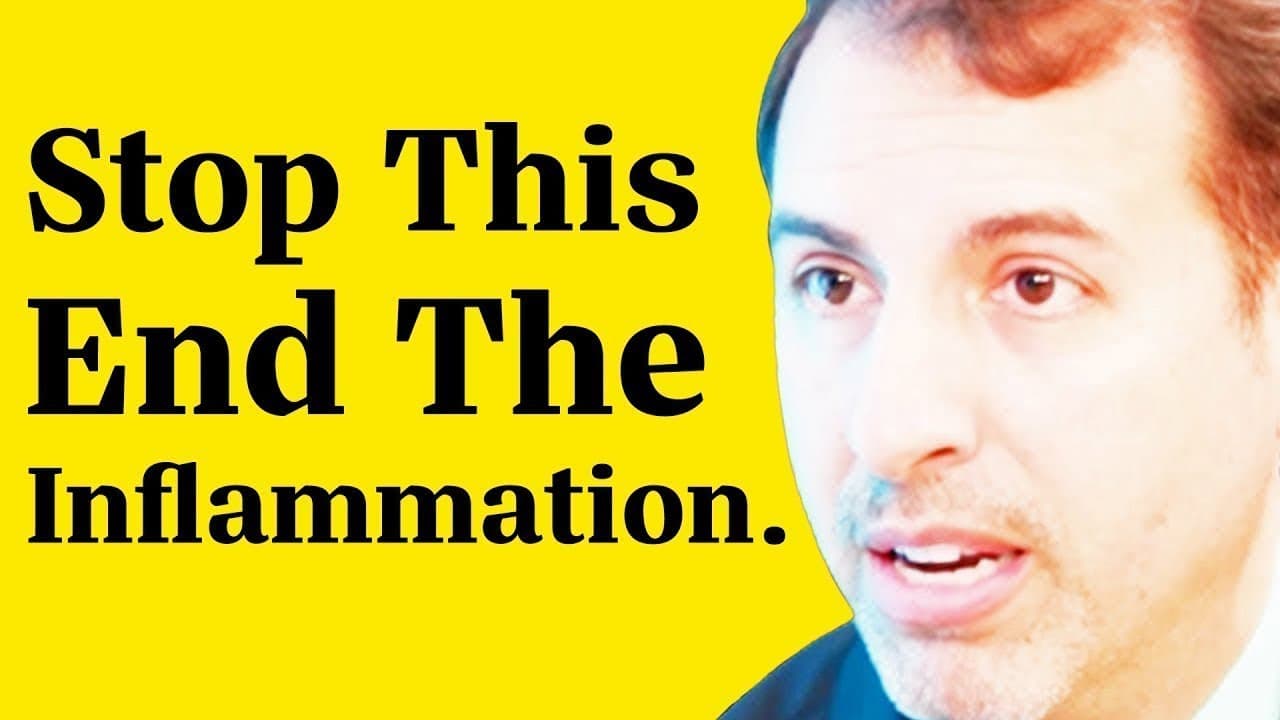
Inflammation is a necessary response to infection, cellular damage, and repair, but it becomes problematic when it persists longer than needed. Getting at least seven hours of sleep and aligning sleep with the body’s circadian rhythm may help essential processes finish properly. Reducing bright light exposure at night can prevent the brain from interpreting evening as daytime and delaying sleep.
Transcript
inflammation is at the heart of many of the different conditions that we struggle with these days heart disease cancer depression strokes alzheimer's whatever it is we know that inflammation often sits at the heart right at the start of this conversation i wonder if you could explain to people you know how do you see inflammation what is it and why... Read More
Key Insights
- Inflammation is a sign that an active process is occurring in the body, including the immune response to infection and the repair of damaged cells. It is not inherently good or bad, because its value depends on its context, intensity, duration, and timely resolution.
- Chronic inflammation can arise when an infection is not cleared or when inflammatory activity continues beyond what the body needs. The desired outcome is sufficient inflammation to complete necessary work, followed by its removal so it does not remain associated with ongoing disease processes.
- The relationship between inflammation and health is nuanced rather than an on-off choice. Attempts to eliminate all inflammation misunderstand its essential role, while excessive or unnecessary inflammation can contribute to the conditions discussed, including heart disease, cancer, depression, strokes, and Alzheimer’s disease.
- Food, movement, sleep, and relaxation form a practical framework for addressing inappropriate inflammation. These four health pillars are emphasized because they strongly affect how people feel and function, while also remaining areas over which many people have a relatively high degree of control.
- Sleep problems involve both quantity and quality. A common problem in the Western world is that people want adequate sleep but do not allocate enough time for it, although insomnia creates a different situation in which someone wants to sleep more but cannot fall asleep.
- Circadian rhythm is controlled by the suprachiasmatic nucleus in the brain, which coordinates smaller clocks throughout the body’s cells. When daily behavior is misaligned with this internal timing system, a person may attempt sleep before the body is biologically prepared for it.
- Light is the most powerful signal telling the brain what time of day it is, although food and social interaction also provide timing information. Electricity, light bulbs, televisions, and other screens have dramatically changed how much light reaches human eyes after sunset.
- Bright light at night can tell the brain that daytime is continuing, delaying the circadian rhythm and pushing sleep later. Because work and social demands often require a fixed alarm time, the delayed bedtime reduces total sleep, making at least seven hours a useful initial target.
Install to Summarize YouTube Videos and Get Transcripts
Explore YouTube Video Summarizer or Get YouTube Transcript Extractor
Questions & Answers
Q: What is inflammation and why does the body need it?
Inflammation is a sign that some form of work is occurring inside the body. It may accompany the immune system’s response to an infection or the repair of damaged cells. The discussion compares it with construction during the building of a house or road: the disruption is necessary for progress, but it should end once the required work has been completed.
Q: When does inflammation become a health problem?
Inflammation becomes problematic when it is excessive, remains longer than necessary, or turns chronic because an underlying issue such as an infection has not been cleared. The goal is not to eliminate every inflammatory response. The body needs enough inflammation to perform necessary immune and repair functions, followed by effective resolution when those functions are finished.
Q: Is all inflammation harmful to the body?
No. Inflammation is neither automatically good nor automatically bad. Its effect depends on the context, the amount of inflammation, and whether it disappears after completing the necessary repair or immune task. Treating it as something that should always be eliminated ignores its useful role in fighting infection and repairing damaged cells.
Q: Which lifestyle factors may help reduce inappropriate inflammation?
The lifestyle framework presented consists of food, movement, sleep, and relaxation. These four pillars are described as major influences on how people feel and operate, and many people have substantial control over them. The transcript focuses most closely on sleep, particularly adequate duration, circadian alignment, and the effects of bright evening light on bedtime.
Q: How are sleep and inflammation connected?
Sleep allows important processes in the body to be completed. The discussion states that research has established that inadequate sleep prevents necessary bodily processes from finishing properly, although scientists do not know exactly why humans sleep in general. Because inflammation reflects ongoing immune or repair activity, sufficient sleep is presented as an important lifestyle priority for supporting appropriate bodily regulation.
Q: How much sleep should adults get each night?
The stated recommendation for adults is seven to eight hours of sleep per night at minimum, with at least seven hours presented as the lowest-hanging target. Many people reduce their sleep not because they cannot sleep, but because they stay awake too late while still needing to rise at a fixed time for daily obligations.
Q: How does bright light at night affect sleep?
Bright evening light entering the eyes can signal to the brain that it is still daytime. This pushes the circadian rhythm later, so the body may not become ready for sleep until well after the intended bedtime. When morning responsibilities still require waking at a fixed time, this delayed sleep onset reduces the total amount of sleep obtained.
Q: What is the circadian rhythm and how does it control sleep?
The circadian rhythm is the body’s internal timing system, controlled in the brain by a small region called the suprachiasmatic nucleus. This master clock coordinates smaller clocks throughout the body’s cells. It receives time-of-day signals from food, social interaction, and especially light, helping determine when the body is biologically prepared to sleep.
Summary & Key Takeaways
-
Inflammation signals that an active process is occurring in the body, such as fighting an infection or repairing damaged cells. Like construction around a house or road, it is necessary for useful work but can create problems when it becomes excessive, remains chronic, or continues after the underlying work should be complete.
-
The discussion organizes controllable lifestyle factors into four pillars: food, movement, sleep, and relaxation. Sleep receives particular attention because insufficient quantity or poor quality can prevent necessary bodily processes from being completed. For adults, the stated minimum target is seven to eight hours of sleep each night.
-
Circadian rhythm influences when the body is ready to sleep. The brain’s suprachiasmatic nucleus acts as a master clock, while signals such as food, social interaction, and especially light indicate the time of day. Bright evening light can delay this clock, leading to later sleep despite fixed morning obligations.
Read in Other Languages (beta)
Share This Summary 📚
Summarize YouTube Videos and Get Video Transcripts with 1-Click
Try YouTube Summary with ChatGPT & Claude or YouTube Transcript Generator
Explore More Summaries from Dr Rangan Chatterjee 📚





Summarize YouTube Videos and Get Video Transcripts with 1-Click
Try YouTube Summary with ChatGPT & Claude or YouTube Transcript Generator