What Is VX Nerve Agent and How Does It Affect the Body?
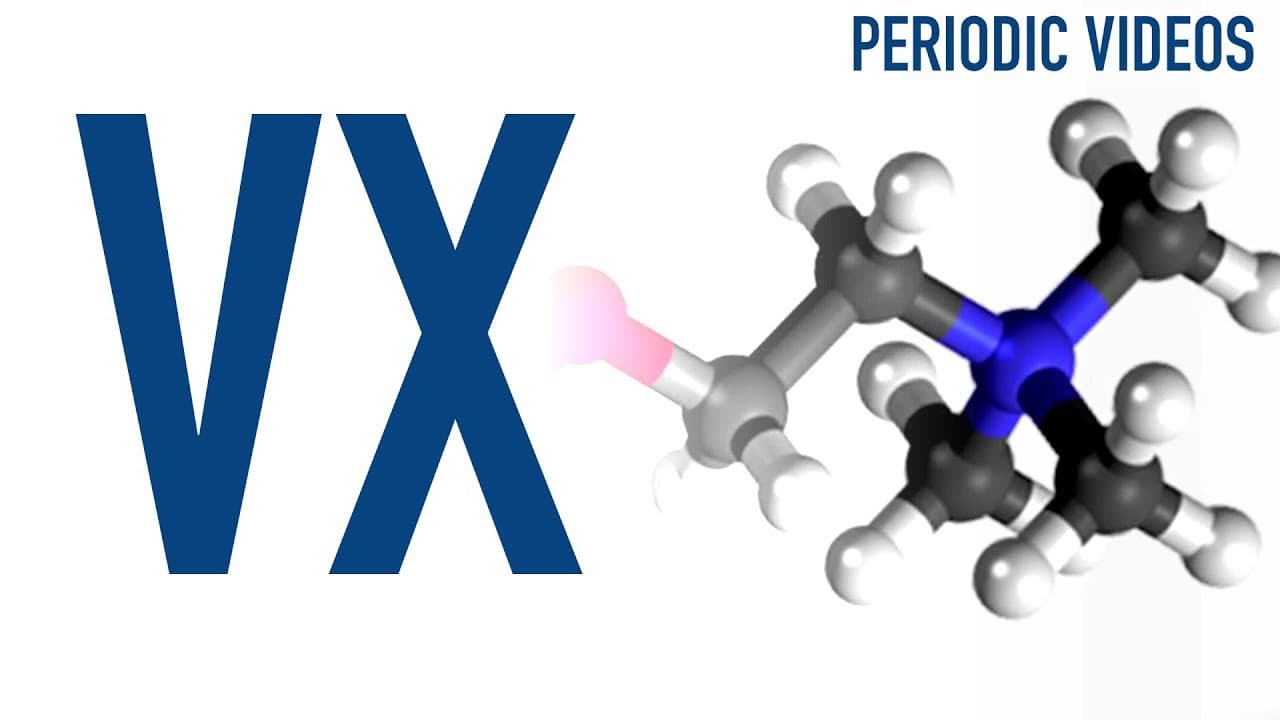
TL;DR
VX is a highly potent nerve agent developed in the 1950s that disrupts normal nervous system function by preventing the breakdown of acetylcholine. This leads to uncontrolled muscle contractions, respiratory failure, and potentially death from asphyxiation, with as little as 10 milligrams being lethal. Efforts by the Organization for the Prohibition of Chemical Weapons have successfully destroyed 95% of chemical weapon stocks worldwide.
Transcript
It's not actually a gas; it's quite a thick, heavy oil. It was developed in the 1950s during some pesticide research, actually, and they found some agents which were particularly toxic. I believe that nerve agents are some of the most dreadful chemicals that chemists have ever synthesized. The "V" stands for "venomous agent" so this is venomous age... Read More
Key Insights
- 👨🔬 VX nerve agent is a highly toxic chemical developed during pesticide research in the 1950s.
- 😟 The phosphorus-to-sulfur bond in VX plays a crucial role in its interaction with the nervous system.
- 🔫 The Organization for the Prohibition of Chemical Weapons has been successful in destroying a significant percentage of chemical weapon stocks worldwide.
- 😣 VX is more potent than sarin nerve agent and can cause severe respiratory failure.
- 🥺 The presence of VX nerve agent can lead to uncontrolled muscle contractions and convulsions.
- 😟 The neurotransmitter acetylcholine plays a vital role in the nervous system's signaling process.
- 😒 The development of binary missiles and bombs made VX nerve agent easier to assemble and use.
Install to Summarize YouTube Videos and Get Transcripts
Explore YouTube Video Summarizer or Get YouTube Transcript Extractor
Questions & Answers
Q: What is VX nerve agent, and how was it developed?
VX nerve agent is a highly toxic chemical developed in the 1950s during pesticide research. It was created by synthesizing specific agents that were found to be particularly toxic.
Q: How does VX nerve agent affect the nervous system?
VX interrupts the nervous system by mimicking acetylcholine, the neurotransmitter responsible for muscle contractions. It binds to the receptors, preventing the breakdown of acetylcholine and leading to uncontrolled muscle contractions and respiratory failure.
Q: How does VX nerve agent compare to other nerve agents like sarin?
VX is more potent than sarin. Only around 10 milligrams of VX, which is a hundredth of a gram, is enough to kill an average human. It is extremely dangerous and can cause vomiting, diarrhea, convulsions, and asphyxiation.
Q: What efforts have been made to prevent the use of VX nerve agent?
The Organization for the Prohibition of Chemical Weapons has been working to destroy 95% of chemical weapon stocks worldwide, including VX nerve agent, over the past two decades.
Summary & Key Takeaways
-
VX is a thick, heavy oil developed during pesticide research in the 1950s and is classified as a nerve agent.
-
The key component of VX is a phosphorus-to-sulfur bond that reacts with the nervous system, causing uncontrolled muscle contractions and respiratory failure.
-
The Organization for Prohibition of Chemical Weapons has worked towards destroying 95% of chemical weapon stocks worldwide.
Read in Other Languages (beta)
Share This Summary 📚
Summarize YouTube Videos and Get Video Transcripts with 1-Click
Try YouTube Summary with ChatGPT & Claude or YouTube Transcript Generator
Explore More Summaries from Periodic Videos 📚



Summarize YouTube Videos and Get Video Transcripts with 1-Click
Try YouTube Summary with ChatGPT & Claude or YouTube Transcript Generator