What Is Mass Spectrometry and How Is It Used in Biology?
TL;DR
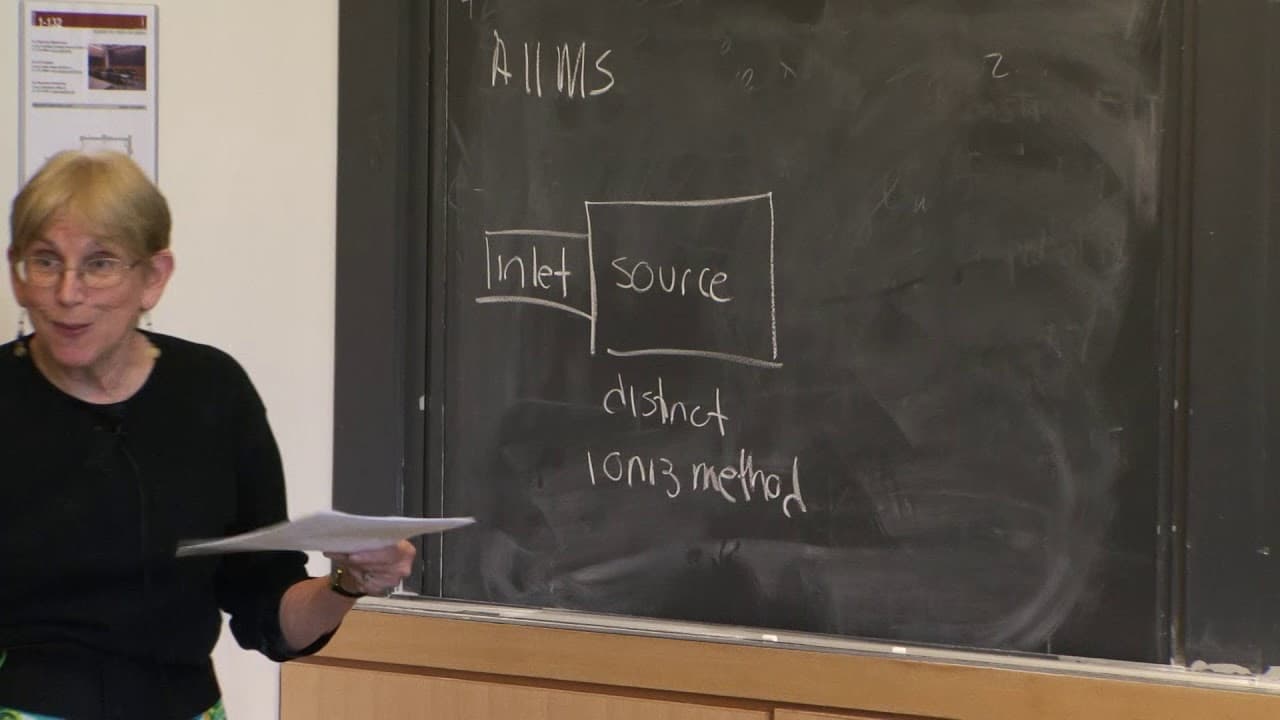
Mass spectrometry is a technique that has transformed biological research, enabling the study of complex molecules like proteins and their modifications. It is particularly crucial for analyzing reactive oxygen species and post-translational modifications, such as sulfenic acids, which play significant roles in cellular signaling and regulation.
Transcript
The following content is provided under a Creative Commons license. Your support will help MIT OpenCourseWare continue to offer high quality educational resources for free. To make a donation or view additional materials from hundreds of MIT courses, visit MIT OpenCourseWare at ocw.mit.edu. JOANNE STUBBE: This recitation on mass spec is supposedly ... Read More
Key Insights
- 👨🔬 Mass spectrometry is a powerful tool that has revolutionized research in biology and chemistry.
- 💁 The study of post-translational modifications, such as sulfenic acid formation, is becoming increasingly important in understanding cellular signaling and regulation.
- 🏣 Techniques and methods for accurately analyzing and quantifying post-translational modifications are continuously being developed and improved.
Install to Summarize YouTube Videos and Get Transcripts
Explore YouTube Video Summarizer or Get YouTube Transcript Extractor
Questions & Answers
Q: What is the major unsolved problem in mass spectrometry?
The major unsolved problem in mass spectrometry is the accurate analysis and quantification of post-translational modifications, such as sulfenic acid formation.
Q: How does hydrogen peroxide react with cystine to form sulfenic acids?
Hydrogen peroxide reacts with cystine to form sulfenic acids through a reaction that is relatively slow, with a rate constant of 1 per molar per second.
Q: How can researchers distinguish between sulfenic acid and cystine in a sample?
Researchers can use specific reagents, such as dimedone, to selectively modify sulfenic acids. This allows for the identification and quantification of sulfenic acid modifications.
Q: What are some of the challenges in analyzing and quantifying post-translational modifications?
Some of the challenges in analyzing and quantifying post-translational modifications include the potential for low abundance and the need for specific reagents and methods to selectively target and detect these modifications.
Summary & Key Takeaways
-
Mass spectrometry has undergone a revolution in recent years, becoming a widely used tool in biology and chemistry.
-
The study of reactive oxygen species is becoming increasingly important, as they have been found to play a role in signaling and regulation within cells.
-
Researchers are focusing on post-translational modifications, such as sulfenic acid formation, and developing methods to accurately analyze and quantify these modifications.
Read in Other Languages (beta)
Share This Summary 📚
Summarize YouTube Videos and Get Video Transcripts with 1-Click
Try YouTube Summary with ChatGPT & Claude or YouTube Transcript Generator
Explore More Summaries from MIT OpenCourseWare 📚


Summarize YouTube Videos and Get Video Transcripts with 1-Click
Try YouTube Summary with ChatGPT & Claude or YouTube Transcript Generator