What Is Self-Attention and How Does It Enhance Generative Models?

TL;DR
Self-attention is a mechanism that allows generative models, like transformers, to learn the structure and relationships within data, improving representation and generation tasks in text, images, and music. It captures self-similarity and enhances capabilities through relative attention, which models expressive timing and multi-modal outputs, creating more coherent and contextually aware outputs.
Transcript
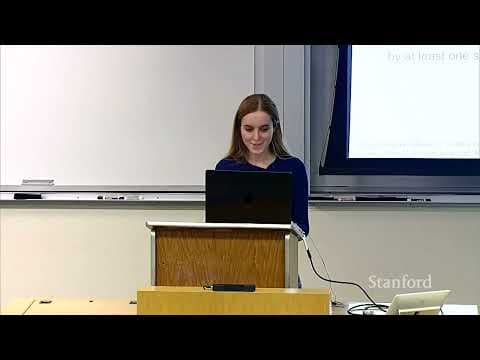
Okay. So I'm delighted to introduce, um, our first lot of invited speakers. And so we're gonna have two invited speakers, um, today. So starting off, um, we go and have Ashish Vaswani who's gonna be talking about self attention for generative models and in particular, um, we'll introduce some of the work on transformers that he is well-known for al... Read More
Key Insights
- 🥺 Self-attention enables models to capture relationships and dependencies within data, leading to improved generation and representation learning.
- 🤳 Relative attention extends self-attention and enables the modeling of expressive timing and multi-modal outputs in generative models.
- 🤳 Self-attention can be applied to various domains, including text, images, music, and graphs, providing flexible modeling capabilities.
Install to Summarize YouTube Videos and Get Transcripts
Explore YouTube Video Summarizer or Get YouTube Transcript Extractor
Questions & Answers
Q: What is self-attention and how does it benefit generative models?
Self-attention is a mechanism that allows models to capture relationships and dependencies within a sequence of data. It enables generative models to capture structures, symmetries, and repetition patterns, leading to improved generation performance.
Q: How does relative attention differ from traditional self-attention?
Relative attention introduces additional computations to measure the relative distance between elements in a sequence, allowing the model to consider both the content similarity and the positional relationship. This enables the model to capture translational equivariance and expressive timing in music generation.
Q: Can self-attention be applied to graph-based problems?
Yes, self-attention can be extended to solve graph-based problems by modeling relationships between nodes in a graph. It provides a way to capture interactions and dependencies between different elements of the graph, making it useful for tasks like recommendation systems and molecular chemistry.
Q: How can self-attention be used in transfer learning?
Self-attention has been successfully applied in transfer learning, allowing models to learn from large unlabeled datasets and perform well on downstream tasks with limited labeled data. This is achieved by pre-training the model on a large dataset and then fine-tuning it on a specific task, leveraging the learned representations.
Summary & Key Takeaways
-
Self-attention is a key component in generative models, such as transformers, that enables them to capture the structure and relations within large datasets.
-
Self-attention allows for the modeling of self-similarity in images and music, leading to improved generation and representation learning.
-
Relative attention, a variant of self-attention, extends its capabilities by enabling the modeling of expressive timing and the handling of multi-modal outputs.
-
Self-attention has also been successfully applied to graph-based problems and offers potential for scaling up models and transfer learning.
Read in Other Languages (beta)
Share This Summary 📚
Summarize YouTube Videos and Get Video Transcripts with 1-Click
Try YouTube Summary with ChatGPT & Claude or YouTube Transcript Generator
Explore More Summaries from Stanford Online 📚

Summarize YouTube Videos and Get Video Transcripts with 1-Click
Try YouTube Summary with ChatGPT & Claude or YouTube Transcript Generator