Can Argon Carbonate Beer Instead of CO2?
TL;DR
Argon cannot effectively carbonate beer on its own, resulting in flat beer with minimal bubbles. While argon has higher solubility than nitrogen, it lacks the necessary carbonation qualities, making a blend with carbon dioxide more effective for achieving better results.
Transcript
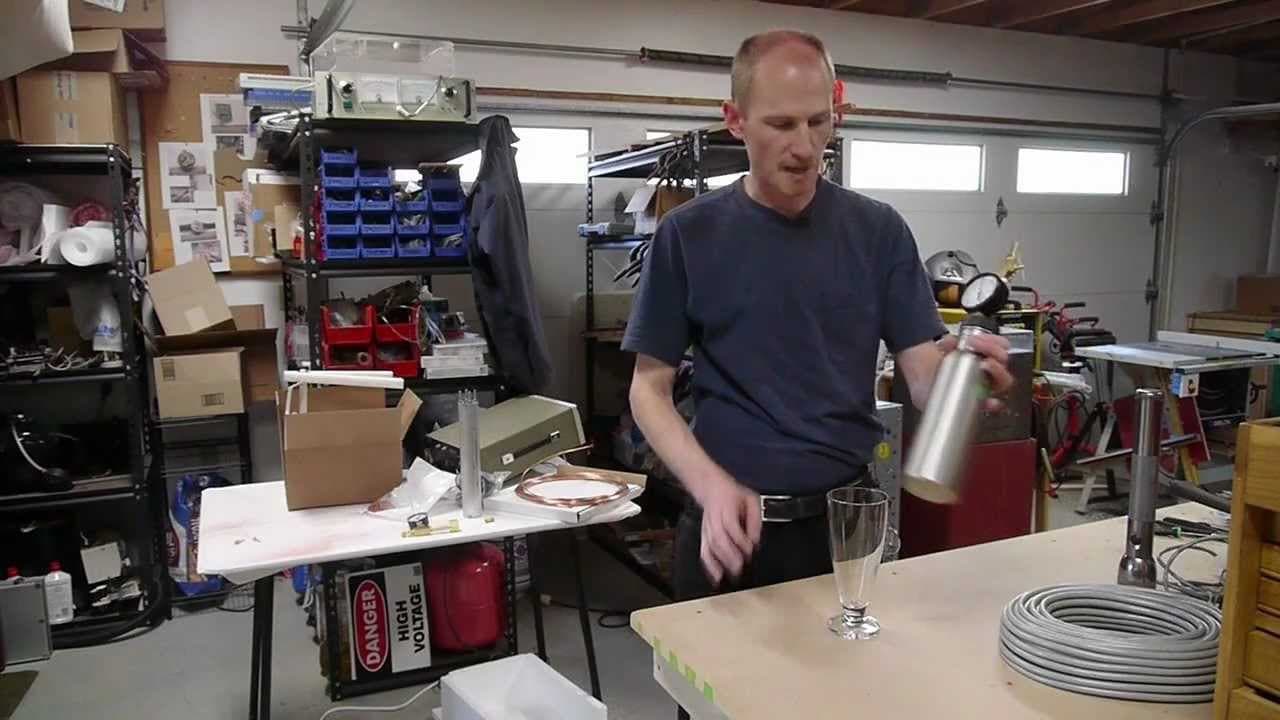
hey everyone today I've got something pretty unusual I've got a container here that I built uh full of beer that instead of using carbon dioxide to carbonate I've used argon to argate it uh so this is sort of unusual beer is um almost always 100% CO2 but some beers like Guinness are served 75% nitrogen 25% carbon dioxide and the purpose is that the... Read More
Key Insights
- 🫢 Carbonation in beer typically relies on carbon dioxide, but other gases like nitrogen can be used for specific effects.
- 🫓 Argon, while more soluble than nitrogen, did not provide sufficient carbonation on its own, resulting in flat beer.
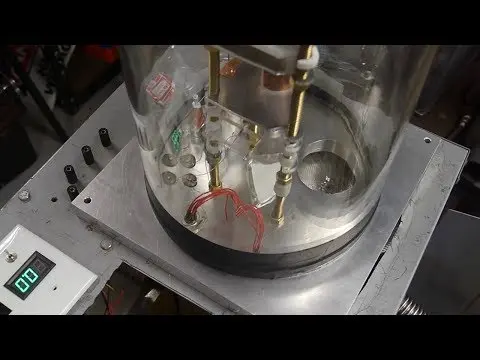
- 💦 The construction of the container involved modifying a stainless steel water bottle to accommodate high pressure.
- 🍺 The container was filled with homebrew beer and pressurized with argon from a welding tank.
- 😒 Guinness uses a nitrogen mix to achieve specific characteristics, allowing for higher serving pressure without excessive carbonation.
- 👅 Carbon dioxide forms carbonic acid, which affects the taste and mouthfeel of carbonated beverages.
- 🫢 The pressure of argon in the beer decreased when placed in the refrigerator, indicating the gas dissolved in the liquid.
Install to Summarize YouTube Videos and Get Transcripts
Explore YouTube Video Summarizer or Get YouTube Transcript Extractor
Questions & Answers
Q: How does using argon instead of carbon dioxide affect the carbonation of beer?
Argon, being less soluble in water than carbon dioxide, resulted in flat beer with minimal carbonation. The bubbles were larger on the surface, and there was a lack of a foamy head.
Q: What is the purpose of using nitrogen in beer, like Guinness?
Nitrogen is used in beers like Guinness to create a different quality of bubbles. It allows for a higher-pressure serving without overcarbonating the beer, resulting in a smoother mouthfeel.
Q: How was the container for the experiment built?
The container was constructed using a stainless steel water bottle. The original cap was modified by creating a custom thread using a parting tool. Other additions included a gauge, a brass valve for gas connection, and drilled holes for filling and sealing.
Q: How did the experimenter plan to improve the carbonation using argon?
The plan was to repressurize the container with 30 PSI of argon and then introduce carbon dioxide to enhance carbonation. The aim was to find the ideal combination for best results, similar to the nitrogen-carbon dioxide mix used in Guinness.
Summary & Key Takeaways
-
The experimenter used a container filled with beer carbonated with argon instead of the conventional carbon dioxide.
-
The beer poured flat with minimal bubbles and a lack of a frothy head.
-
Argon alone did not provide sufficient carbonation, so a combination of argon and carbon dioxide was tested for better results.
Read in Other Languages (beta)
Share This Summary 📚
Summarize YouTube Videos and Get Video Transcripts with 1-Click
Try YouTube Summary with ChatGPT & Claude or YouTube Transcript Generator
Explore More Summaries from Applied Science 📚


Summarize YouTube Videos and Get Video Transcripts with 1-Click
Try YouTube Summary with ChatGPT & Claude or YouTube Transcript Generator