Why Should You Consider Giving Up Alcohol?
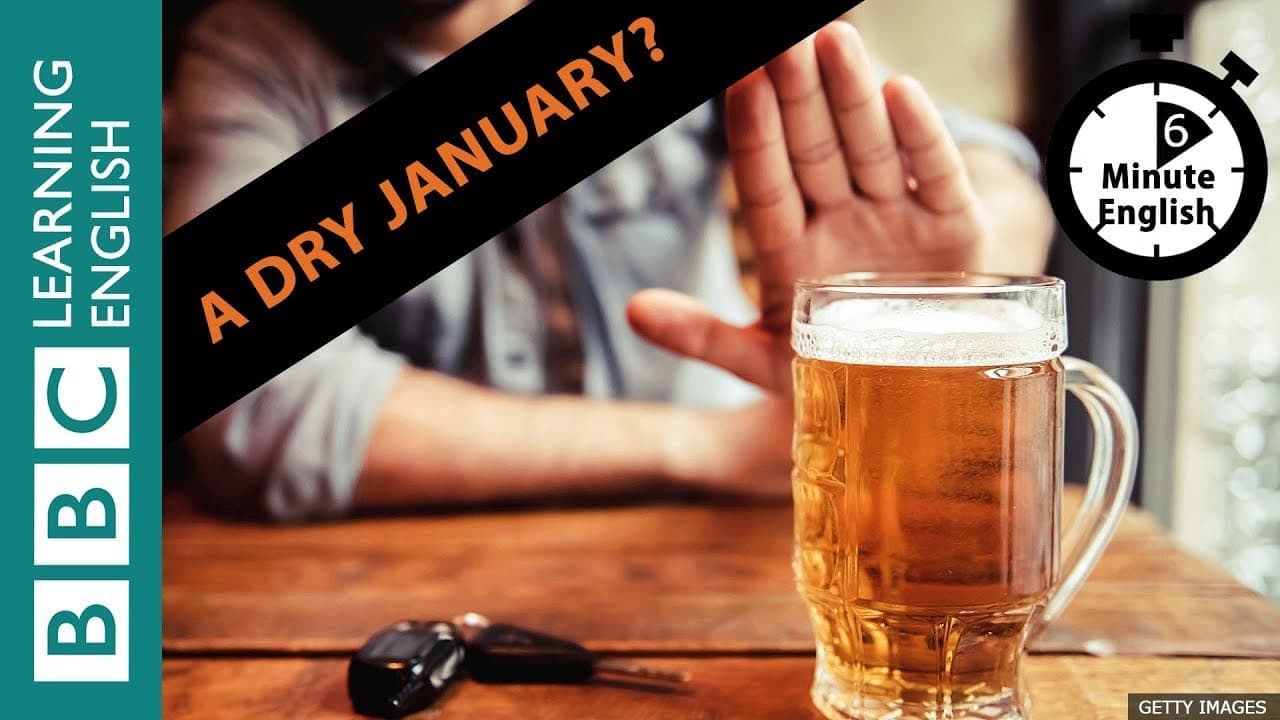
TL;DR
Abstaining from alcohol can improve your health and save money. Studies show that a month of sobriety can lead to better sleep and weight loss. Experts suggest that fully establishing a new habit, like quitting alcohol, typically takes around 66 days, making it worthwhile to commit for at least that long.
Transcript
Rob: Hello and welcome to 6 Minute English – the show that brings you an interesting topic, authentic listening practice and vocabulary to help you improve your language skills. I'm Rob… Catherine: And I'm Catherine. In this programme we'll be discussing quitting drinking and staying dry. Rob: Right, so when you say ‘quitting’, you mean ‘giving up’... Read More
Key Insights
- The term 'dry' in the context of alcohol means no consumption of alcohol, and many people opt for a dry January as a New Year's resolution to improve health and save money.
- A resolution is a promise to oneself to do or not do something, often made at the beginning of the year to encourage positive changes.
- Studies have shown that abstaining from alcohol for a month can lead to better sleep and weight loss, as demonstrated by a study of British adults.
- Catherine Gray, an author, discusses how quitting alcohol helped her deal with social anxiety by forcing her to develop real confidence without relying on alcohol as a crutch.
- The concept of using alcohol as a crutch highlights how some individuals rely on it to ease social interactions, which can lead to overdependence.
- Experts suggest that forming a new habit, such as abstaining from alcohol, takes about 66 days to bed in, meaning it becomes normal and starts working properly.
- Data from the World Health Organisation in 2015 indicated that the Czech Republic consumed the most alcohol per person, highlighting cultural differences in alcohol consumption.
- The program emphasizes the importance of moderation and the potential health benefits of sobriety, encouraging listeners to consider their own drinking habits.
Install to Summarize YouTube Videos and Get Transcripts
Explore YouTube Video Summarizer or Get YouTube Transcript Extractor
Questions & Answers
Q: What does 'dry' mean in the context of alcohol consumption?
In the context of alcohol consumption, 'dry' refers to abstaining from drinking alcohol. It is commonly used to describe periods when individuals choose not to consume alcohol, such as 'dry January,' where people give up alcohol for the month to improve their health and save money.
Q: What benefits have studies found from abstaining from alcohol for a month?
Studies, such as one involving 857 British adults, have found that abstaining from alcohol for a month can lead to benefits like better sleep and weight loss. Participants reported improved sleep quality and reduced weight, which are some of the positive outcomes of taking a break from alcohol consumption.
Q: How did quitting alcohol help Catherine Gray deal with social anxiety?
Catherine Gray found that quitting alcohol forced her to confront and manage her social anxiety without relying on alcohol as a confidence booster. By abstaining, she had to develop genuine confidence and social skills, which ultimately helped her overcome the anxiety she previously masked with alcohol consumption.
Q: What is meant by using alcohol as a 'crutch'?
Using alcohol as a 'crutch' means relying on it for support, particularly in social situations. Some individuals use alcohol to ease anxiety and boost confidence in social settings, but this can lead to overdependence, where they feel unable to socialize without the aid of alcohol.
Q: How long do experts suggest it takes to form a new habit like sobriety?
Experts suggest that it takes about 66 days for a new habit to 'bed in,' meaning it becomes normal and starts working properly. This suggests that while a 30-day challenge like dry January is beneficial, extending the period to 66 or even 90 days can help solidify the habit of sobriety.
Q: Which country consumed the most alcohol per person according to the WHO in 2015?
According to data from the World Health Organisation in 2015, the Czech Republic consumed the most alcohol per person, with an average of 14.1 liters of pure alcohol consumed annually. This statistic highlights cultural differences in alcohol consumption across countries.
Q: Why is moderation emphasized in the discussion of alcohol consumption?
Moderation is emphasized because while alcohol can be enjoyed socially, excessive consumption can lead to negative health effects. The program encourages listeners to be mindful of their drinking habits and consider the potential benefits of reducing alcohol intake or abstaining altogether for improved health and well-being.
Q: What vocabulary related to alcohol consumption is introduced in the episode?
The episode introduces vocabulary such as 'resolution' (a promise to oneself), 'to shed' (to lose weight), 'sobriety' (the state of not being drunk), 'crutch' (something relied on for support), 'abstain' (to refrain from something enjoyable but harmful), and 'bed in' (to become normal and start working properly).
Summary & Key Takeaways
-
The episode discusses the concept of a 'dry January,' where individuals abstain from alcohol for a month to improve health and save money. It includes insights from studies and personal experiences on the benefits of sobriety.
-
Catherine Gray shares her experience of quitting alcohol, which helped her overcome social anxiety and develop genuine confidence. The episode explores the idea of alcohol as a crutch for social interactions.
-
Experts recommend a longer period, such as 90 days, to fully establish new habits like sobriety. The program also touches on global alcohol consumption statistics and the importance of moderation.
Read in Other Languages (beta)
Share This Summary 📚
Summarize YouTube Videos and Get Video Transcripts with 1-Click
Try YouTube Summary with ChatGPT & Claude or YouTube Transcript Generator
Explore More Summaries from BBC Learning English 📚

Summarize YouTube Videos and Get Video Transcripts with 1-Click
Try YouTube Summary with ChatGPT & Claude or YouTube Transcript Generator