What Is the Artemis I OTC-1 Burn and Why Does Orion Need It?
TL;DR
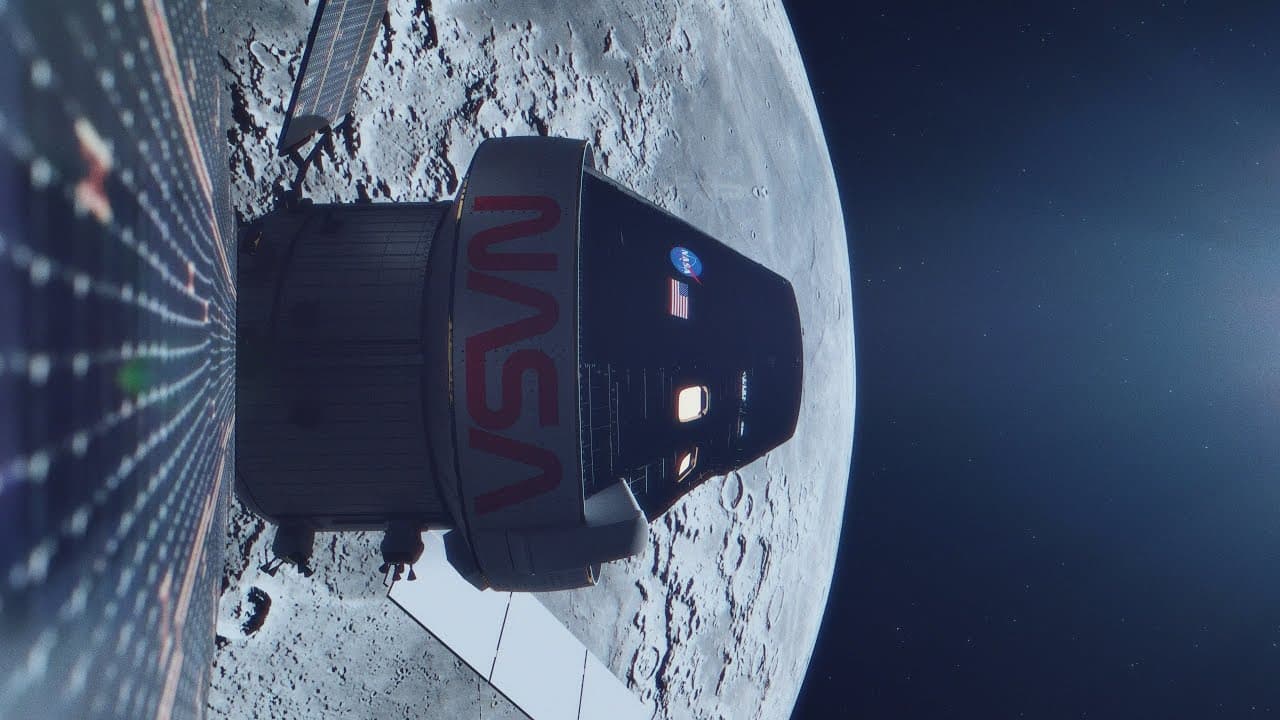
The OTC-1 burn (outbound trajectory correction number one) does two jobs: it fine-tunes Orion's path toward the Moon by correcting dispersions left over from trans-lunar injection, and it performs a critical checkout of the orbital maneuvering system engine, the main engine on the European service module. That engine handles the big pushing maneuvers, including the powered flybys that swing Orion into a distant retrograde orbit and later bring it home. This first burn proves the hardware works before those make-or-break maneuvers, which is why teams watch it so closely.
Transcript
safety Bay here the angle has landed foreign good morning and welcome to the Johnson Space Center in Houston Texas I'm NASA's Sandra Jones and we're bringing you live coverage from Mission Control Houston of the upcoming outbound trajectory correction burn or otc-1 burn following the historic launch of the space launch system from the Kennedy Space... Read More
Key Insights
- 🚒 The OTC-1 burn successfully checked the performance of the orbital maneuvering system engine, confirming its readiness for future missions.
- 🚒 The Orion spacecraft has 33 engines, including the main OMS engine and auxiliary thrusters for additional push.
- 🔥 The OTC-1 burn corrected trajectory dispersions and ensured Orion's path towards the Moon.
Install to Summarize YouTube Videos and Get Transcripts
Explore YouTube Video Summarizer or Get YouTube Transcript Extractor
Questions & Answers
Q: What is the purpose of the OTC-1 burn?
OTC-1 has two purposes. First, it makes a trajectory correction, cleaning up dispersions and errors picked up during trans-lunar injection so Orion is aimed the right way. Second, it is a critical checkout of the orbital maneuvering system engine before that engine is needed for later maneuvers.
Q: What does the orbital maneuvering system (OMS) engine do?
The OMS engine is the main engine that performs Orion's big pushing maneuvers. It is critical for the powered flybys of the Moon, both the one that places Orion into a distant retrograde orbit and the one that sends it home. Proving it works on OTC-1 is essential before those flybys.
Q: Where is the OMS engine located on Orion?
The orbital maneuvering system engine sits in the aft part of the Orion service module. It is the main engine on the European service module, which supplies propulsion and support systems for the spacecraft on this Artemis I mission.
Q: What is the outbound leg of the Artemis I mission?
The outbound leg is the portion of the flight between trans-lunar injection and distant retrograde orbit insertion. It takes several days, during which engineers evaluate the spacecraft's systems. OTC-1 is one of the burns made along this stretch to keep Orion on target.
Q: What are the auxiliary thrusters used for?
Orion has a set of auxiliary thrusters arranged around the bottom of the service module. They provide additional push to help out the orbital maneuvering system engine during maneuvers, supplementing the main engine rather than replacing it.
Q: Why is testing the OMS engine on this burn so critical?
OTC-1 is described as a critical test of that large orbital maneuvering system engine, which does the major pushing maneuvers. Confirming it fires correctly here ensures it will work for the powered flybys, which set up the slingshot into a stable orbit around the Moon where Orion can be put through its paces.
Q: How many burns will Orion make on the way to the Moon?
OTC-1 is the first of several burns. Controllers expect to make a number of these outbound trajectory correction burns on the way out, each fine-tuning Orion's path so it targets the right direction toward the Moon.
Q: What happens after the outbound leg near the Moon?
After the outbound leg, Orion makes a close approach above the lunar surface and uses the Moon's gravitational force to propel it into a distant retrograde orbit, traveling well past the Moon. This path is farther out than the record set during Apollo 13, among the farthest a spacecraft built for humans has flown.
Summary & Key Takeaways
-
The Space Launch System (SLS) launched from the Kennedy Space Center in Florida. Orion is currently in the outbound leg of its mission to the Moon.
-
The OTC-1 burn fine-tuned Orion's path to the Moon and checked the performance of the orbital maneuvering system engine.
-
This burn is essential for Orion's powered flybys of the Moon and its journey back to Earth.
Read in Other Languages (beta)
Share This Summary 📚
Summarize YouTube Videos and Get Video Transcripts with 1-Click
Try YouTube Summary with ChatGPT & Claude or YouTube Transcript Generator
Explore More Summaries from NASA 📚

Summarize YouTube Videos and Get Video Transcripts with 1-Click
Try YouTube Summary with ChatGPT & Claude or YouTube Transcript Generator