What Did Crunch Report Say About Apple’s Long-Range Wireless Charging Technology?
TL;DR
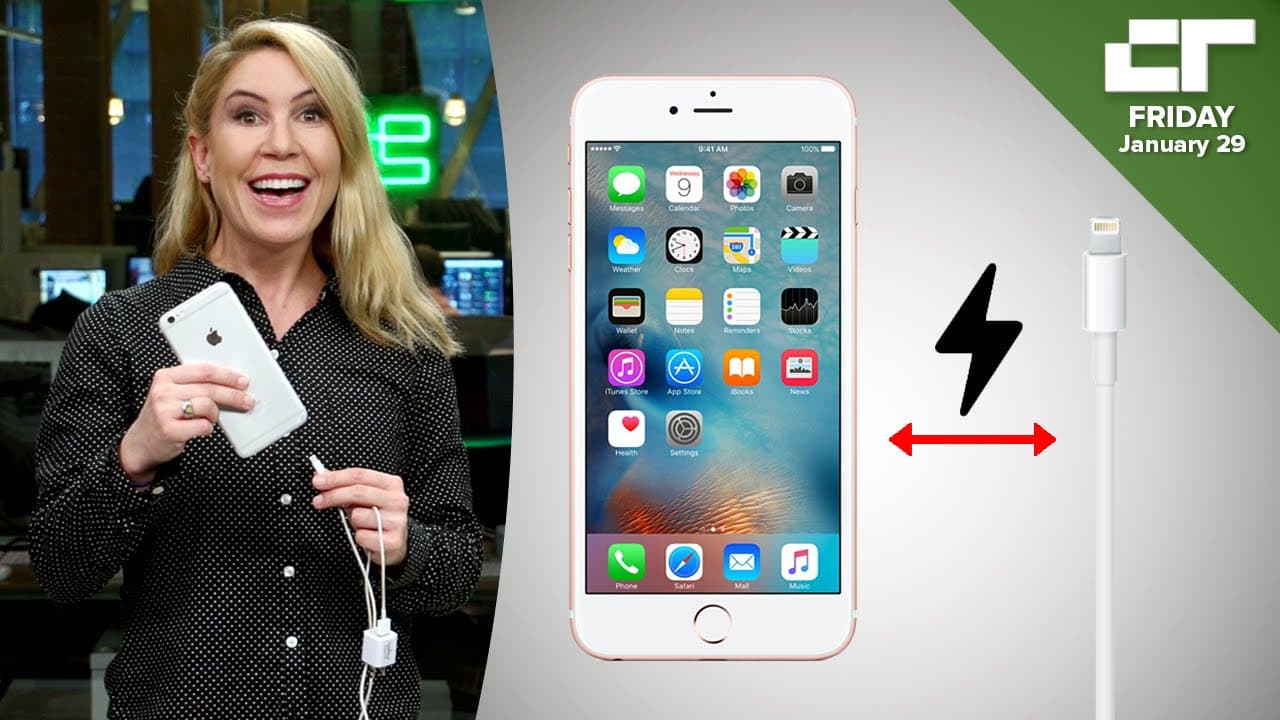
Apple was reportedly developing technology that could charge iPhones and iPads wirelessly over an unspecified distance, without a wall connection or charging mat. The January 29 Crunch Report also covers IBM’s Weather Company acquisition, Apple’s purchase of Flyby Media, Spotify video, and the Opportunity rover’s 12-year Mars milestone. Read on for the reported timelines, deal consequences, platform changes, and mission details.
Transcript
Apple may be developing long-distance charging technology IBM is officially the proud owner of the weather company iOS and Android users now have Spotify video and more it's Friday January 29th and this is press apart hello everyone TGIF Apple is building technology that would allow iPhone and iPad owners to charge their devices wirelessly without ... Read More
Key Insights
- Distance remained the key unknown: The report described Apple’s prospective charging system as working over long distances, but it supplied no measurement for that range. That omission matters because the central distinction was freedom from physical contact. Existing wireless-charging phones still had to touch a charging mat or charger, while Apple’s reported approach aimed to remove that requirement.
- The reported schedule excluded iPhone 7: If Bloomberg’s account was accurate, devices with the charging technology could ship by the year after the report. The upcoming iPhone 7, expected that September, was specifically ruled out by the timing. The segment therefore presented the development as a possible future capability rather than a feature promised for Apple’s next immediate phone release.
- Port rumors increased its appeal: The presenter connected truly wireless charging with rumors that the headphone jack might disappear from future iPhone models. No direct technical relationship between those developments was established. Instead, the possible removal of another physical connection made a charging method without a wall cable or contact mat seem especially attractive to the presenter.
- IBM’s purchase centered on data: The Weather Company acquisition supported IBM’s broader push into cloud data services, Watson AI, and Internet of Things operations. Its immediate infrastructure consequence was concrete: the acquired cloud platform would stop running on Amazon Web Services and move to IBM’s own cloud data centers. The deal therefore changed both ownership and the platform’s underlying cloud provider.
- The reported price was unreliable: Terms of IBM’s Weather Company acquisition were not disclosed. Although the transaction had originally been reported at around $2 billion, sources close to IBM later said that amount was incorrect. The segment preserved both points, making clear that the widely circulated estimate should not be treated as the confirmed purchase price.
- The Weather Channel stayed separate: The familiar Weather Channel was not included in IBM’s acquisition, even though viewers might associate it closely with the Weather Company. Under a long-term contract connected to the sale, the channel would instead license weather data, forecasts, and analytics that IBM now owned. That distinction explains how the channel could remain outside the deal while continuing to use the acquired assets.
- Flyby connected objects and people: Flyby Media’s system let mobile phones scan recognizable physical items, including hats, signs, posters, and writing on buildings. Those detected items could be saved into a collection of shared objects and discussed with friends. The description positioned Flyby as more than a recognition engine because its technology joined visual understanding with persistent collections and social communication.
- Apple’s AR activity was cumulative: The Flyby purchase appeared alongside several other reported steps. Apple had been building possible headset configurations for several months, hired AR and VR specialist Doug Bowman, bought AR startup Metaio the previous year, acquired motion-capture company Faceshift, and purchased motion-sensing company PrimeSense in 2013. Together, these details led the presenter to view Apple’s interest as serious.
- Spotify organized video under Shows: Users could find Spotify’s new video material through a Shows option within Browse. The selection extended beyond music to clips, podcasts, news, and other video formats from multiple providers. Spotify also said programming would differ between markets and could be tailored to individual tastes, so users were not necessarily expected to receive identical catalogs or recommendations.
- Spotify’s rollout was still incomplete: Video was live on iOS after starting to roll out on Android earlier in the same week, but it had not necessarily reached every account. The presenter cautioned viewers not to worry if the feature was missing. At the time, Spotify said it had 20 million paying subscribers, while newer reports placed the figure nearer 28 million.
- Opportunity vastly exceeded its design: The Mars rover was intended to operate for roughly 90 days but reached 12 years on the planet. That survival followed a six-and-a-half-month trip from Earth and a January 2004 landing involving parachutes, retro rockets, and airbags. The contrast between the planned lifetime and actual milestone was the central reason the report called the achievement remarkable.
- Martian winds protected the power source: NASA initially expected extreme dust to cover Opportunity’s solar panels until the rover could no longer obtain power. Instead, columns of moving air described as dust devils periodically swept over the rover and removed the accumulated dust. These natural cleaning events helped explain its continued operation, although keeping the mission running still cost about $14 million per year.
Install to Summarize YouTube Videos and Get Transcripts
Explore YouTube Video Summarizer or Get YouTube Transcript Extractor
Questions & Answers
Q: How would Apple’s reported long-range wireless charging technology work?
The reported technology would allow iPhone and iPad owners to charge without plugging their devices into a wall or placing them directly on a charging mat. Bloomberg reportedly said it could operate over long distances, but the transcript gives no exact range or detailed mechanism. That would distinguish it from wireless-charging phones that still needed physical contact with a mat or charger. If the report was correct, compatible devices could ship by the following year, but not with the iPhone 7 due that September.
Q: Was Apple’s long-range charging expected for the iPhone 7?
No, the report specifically said the technology would not be included in the upcoming iPhone 7. That model was due for release in September, while devices using the reported charging system could ship by the following year if Bloomberg’s information was correct. The timing showed that the work was still prospective rather than ready for Apple’s immediate release. Neither a confirmed launch date nor a supported charging distance was provided.
Q: What changed after IBM acquired the Weather Company?
The Weather Company’s cloud platform was set to move from Amazon Web Services to IBM’s cloud data centers. IBM also planned to expand weather.com into five more markets, including China, India, and Brazil, and connect it with 45 global cloud centers. These changes supported IBM’s wider work in cloud data services, Watson AI, and the Internet of Things. The Weather Channel itself was excluded from the purchase and would license IBM-owned weather data, forecasts, and analytics under a long-term contract.
Q: How much did IBM pay for the Weather Company?
The transaction’s official terms were not disclosed. An earlier report placed its value at around $2 billion, but sources close to IBM later said that figure was wrong. The transcript does not provide a corrected price, so no confirmed purchase amount can be stated. What it does establish is that IBM successfully closed the acquisition and immediately planned cloud, market, and data-service changes.
Q: Why was Apple’s acquisition of Flyby Media significant?
Flyby Media gave phones a way to scan real-world objects, save them into shared collections, and support conversations about them. It had also worked with Google and used Project Tango image recognition in a consumer-facing application. The acquisition joined Apple’s reported headset prototypes, the hiring of AR and VR specialist Doug Bowman, and earlier purchases of Metaio, Faceshift, and PrimeSense. That broader pattern is why the presenter concluded Apple was taking augmented reality seriously.
Q: What video content did Spotify add on iOS and Android?
Spotify added clips, podcasts, news, and other kinds of video as it expanded beyond music. Users could open Browse and select Shows to find material from ESPN, Comedy Central, the BBC, Vice Media, Maker Studios, MTV, and other providers. Spotify said the available content would vary by market and could be personalized to individual tastes. The rollout had begun on Android earlier that week and was then live on iOS, although some users might not see it immediately.
Q: How did the Opportunity rover survive for 12 years?
Opportunity survived partly because Martian dust devils periodically swept dust away from its solar panels. NASA had expected the planet’s dust to accumulate until the rover could no longer receive power, which contributed to its planned operating life of about 90 days. The natural cleaning events repeatedly reduced that threat. As a result, the rover reached its 12-year anniversary on Mars after landing there in January 2004.
Q: What did NASA spend on the Opportunity rover?
NASA paid $400 million to build Opportunity and place it on the surface of Mars. Continued operation still cost about $14 million per year, so the rover was not functioning without ongoing mission expenses. Its longevity made those figures especially notable because it had been designed for only about 90 days of work. By the report, that expected lifetime had extended to 12 years on Mars.
Summary & Key Takeaways
-
Apple explores distance charging: Bloomberg reportedly claimed that Apple was building technology that would let iPhone and iPad owners charge without connecting to a wall or placing their devices on a charging mat. Its maximum operating distance was not specified. If the report proved correct, compatible Apple devices could ship by the following year, although the technology would not appear in the upcoming iPhone 7 due that September. The report contrasted this concept with existing phones that still needed contact with a mat or charger.
-
IBM completes its acquisition: IBM announced that it had closed its acquisition of the Weather Company as part of its expansion into data services, Watson AI, and the Internet of Things. The terms were undisclosed, and sources reportedly disputed an earlier figure of around $2 billion. The Weather Company’s cloud platform would move from Amazon Web Services to IBM’s cloud data centers. IBM also planned to take weather.com into five additional markets, including China, India, and Brazil, and integrate it with 45 global cloud centers.
-
Apple adds another AR company: The Financial Times reported that Apple acquired Flyby Media, whose technology enabled phones to scan physical objects and preserve them in collections of shared objects for social interaction. Flyby had worked with Google and used Project Tango image recognition in a consumer-facing application. The startup had offices in New York and Palo Alto and had raised about $13.78 million. The report placed the purchase alongside Apple’s headset prototypes, specialist hire Doug Bowman, and earlier acquisitions of Metaio, Faceshift, and PrimeSense.
-
Spotify expands beyond music: Spotify video became available on iOS after beginning its Android rollout earlier that week. The company had announced its move into video the previous May, and the resulting product included clips, podcasts, news, and other programming. A Shows option inside Browse offered material from providers such as ESPN, Comedy Central, the BBC, Vice Media, Maker Studios, and MTV. Availability and recommendations could vary by market and individual taste, and the feature was still reaching users gradually.
-
Opportunity marks twelve years: NASA’s Opportunity rover passed its 12-year anniversary on Mars despite having been designed to operate for about 90 days. Following a six-and-a-half-month journey, it entered the Martian atmosphere and landed in January 2004 using parachutes, retro rockets, and airbags. NASA expected dust to accumulate on the solar panels and eventually prevent power generation, but passing dust devils repeatedly cleaned them. NASA spent $400 million to build and land Opportunity, while continued operation cost about $14 million annually.
Read in Other Languages (beta)
Share This Summary 📚
Summarize YouTube Videos and Get Video Transcripts with 1-Click
Try YouTube Summary with ChatGPT & Claude or YouTube Transcript Generator
Explore More Summaries from TechCrunch 📚






Summarize YouTube Videos and Get Video Transcripts with 1-Click
Try YouTube Summary with ChatGPT & Claude or YouTube Transcript Generator