How to Complain Creatively | The Guerrilla Girls | The Art Assignment | PBS Digital Studios
TL;DR
To complain creatively, identify an injustice and communicate it in a unique way that can change people’s minds. The Guerrilla Girls, an anonymous group of women artists active since 1985, combine statistics, outrageous statements, and humor to expose sexism, racism, and corruption. Their Tate Modern complaints department invites the public to post concerns about art, politics, culture, or anything they care about. Read on for practical insights into turning dissatisfaction into creative protest.
Transcript
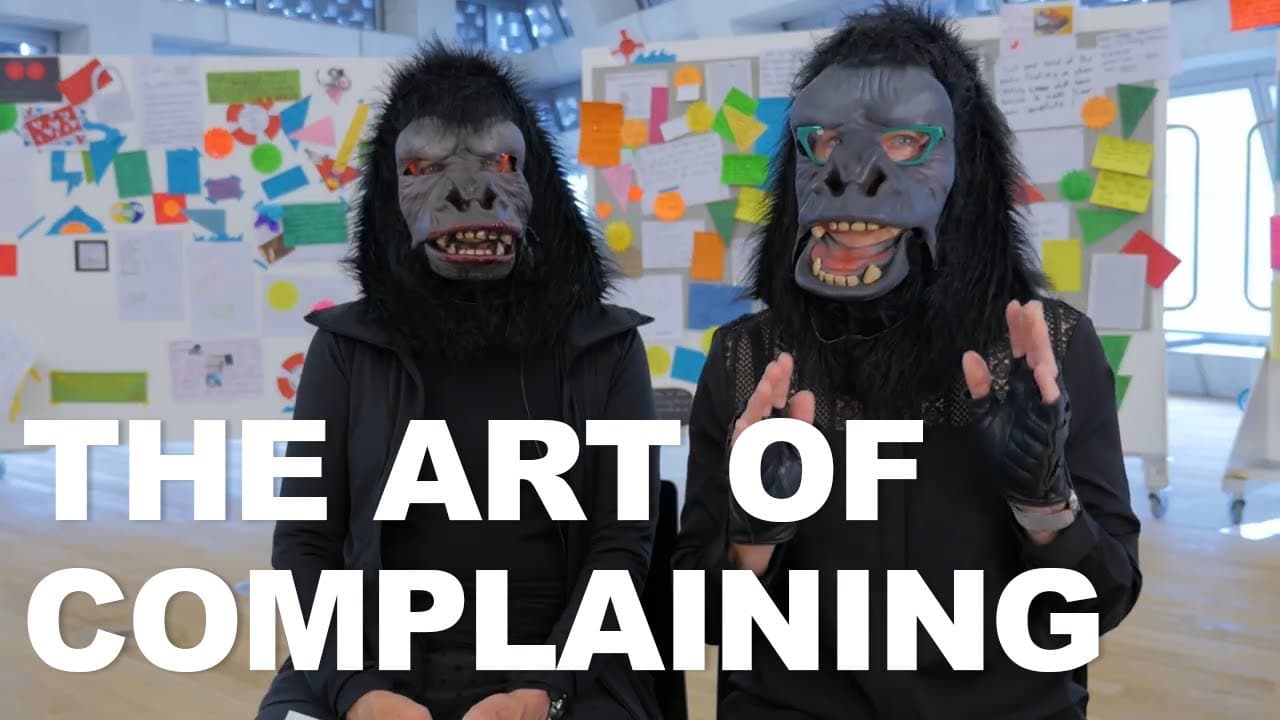
We are in London today-- at Tate Modern-- to meet up with the Guerrilla Girls, who are currently operating a complaints department within the Tate Exchange space in the new Switch House building that opened this past summer. The Guerrilla Girls have invited the public to come join them in the gallery and post complaints about art, politics, cultur... Read More
Key Insights
- 🌍 The Guerrilla Girls utilize creativity and humor to address societal issues and challenge the art world's status quo.
- 😥 Complaining can be a valuable starting point for activism, but it is crucial to refine one's message and consider different perspectives.
- 💱 Statistics, outrageous statements, and humor are effective tools in changing people's minds and promoting social change.
- ✊ The Guerrilla Girls highlight the power of collaboration and brainstorming, identifying targets, and considering the impact of information in their activism.
Install to Summarize YouTube Videos and Get Transcripts
Explore YouTube Video Summarizer or Get YouTube Transcript Extractor
Questions & Answers
Q: How can you complain creatively?
Choose something you genuinely want to complain about, then communicate the message in a unique, creative way. The Guerrilla Girls recommend going beyond saying something is bad by finding an approach that can change people’s minds.
Q: Who are the Guerrilla Girls?
The Guerrilla Girls are an anonymous group of women artists who have challenged art-world practices since 1985. They use public actions and creative media to expose sexism, racism, and corruption in the art world and wider culture.
Q: Why did the Guerrilla Girls form?
They formed after seeing few opportunities for women artists and artists of color in New York City while others acted as though nothing was wrong. A group of colleagues and friends met in Frida’s loft, chose the Guerrilla Girls name, and pooled money to print their first political posters.
Q: What strategies do the Guerrilla Girls use to change minds?
They use statistics, outrageous statements, and humor to challenge prevailing assumptions. They explain that making someone who disagrees laugh can create an opening for the message to influence that person’s thinking.
Q: What is the creative assignment for viewers?
The assignment is to identify something you truly want to complain about and communicate that complaint in a distinctive creative form. Viewers are asked to consider how they can use the culture of their own time to express dissatisfaction and dissent.
Q: What was the Guerrilla Girls’ complaints department at Tate Modern?
It was an interactive project in the Tate Exchange space where visitors could post complaints about art, politics, culture, or anything else they cared about. The available posting spaces filled within about one day, and people continued bringing new complaints every day.
Q: What was the Guerrilla Girls’ “It’s Even Worse in Europe” project about?
The group revisited its 1986 poster “It’s Even Worse in Europe” with a new Whitechapel Gallery display. Based on questionnaires sent to European museum directors, it examined representation of female and gender-nonconforming artists and artists from outside North America and Europe.
Q: Why do Guerrilla Girls wear masks and use pseudonyms?
Group members wear gorilla masks when appearing publicly as part of their anonymity. Each member selects the name of a deceased woman artist as a pseudonym, as illustrated by the members introduced as Frida Kahlo and Käthe Kollwitz.
Summary & Key Takeaways
-
The Guerrilla Girls operate a complaints department in Tate Modern, inviting the public to voice their complaints about art, politics, and culture.
-
They have been fighting for equality in the art world since 1985, using various tactics to challenge prevailing norms and expose injustice.
-
The group is revisiting their 1986 poster "It's Even Worse in Europe" and exposing statistics on the representation of women and artists from non-Western countries.
Read in Other Languages (beta)
Share This Summary 📚
Summarize YouTube Videos and Get Video Transcripts with 1-Click
Try YouTube Summary with ChatGPT & Claude or YouTube Transcript Generator
Explore More Summaries from The Art Assignment 📚

Summarize YouTube Videos and Get Video Transcripts with 1-Click
Try YouTube Summary with ChatGPT & Claude or YouTube Transcript Generator