How to Make Money Online Without Destroying Your Reputation
TL;DR
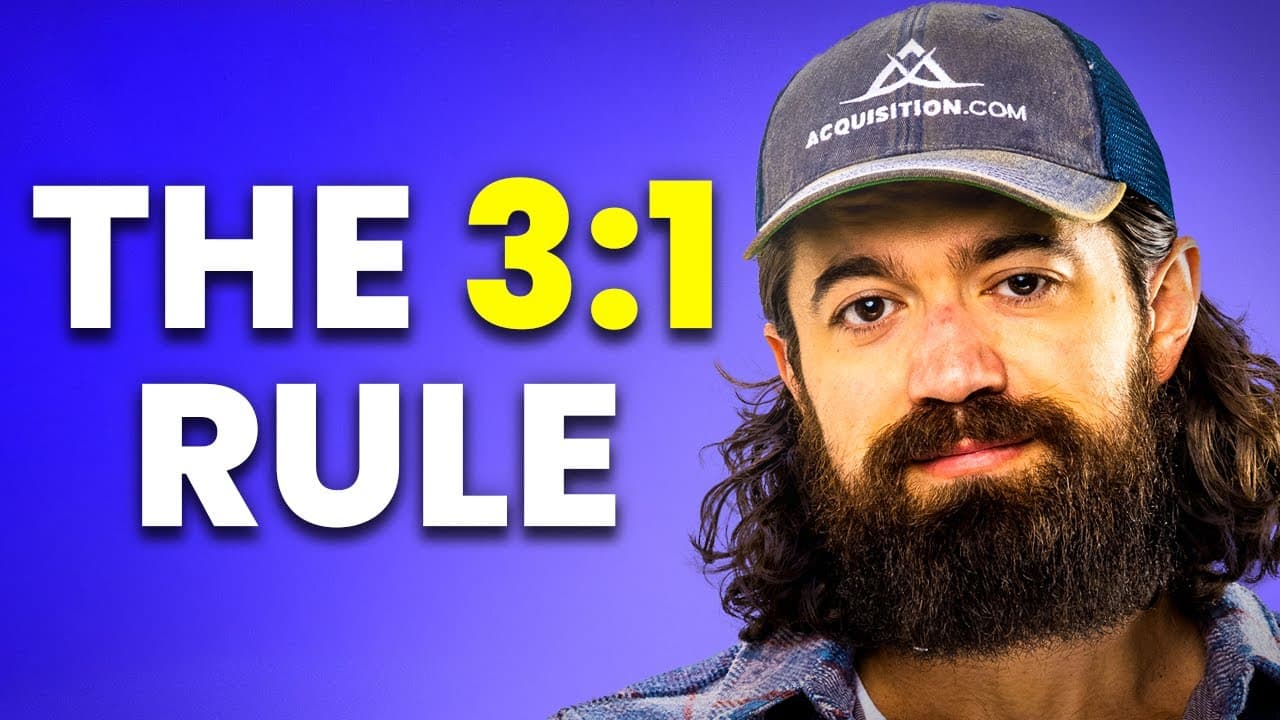
To make money online without damaging your reputation, give your audience substantially more value than you ask from them, then make offers when they show that they are ready. The speaker prefers roughly 98% giving and 2% asking, although television demonstrates a maximum benchmark near three to one. Read on for the specific public, private, integrated and intermittent approaches behind this gift-ask ratio.
Transcript
so you want to make money online but you don't want to feel icky or sleazy to the people who know and love you when you ask them to give you money so there's a good way to do it and there's a bad way to do it the good news is I can show you step by step how I got my first 20 clients posting on social media for my personal training business a decade... Read More
Key Insights
- Goodwill has a measurable consequence: The podcast story connects excessive promotion with two linked declines, shrinking returns from each ask and falling listenership. The mistake was not making an offer once. It was interpreting one profitable offer as proof that offers should become more frequent, without accounting for the goodwill consumed whenever content turns into a commercial.
- An ask is not a take: The gift-ask framing matters because the audience still chooses whether to respond. Gary Vee’s “jab, jab, jab, right hook” supplies the basic sequence of repeated giving followed by an ask. The speaker’s revision is less mechanical: continue giving until the audience itself indicates readiness by asking about the offer.
- Media companies establish an upper boundary: Television devotes 13 minutes of a 60-minute slot to advertising and 47 minutes to content. Facebook presents about one advertisement for every four posts. These examples suggest a roughly three-to-one content-to-advertising ratio, which the speaker treats as a maximum promotional level rather than his preferred target.
- The preferred ratio is far stricter: Although three to one is presented as a minimum benchmark, the speaker would rather deliver about 98% value and devote only 2% to asking. He evaluates the ratio across the total seconds of a video. A brief, relevant promotion can therefore coexist with a strong overall gift balance without driving away the audience.
- Public value reinforces reputation: Giving in public repeatedly demonstrates what the creator knows and keeps the brand visible. Selling in private separates that broad reputation-building activity from individual commercial conversations. The approach also pressures the creator to maintain excellent content because every public contribution either reinforces or weakens the reputation being built.
- Reciprocity can operate at scale: Helping someone first makes that person more likely to comply with a later request because people often want to help those who helped them. Media applies this dynamic to millions of recipients simultaneously. The value spreads outward at scale, while the resulting goodwill and attention return to the creator who supplied it.
- Content expires faster than audiences: A post may vanish from the active news feed within three days, but the people it attracts can remain. In the speaker’s example, one video added 300 people who began seeing later material. This is why he identifies the audience, rather than any isolated piece of content, as the durable asset.
- Restraint enables audience compounding: Audience growth is initially small, making early monetization tempting. The speaker argues that continued giving, combined with infrequent asks, allows each new group to join the existing audience. Eventually, opportunities can arrive without public solicitation. Holding back is therefore presented as a mechanism for accumulating attention, not as opposition to earning money.
- Profit qualified the target companies: The speaker tested whether sustained business content could attract companies producing one million, five million or 10 million dollars in yearly profit. He explicitly distinguishes profit from revenue. He wanted these businesses to approach him so he could invest in them and help them grow, and he reports that the strategy worked.
- Integrated promotion must stay brief: An integrated ask belongs naturally inside the subject being discussed. The speaker demonstrates this by mentioning 100 Million Dollar Leads while explaining advertising methods used to promote that same book. The content then returns to the teaching. Spending one minute on value and five minutes on promotion would violate the intended balance despite being technically integrated.
- Launch registration demonstrates embedded promotion: While describing integrated asks, the speaker states that 100 Million Dollar Leads covers eight advertising methods and that he was using all eight to advertise it. He also reports 200,000 registrations for the live book launch scheduled for Saturday, August 19. The promotion supports the lesson because it simultaneously serves as its example.
- Short-form requires wider spacing: Intermittent promotion places a commercial between normal pieces of content rather than inside them. One example is publishing 10 Instagram posts or TikTok reels, making the 11th about offered services, then returning immediately to regular programming. For creators posting multiple times daily, the speaker recommends staying below 3%, approximately one promotional post once or twice per month.
Install to Summarize YouTube Videos and Get Transcripts
Explore YouTube Video Summarizer or Get YouTube Transcript Extractor
Questions & Answers
Q: How can you make money online without destroying your reputation?
Give useful content repeatedly and keep commercial asks rare enough that they do not consume the audience’s goodwill. The speaker’s preferred strategy is to give publicly, sell privately and wait until people ask about an offer before presenting it. He favors roughly 98% giving and 2% asking, even though a three-to-one balance appears in major media. This works because public value strengthens the brand and grows the audience, while restrained selling avoids turning every interaction into a commercial. The audience can then compound into a durable business asset.
Q: What is the gift-ask ratio?
The gift-ask ratio is the balance between value delivered to an audience and requests made of that audience. Television illustrates the concept with 47 minutes of content and 13 minutes of advertising in a 60-minute slot. Facebook provides another example, with about one advertisement for every four posts. The speaker treats the resulting three-to-one ratio as a maximum benchmark and prefers approximately 98% giving to 2% asking. The purpose is to earn revenue without losing viewership, listenership or goodwill.
Q: Why should creators give until people ask?
An audience asking about an offer is evidence that interest has developed before the creator introduces a commercial message. The speaker therefore changes “give, give, give, ask” into “give until they ask you.” Continued giving deposits goodwill and lets the audience grow around consistently useful work. It also reduces the risk of repeating the podcast creator’s mistake of increasing asks until returns and listenership decline. Waiting aligns the offer with demonstrated demand instead of relying on a fixed posting sequence.
Q: How does giving publicly and selling privately work?
The creator shares useful material publicly so the brand, expertise and reputation are reinforced in front of the whole audience. Interested people can then move into private commercial conversations rather than encountering constant public sales messages. Public media allows one creator to help millions of people at once, creating goodwill at scale. The strategy also forces the public content to remain strong because that content is continually shaping reputation. Selling privately preserves the public feed primarily as a source of value.
Q: What is an integrated ask in long-form content?
An integrated ask is a brief promotion placed naturally inside a longer book, video, podcast or blog post. The creator connects the offer to the subject already being discussed, makes the request, then returns to the useful material. The mention of 100 Million Dollar Leads during a lesson about advertising is the speaker’s example. Integration works for long-form content because the promotional seconds can remain a small percentage of the total consumption time. It fails the intended ratio if the commercial becomes much longer than the surrounding value.
Q: How often should creators promote services on Instagram or TikTok?
The speaker recommends using intermittent asks for short-form platforms such as Instagram and TikTok. One pattern is to publish 10 ordinary posts or reels, make the 11th about available services, then return to the regular program. For accounts publishing multiple times per day, he would keep promotional content below 3%. He translates that restraint into roughly one promotional post once or twice per month. The spacing protects goodwill because the audience continues receiving far more value than advertising.
Q: Why is the audience more valuable than individual content?
An individual post can disappear from a news feed within three days, while the people it attracts may continue seeing future work. The speaker describes one piece of content adding 300 people to his audience. Those people become part of a compounding base as long as the creator does not ask too much or too frequently. This makes each useful post a way to acquire lasting attention rather than merely generate a temporary view. The accumulated audience can eventually produce inbound opportunities without repeated public asks.
Q: What happens when a creator asks too frequently?
The podcast example shows that frequent asks can initially produce additional money while setting up a longer decline. After one profitable ask, the podcaster made more offers and earned a little more at first. Subsequent returns became smaller, and his listenership repeatedly dropped. The speaker attributes both outcomes to lost audience goodwill. The lesson is that immediate revenue can conceal damage to the audience that generated the revenue in the first place.
Summary & Key Takeaways
-
The costly lesson from overasking: A friend built a podcast with millions of downloads, and nearly all of his business growth came from its listeners. After one promotional ask made substantial money, he assumed that more asks would produce more revenue. Additional asks initially earned a little more, but returns progressively declined. His listenership also fell because he had depleted the audience’s goodwill. The example establishes the central problem: monetization can undermine the very audience that makes monetization possible.
-
Finding the sustainable ratio: The speaker frames promotion as a gift-ask ratio, meaning the balance between providing value and requesting something in return. Gary Vee popularized a related idea through “jab, jab, jab, right hook.” Major media companies study this balance because they want advertising revenue without losing audiences. Television places 13 minutes of advertising alongside 47 minutes of content, while Facebook shows roughly one advertisement for every four posts, illustrating a ratio close to three parts content for one part advertising.
-
Giving until demand appears: Rather than mechanically giving three times and then asking, the speaker recommends giving until audience members ask about an offer. This signals that they are ready. His preferred arrangement is to give publicly and sell privately. Each useful public contribution deposits goodwill, strengthens the brand and can create a sense that recipients want to help in return. Media makes this unusually powerful because one person can provide value to millions of people at scale and funnel the resulting attention back to one source.
-
Treating audience as the asset: Individual posts may disappear from a news feed within three days, but each useful post can add lasting audience members. The speaker gives an example of one piece attracting 300 more people who then continue seeing his work. If creators avoid asking too much or too frequently, that audience can compound. He tested the strategy by publishing business content intended to attract companies earning one million, five million or 10 million dollars in annual profit, and says it succeeded.
-
Choosing the appropriate ask format: Asks function like commercials interrupting a creator’s own programming. Integrated asks appear naturally inside long-form books, videos, podcasts or blog posts, then quickly return to the main material. Intermittent asks work better between short-form posts. The speaker promotes 100 Million Dollar Leads as an integrated example and says 200,000 people had registered for its live launch on Saturday, August 19. For short-form publishing, he suggests no more than 3%, such as one promotional post once or twice monthly.
Read in Other Languages (beta)
Share This Summary 📚
Summarize YouTube Videos and Get Video Transcripts with 1-Click
Try YouTube Summary with ChatGPT & Claude or YouTube Transcript Generator
Explore More Summaries from Alex Hormozi 📚
Summarize YouTube Videos and Get Video Transcripts with 1-Click
Try YouTube Summary with ChatGPT & Claude or YouTube Transcript Generator