How Does the Software Development Life Cycle Work?
TL;DR
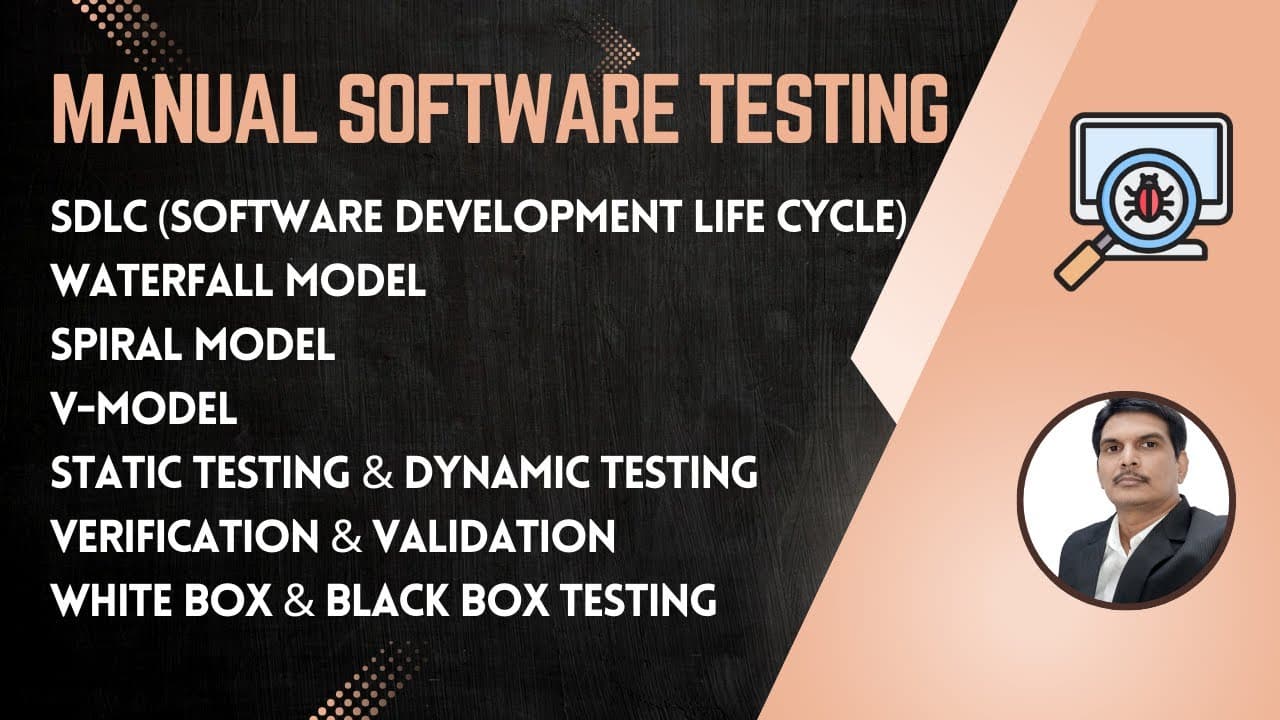
The software development life cycle is a step-by-step process for designing, developing, testing, delivering, and maintaining software. Its main phases are requirement analysis, design, development, testing, and maintenance. Companies organize these activities through process models such as waterfall, spiral, prototype, and V-model, with each model applying the phases through a different approach.
Transcript
all right so before starting uh today's session so let's recap what we have discussed in the previous session and then we'll move forward so yesterday's session we have seen like what is software and what are the different types of softwares and we have understood what is software testing and software quality and also we have seen the differe... Read More
Key Insights
- SDLC is the software development life cycle, a step-by-step process used by the software industry to design, develop, test, deliver, and maintain software. It divides software creation into defined phases so teams can follow an organized path toward delivering a quality product.
- People, process, and product are the three pillars described for any company. People perform activities such as development and testing, the process defines the stages they follow, and the product is the application or other result ultimately delivered to the customer.
- Requirement analysis is the first SDLC phase, where customer requirements are collected and understood. Project managers or product managers normally communicate with customers during this phase and prepare documents that record what the requested software is expected to provide.
- Design is the phase in which designers plan how the software should look and operate. The work can include the user interface and navigation, and it serves a role comparable to creating a blueprint or plan before constructing a house.
- Development is the phase in which software developers turn the design into working software. They write programs using different programming languages, completing the coding and implementation work before the application moves into the testing phase.
- Testing is performed after development and before the software is delivered to the customer. Testers, QA personnel, and QC personnel conduct different forms of evaluation, including functional, non-functional, performance, and security testing, to examine the developed application.
- Maintenance begins after the software is delivered and deployed in the customer's environment. At that point, customers begin using the application, making maintenance the final phase in the high-level SDLC sequence presented in the training.
- The waterfall model is an old, traditional, linear SDLC model whose flow moves downward like a waterfall. It follows the familiar development phases through a specific approach and places strong importance on documenting every activity, including requirements in an SRS document.
Install to Summarize YouTube Videos and Get Transcripts
Explore YouTube Video Summarizer or Get YouTube Transcript Extractor
Questions & Answers
Q: What is the software development life cycle?
The software development life cycle, commonly called SDLC, is a step-by-step process used by the software industry to design, develop, test, deliver, and maintain software. It begins with understanding customer requirements and continues through design, coding, testing, deployment, and maintenance. The process organizes software work into phases so people can systematically produce and deliver a quality application.
Q: What are the main phases of SDLC?
The main SDLC phases are requirement analysis, design, development, testing, and maintenance. Teams first collect and understand customer requirements, then design the software and implement it through coding. After development, testers evaluate the application before delivery. Finally, the software is deployed in the customer's environment, customers begin using it, and maintenance activities start.
Q: What happens during SDLC requirement analysis?
Requirement analysis is the first SDLC phase. Project managers or product managers normally communicate with customers to collect and understand their requirements. The gathered information is then recorded in relevant documents. In the waterfall model described in the training, this documentation includes a software requirement specification, or SRS, which captures the requirements obtained from the customer.
Q: What happens during the software design phase?
During the design phase, designers plan the software after the customer requirements have been collected. They determine how the application should look and consider elements such as its user interface and navigation. The training compares this work to preparing a blueprint or plan before constructing a house. Development begins after the design work has been completed.
Q: What is the role of testing in SDLC?
Testing occurs after software development and before delivery to the customer. Testers, QA personnel, and QC personnel evaluate the developed application through different types of testing. The training identifies functional, non-functional, performance, and security testing as examples. This phase supports the broader SDLC goal of delivering a quality product after the software has been designed and coded.
Q: What are the three pillars of a company in SDLC?
The three pillars are people, process, and product. People perform work such as software development and testing. Process provides the stages they follow to achieve the intended goal. Product is the application or other result delivered to the customer. The training connects SDLC specifically to the process pillar, which coordinates how people create and deliver a quality product.
Q: What is the waterfall model in software development?
The waterfall model is an old and traditional process model within SDLC, and it is also called a linear model. Its flow moves downward like a waterfall, following development phases through a sequential approach. It starts with requirement analysis and gives documentation a major role, with activities recorded and customer requirements captured in a software requirement specification document.
Q: Why is documentation important in the waterfall model?
Documentation is important in the waterfall model because each activity is recorded as the software proceeds through its phases. During requirement analysis, business participants such as project managers or product managers communicate with customers, gather their requirements, and prepare a software requirement specification, or SRS, document. This creates a documented representation of the requirements before later software work proceeds.
Summary & Key Takeaways
-
The software development life cycle provides the process that software companies follow to produce a quality application. Customer requirements serve as the input, teams perform design, development, and testing activities, and the completed software is delivered as the product. A defined process helps organize every activity into distinct phases.
-
The principal SDLC phases are requirement analysis, design, development, testing, and maintenance. Project or product managers gather and understand customer requirements, designers plan the software's appearance and navigation, developers implement it with programs and languages, testers evaluate it, and maintenance begins after deployment in the customer's environment.
-
The waterfall model is an old, traditional SDLC process model that is also called a linear model. It uses the same general phases as SDLC but follows a particular sequential approach. Documentation is especially important, beginning with customer requirement gathering and the preparation of a software requirement specification, or SRS, document.
Read in Other Languages (beta)
Share This Summary 📚
Summarize YouTube Videos and Get Video Transcripts with 1-Click
Try YouTube Summary with ChatGPT & Claude or YouTube Transcript Generator
Explore More Summaries from SDET- QA 📚
Summarize YouTube Videos and Get Video Transcripts with 1-Click
Try YouTube Summary with ChatGPT & Claude or YouTube Transcript Generator