How to Build an AI Content System From Real Calls
TL;DR
Build distinctive AI-assisted content by capturing real conversations, extracting original insights and customer language, studying proven outliers, and repurposing authentic moments across channels. The four-part stack uses Fathom for transcripts, the Founder OS Clip Engine for short-form extraction, Poppy AI for structured ideation, and Claude Code for deeper research and writing.
Transcript
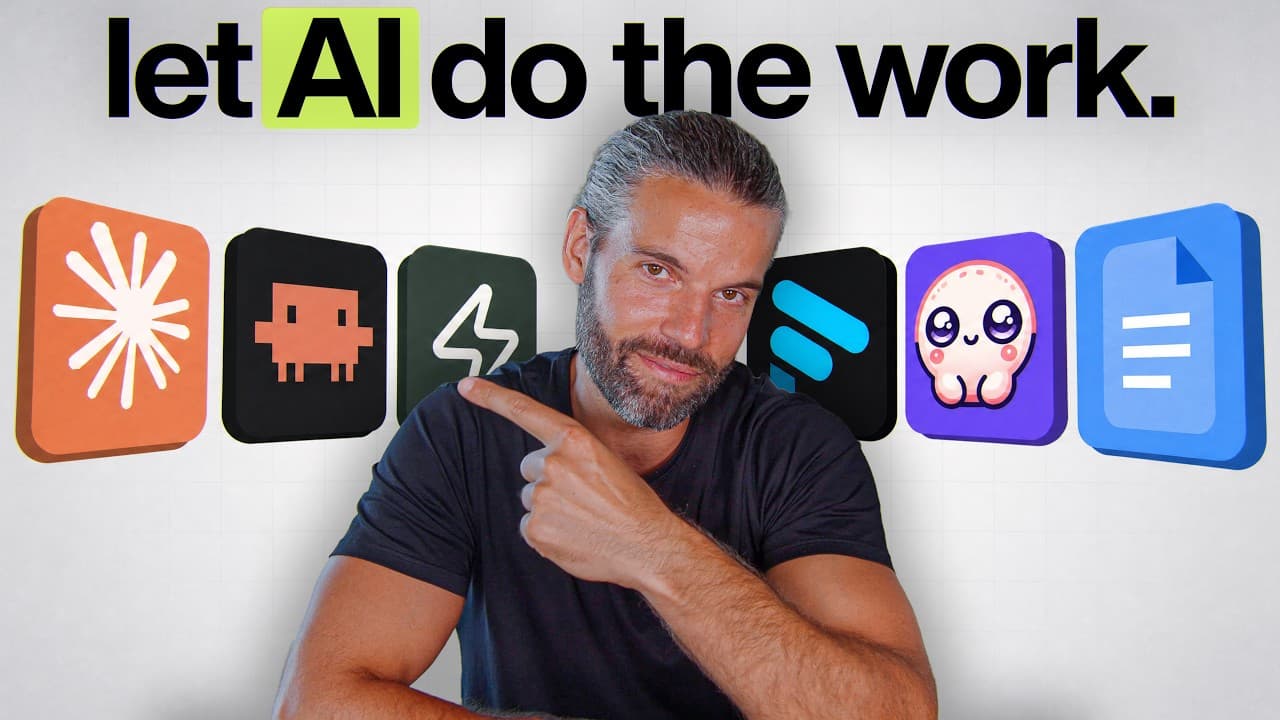
Case is everyone's biggest competitive advantage, but when most people use AI to create content, that goes out the window because AI is making most content worse, not better. So, I'm going to show you the exact [music] stack of four AI tools I use to make truly tasteful content. Tool number one is Fathom. Fathom is a tool I use to record all of the... Read More
Key Insights
- Fathom is the capture layer for the content system, recording calls across customer success, sales, internal teams, coaching, and advisory relationships. Its transcripts preserve useful conversations that founders might otherwise forget, making existing business activity available as searchable raw material for future content.
- The strongest content ideas can come from advice already given during real calls. A founder conversation about money became the foundation for a newsletter on the psychology of wealth, showing how naturally expressed expertise can produce relevant topics without forcing a separate brainstorming session.
- Voice-of-customer research is more accurate when it uses customers' unfiltered language. Transcripts from about 30 clients paying more than $50,000 per year were synthesized into a document covering recurring pain points, revenue concerns, limited bandwidth, desired focus time, and service expansion goals.
- Tasteful content requires both human judgment and detailed customer knowledge. Artistry, intuition, references, and personal taste shape the creative direction, while transcript analysis supplies the audience's real language, problems, and ambitions, helping each post or workshop address concerns that customers have actually expressed.
- The Founder OS Clip Engine converts raw business conversations into channel-ready assets. It extracts moments from coaching calls, mentorship discussions, workshops, team meetings, and other recordings, then supports outputs such as YouTube videos, YouTube Shorts, Instagram carousels, titles, and thumbnails.
- The Clip Engine identifies promising moments by locating sentiment within videos and estimating which sections may perform best. It also suggests titles and finds thumbnails, while automatically pulling new recordings each day to populate a second YouTube channel built from coaching and mentorship material.
- Poppy AI is an interactive ideation board connected to social content and an AI chat. It can surface top outlier videos from a creator's Instagram or YouTube presence, group selected examples, retain their core performance data, and support questions about recurring patterns across successful content.
- The four-tool workflow separates content creation into capture, extraction, ideation, and development. Fathom collects conversations, the Clip Engine repurposes strong moments, Poppy AI studies outliers, and Claude Code handles deeper research and writing, allowing AI to amplify authentic source material instead of replacing the creator's voice.
Install to Summarize YouTube Videos and Get Transcripts
Explore YouTube Video Summarizer or Get YouTube Transcript Extractor
Questions & Answers
Q: How can founders turn recorded calls into content ideas?
Founders can record customer, sales, team, coaching, and advisory calls with Fathom, retrieve the transcripts, and give them to Claude for analysis. The useful instruction is to identify core themes, novel advice, memorable quotes, and subjects that are rarely discussed publicly. Those findings can become newsletters, social posts, carousels, workshops, or prompts for deeper research without requiring a separate idea-generation session.
Q: Why are call transcripts useful for avoiding writer's block?
Call transcripts preserve ideas that a founder has already explained naturally while helping customers, employees, or advisers. Instead of trying to remember every conversation or invent a topic from nothing, the founder can search recent transcripts for relevant observations, quotes, and recurring advice. The source material is grounded in real work, so it provides both a topic and the practical reasoning needed to develop it.
Q: How do you create a voice-of-customer document from transcripts?
Collect transcripts from conversations with valuable customers, then use AI to identify repeated pain points, ambitions, objections, and exact phrases. The example draws from about 30 clients paying more than $50,000 annually and organizes statements about limited bandwidth, the content hamster wheel, revenue plateaus, greater focus time, better use of time, and expanding services. The resulting document can guide posts, newsletters, workshops, and carousels.
Q: What makes AI-assisted content sound authentic?
AI-assisted content sounds more authentic when its source material comes from the creator's real conversations, advice, experiences, and customer interactions. The creator's artistry, intuition, judgment, and references should determine what is worth publishing. AI can then organize transcripts, surface themes, and develop drafts, but the underlying ideas and language remain connected to actual business activity rather than generic generated material.
Q: What does the Founder OS Clip Engine do?
The Founder OS Clip Engine takes recordings from coaching calls, mentorship conversations, workshops, team meetings, and other business activities, then extracts useful moments for distribution. It can help create Instagram carousels, YouTube Shorts, and videos for a second channel. It also locates sentiment within recordings, identifies potentially strong segments, suggests titles, finds thumbnails, and pulls new source videos each day.
Q: How can Poppy AI improve content ideation?
Poppy AI creates an interactive board where creators can gather outlier content from platforms such as Instagram and YouTube and connect that material to an AI chat. A creator can group top-performing examples from a recent period, compare them with another creator's outliers, and ask questions about shared patterns. The purpose is to understand what contributes to performance, then use those observations as structured inspiration for original work.
Q: How do the four AI tools work together in the content system?
Fathom captures calls and creates transcripts that preserve original advice and customer language. The Founder OS Clip Engine extracts strong moments and adapts them for different channels. Poppy AI organizes outlier content and supports pattern-based ideation through chat. Claude Code handles deeper research and writing work. Each tool serves a separate stage, creating a pipeline from authentic source material to researched, packaged, and distributed content.
Q: What kinds of content can be produced from everyday business activity?
Everyday business activity can supply newsletters, social posts, Instagram carousels, YouTube videos, YouTube Shorts, workshops, customer research documents, titles, and thumbnail ideas. Useful sources include sales calls, customer success conversations, team meetings, coaching sessions, mentorship calls, and adviser discussions. Because these assets begin with real questions and advice, they can reflect the founder's expertise and the audience's actual problems more directly.
Summary & Key Takeaways
-
Fathom records customer success, sales, team, coaching, and advisory calls, turning everyday conversations into a searchable source of content ideas. Transcripts can reveal non-obvious advice, memorable language, and topics already discussed naturally, reducing writer's block and eliminating the need to invent every newsletter or social post from scratch.
-
Call transcripts can also support detailed voice-of-customer research. By analyzing unfiltered statements from about 30 clients paying more than $50,000 annually, the creator identifies recurring pain points, ambitions, and expressions. Those findings help newsletters, Instagram carousels, posts, and workshops reflect the audience's actual concerns instead of generic assumptions.
-
The broader workflow combines four complementary tools. Fathom captures source material, the Founder OS Clip Engine finds and distributes strong moments, Poppy AI analyzes outlier content for ideation, and Claude Code supports deeper research and writing. Together, they turn authentic business activity into reusable content while preserving the creator's judgment, voice, and taste.
Read in Other Languages (beta)
Share This Summary 📚
Summarize YouTube Videos and Get Video Transcripts with 1-Click
Try YouTube Summary with ChatGPT & Claude or YouTube Transcript Generator
Explore More Summaries from Matt Gray 📚
Summarize YouTube Videos and Get Video Transcripts with 1-Click
Try YouTube Summary with ChatGPT & Claude or YouTube Transcript Generator