What Are Howard Gardner’s Multiple Intelligences, and How Can They Unlock Your Potential?
TL;DR
Howard Gardner’s theory says intelligence consists of distinct abilities rather than one general measure. He identifies linguistic, logical-mathematical, musical, spatial, bodily-kinesthetic, interpersonal, intrapersonal, and naturalist intelligence, while emphasizing that strength in one area does not predict strength in another. Read on to understand why IQ tests capture only part of human ability and what this means for education and personal potential.
Transcript
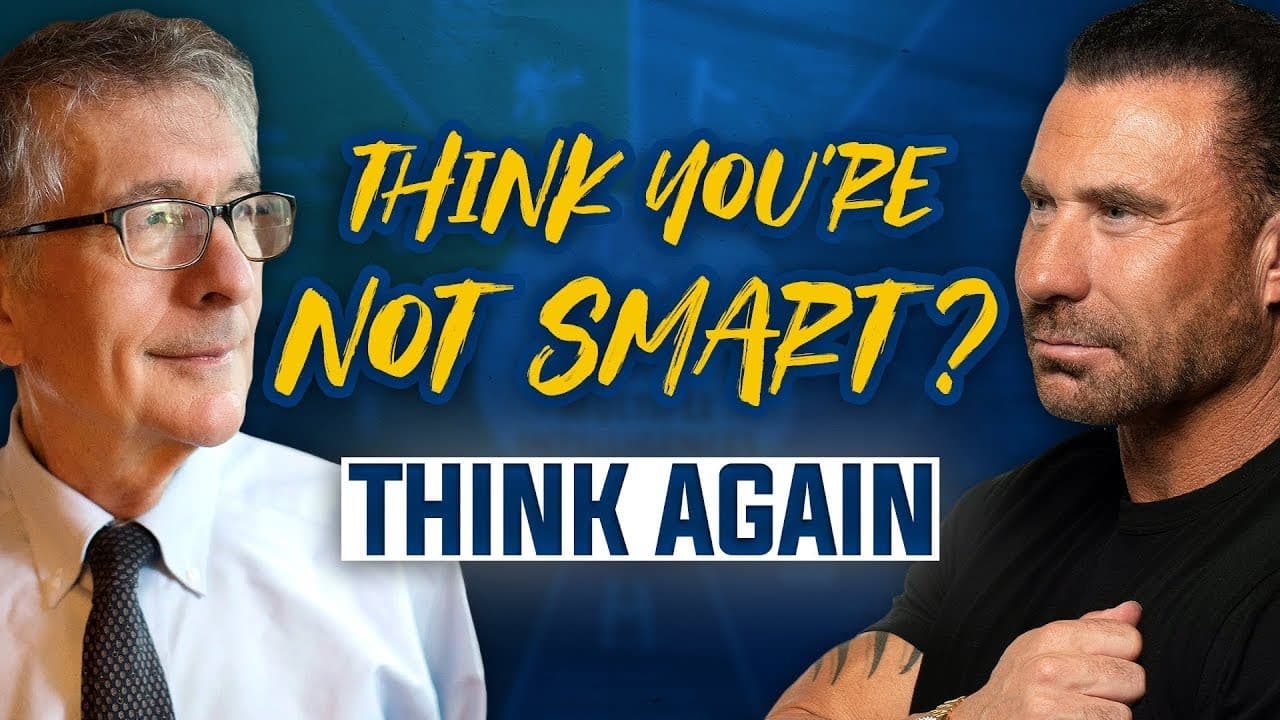
Howard is a renowned developmental psychologist probably best known for his theory of multiple intelligences I'll call them Geniuses in my way are gifts that people have and not all of them are the same what are the multiple intelligences linguistic logical mathematical musical spatial bodily kinesthetic interpersonal and intrapersonal I added an e... Read More
Key Insights
- Howard Gardner's theory identifies multiple intelligences beyond traditional IQ metrics.
- Linguistic and logical-mathematical intelligences are often prioritized in education.
- Musical, spatial, and bodily-kinesthetic intelligences highlight diverse human capabilities.
- Interpersonal and intrapersonal intelligences focus on understanding others and oneself.
- Naturalist intelligence involves recognizing patterns in nature and commerce.
- AI challenges traditional views on intelligence, emphasizing meta-knowledge and ethical use.
- Leadership involves creating and embodying a compelling narrative or story.
- Cultivating cognition involves understanding personal strengths and seeking complementary skills.
Install to Summarize YouTube Videos and Get Transcripts
Explore YouTube Video Summarizer or Get YouTube Transcript Extractor
Questions & Answers
Q: What are the different types of intelligence according to Howard Gardner?
Gardner identifies linguistic, logical-mathematical, musical, spatial, bodily-kinesthetic, interpersonal, intrapersonal, and naturalist intelligence. He says the exact labels matter less than recognizing that strength or weakness in one area does not predict ability in another.
Q: What is Howard Gardner’s theory of multiple intelligences?
The theory treats intelligence as a collection of distinct human capacities rather than a single general trait. Gardner’s central point is that people can be strong in some abilities and weak in others without those strengths and weaknesses necessarily being connected.
Q: Why does Gardner consider IQ tests limited?
Gardner says IQ tests mainly examine language and logical-mathematical ability. People who are skilled at reading, writing, logic, or mathematics therefore tend to perform well, while other abilities receive less attention.
Q: Does being strong in one intelligence mean someone will be strong in others?
No. Gardner explicitly says that being strong or weak in one form of intelligence does not predict whether someone will be strong or weak in another.
Q: Why does Gardner mention intelligence testing in ancient China?
He uses it to show that definitions of intelligence reflect cultural priorities. He suggests that a test developed in ancient China might have emphasized morality, ethics, and relating to other people rather than skills such as solving a crossword puzzle.
Q: What does multiple-intelligences theory suggest about traditional education?
It challenges educational systems that make people feel unintelligent when they do not fit a particular academic mold. The discussion argues that people may have valuable gifts that are not captured by the language and logic skills emphasized in conventional testing.
Q: What question does Gardner raise about education today?
He asks why schools should teach information such as geography when a handheld device can quickly locate places. He does not claim to have the answer, but says educators must raise the question.
Q: How should people use their intelligence and abilities?
Gardner says society needs more than people who are simply more intelligent. People should consider how to use their abilities positively and aim to become good workers and good citizens.
Summary & Key Takeaways
-
Howard Gardner's theory of multiple intelligences expands the concept of intelligence beyond traditional IQ tests, highlighting diverse human capabilities. Recognizing these intelligences can transform self-perception, parenting, and leadership, allowing for environments where varied talents thrive. This understanding is crucial in an AI-driven future, where ethical use of intelligence is paramount.
-
Gardner's work identifies eight intelligences, including linguistic, logical-mathematical, musical, spatial, bodily-kinesthetic, interpersonal, intrapersonal, and naturalist. Each intelligence has unique strengths, challenging the notion that intelligence is monolithic. This perspective encourages a broader appreciation of individual talents and potential.
-
The conversation explores the implications of multiple intelligences in education, leadership, and personal growth. It emphasizes the importance of understanding and nurturing diverse talents, particularly in a rapidly evolving world influenced by AI. The dialogue also highlights the value of maintaining cognitive sharpness through lifelong learning and self-awareness.
Read in Other Languages (beta)
Share This Summary 📚
Summarize YouTube Videos and Get Video Transcripts with 1-Click
Try YouTube Summary with ChatGPT & Claude or YouTube Transcript Generator
Explore More Summaries from Ed Mylett 📚




Summarize YouTube Videos and Get Video Transcripts with 1-Click
Try YouTube Summary with ChatGPT & Claude or YouTube Transcript Generator